Twenty-nine rugby players spent the night before the biggest match of their lives vomiting uncontrollably in a Johannesburg hotel. Nobody has ever been held accountable for what happened to them. Nearly three decades later, no formal investigation has produced a finding, a named suspect, or a credible explanation. That silence is the story.
The night before the final
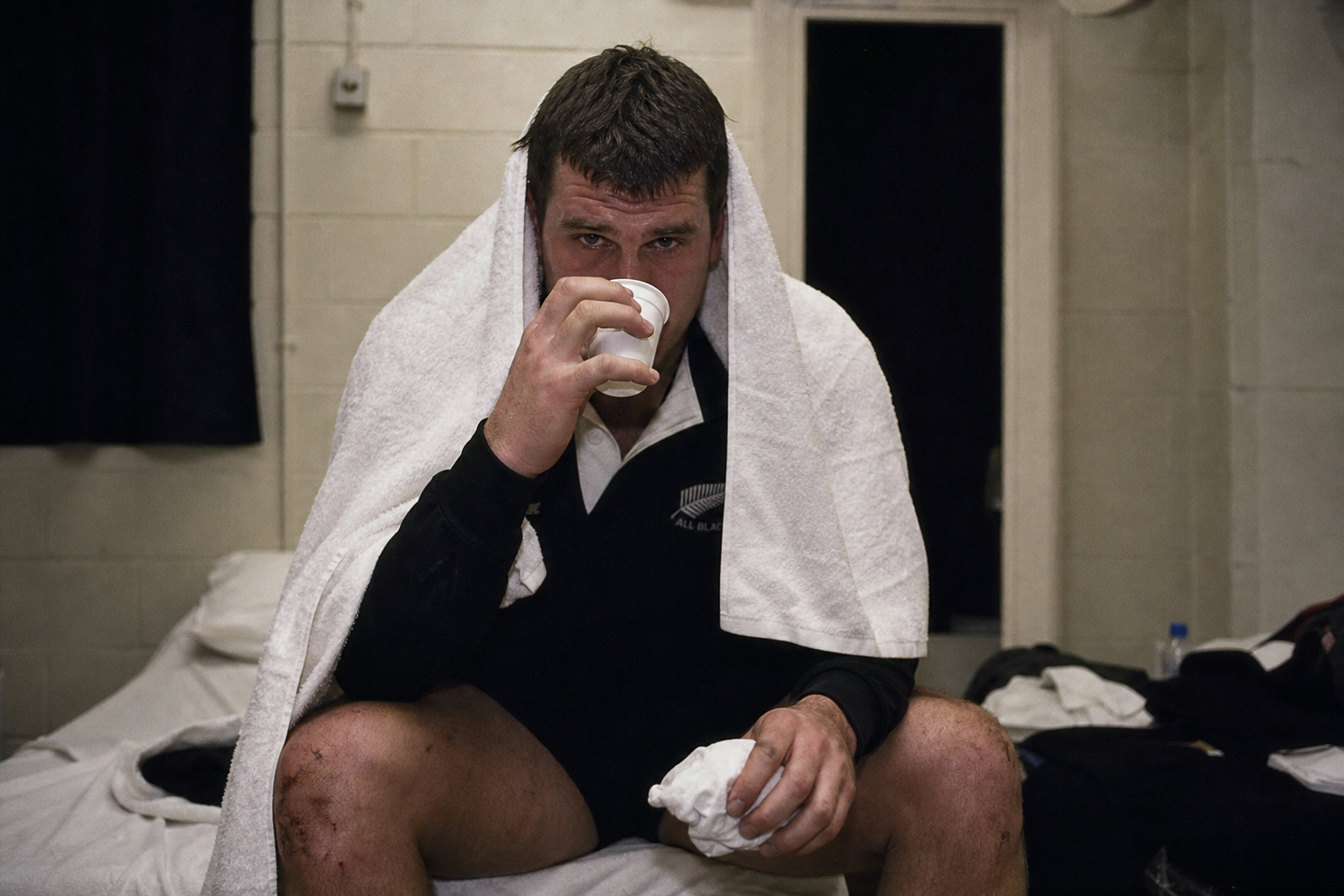
It was June 24, 1995. Ellis Park, Johannesburg. The Rugby World Cup final between New Zealand and South Africa was hours away — the most anticipated match in the sport’s history to that point, staged in a nation still electric with the energy of its first post-apartheid elections. New Zealand had been the form team of the tournament by some distance, dismantling opponents with a physicality and pace that had no precedent in international rugby. And then, sometime that evening, their hotel became a medical emergency.
According to New Zealand head coach Laurie Mains and team doctor Mike Bowen, All Blacks players fell violently ill with symptoms including projectile vomiting. Dr. Bowen — the sole medical professional travelling with the squad — worked through the night administering fluids and injections to control the vomiting and prevent the kind of physical collapse that ends careers, let alone matches.
The medical risks were real and serious. Severe dehydration, electrolyte imbalance, muscle breakdown, and cardiovascular stress are all documented consequences of acute gastrointestinal illness. For elite athletes competing at altitude — Johannesburg sits at approximately 1,750 metres above sea level — any one of those outcomes could have been catastrophic. Some players were still symptomatic when they ran out at Ellis Park the following afternoon.
What the team doctor said

Dr. Bowen has spoken in detail about the scenes he managed alone that night — no second doctor, no hospital transfer, no specialist support. Both Mains and Bowen have been consistent and public in their position: they believe the All Blacks were intentionally poisoned. Neither has wavered from that view in the years since.
The scale is worth sitting with. Projectile vomiting. One doctor. The night before a World Cup final.
One complicating detail has been raised by those sceptical of deliberate targeting: at least one member of the South African contingent assigned to the All Blacks was also reportedly affected by the illness. Mains and Bowen’s camp has never accepted this as exculpatory. The identity of the affected individual, the precise nature of their symptoms, and the timeline of their illness have never been independently verified in a way that resolves the argument either way. Without that verification, the detail proves nothing in either direction.
What cannot be disputed is the human reality: a squad of professional athletes, preparing for the sport’s biggest occasion, spent the night in acute physical distress while their sole doctor scrambled to hold them together.
A mystery figure and a name that stuck

Allegations like this tend to crystallise around a human face, and this one found one — sort of. The accusation centred on an unidentified woman allegedly seen serving food or drinks to All Blacks players that evening. She became known as “Suzie the waitress.” The name stuck. It gave the story a villain with a first name but no surname, a presence but no confirmed identity.
No individual was ever conclusively identified, charged, or held accountable by any official investigation. Details that have surfaced over the years come from player and coaching staff accounts — not from law enforcement findings or independent inquiries. The “Suzie” narrative is an allegation, not a proven fact. Readers deserve to know that distinction clearly, and it should not be obscured by the story’s repeated retelling.
What the name does capture is something real about why this episode endures: it has enough human specificity to feel credible and enough unresolved detail to remain permanently open. The absence of a named, verified perpetrator is not evidence of innocence. It is evidence of an investigation that never seriously began.
The final itself — and why context makes this so charged
South Africa defeated New Zealand 15–12 after extra time, with Joel Stransky’s drop goal in the closing minutes of the second period of extra time settling the match. The match drew 62,000 spectators to Ellis Park and was watched by hundreds of millions more. Nelson Mandela presenting Francois Pienaar with the Webb Ellis Cup — Mandela wearing a Springbok jersey bearing Pienaar’s number six — became one of the defining images of twentieth-century sport. The political and emotional weight of that moment is real, enormous, and entirely legitimate.
Which is precisely what makes any “tainted final” narrative so charged. South Africa’s 1995 World Cup victory was not just a rugby result; it was a moment of national reconciliation that reached far beyond sport. Raising questions about the conditions under which that match was played is not the same as diminishing what it meant to a country emerging from decades of institutional racism — but it is uncomfortable territory, and it always will be. Those two things can both be true at the same time.
For New Zealand, the specific performance that haunts the allegation most is Jonah Lomu’s. Lomu had been the most destructive player of the entire tournament — scoring tries including four in a semifinal demolition of England that left commentators searching for comparisons. His performance in the final was notably subdued by his own standards, and players and coaching staff have linked that directly to the illness. Whether the connection is causal or coincidental, no independent investigation has ever produced an answer.
Zinzan Brooke, one of the All Blacks’ most prominent players in that squad, has stated publicly that the 1995 final “wasn’t a level playing field” — the clearest on-record acknowledgement from within the playing group that the team believes they were compromised going into the match.
The investigation that never happened
No formal criminal investigation ever produced charges, a named suspect, or a definitive finding of deliberate poisoning. World Rugby — then operating as the International Rugby Board — did not launch an independent inquiry at the time. No forensic evidence from the hotel has ever entered the public record. No governing body has since acknowledged that the absence of an investigation was itself a failure.
The story has re-emerged multiple times since 1995, driven each time by player memoirs, coaching accounts, and documentary projects rather than new forensic evidence or renewed official scrutiny. That pattern is itself significant: the story keeps returning because the sporting authorities who could have closed it never tried to. Each revival produces the same cycle — renewed allegations, renewed denials, no new evidence, no resolution.
The absence of accountability is not a verdict of innocence. It is a verdict on the process — which is to say, there was no meaningful process. A head coach and team physician alleged that their squad was deliberately poisoned the night before a World Cup final. That allegation was made by named individuals with direct, firsthand knowledge. It was never formally, independently examined and resolved. That is a failure of sporting governance, whatever the truth of the underlying claim.
What the record supports and what it does not
Here is what the public record supports: players were acutely ill, Dr. Bowen treated them through the night, several were symptomatic on match day, and both Mains and Bowen maintain their belief that the poisoning was deliberate.
Here is what the public record does not support: the identity of any perpetrator, the precise vehicle or mechanism of contamination, or any evidence linking a specific individual or organisation to a deliberate act.
The honest verdict is this: the All Blacks may have been deliberately poisoned before the 1995 Rugby World Cup final. They may equally have suffered a severe but coincidental outbreak of food poisoning at the worst imaginable moment. The evidence in the public domain cannot settle that question — and it cannot settle it precisely because the people with the authority and resources to investigate it properly never did.
A World Cup final was played under conditions that a head coach and team doctor believe were deliberately engineered against their players. That allegation alone — made by credible, named individuals with direct knowledge — warranted a rigorous, independent investigation at the time. It never received one. That remains, nearly three decades later, the most damning fact in the entire episode: not what may have happened in a Johannesburg hotel, but what the sport’s governing bodies chose to do about it afterwards.