When Jackie Robinson broke baseball’s color barrier in 1947, the headlines called it a first — but a catcher named Moses Fleetwood Walker had already done it 63 years earlier, and the story of what happened in between is one of the most deliberate acts of erasure in American sports history.
The Man History Almost Forgot
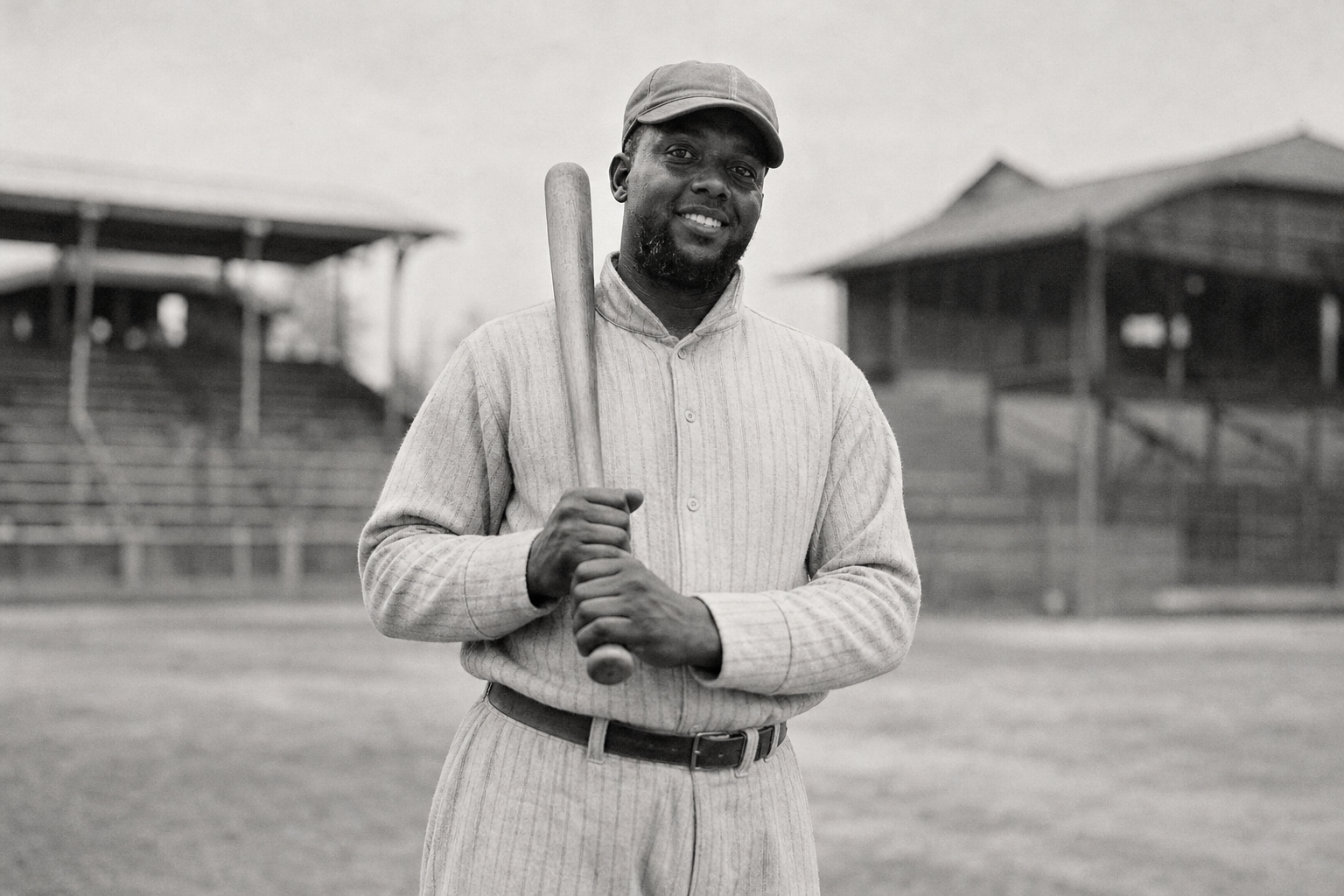
Moses Fleetwood Walker was born on October 7, 1856, in Mount Pleasant, Ohio, the son of a physician who had settled the family in a Quaker community with abolitionist roots. He died on May 11, 1924 — more than two decades before integration returned to baseball’s mainstream conversation. He never lived to see Robinson’s debut. He never received a ticker-tape moment, a presidential phone call, or a Hall of Fame plaque. What he received, mostly, was hostility, a convenient release, and decades of near-invisibility in the official telling of the game’s story.
This is not breaking news. It is a corrective. Moses Fleetwood Walker is the documented first Black man to play major league baseball, and understanding what his career looked like — and why it ended — sharpens every conversation about what Robinson actually walked into in 1947.
May 1, 1884: A Debut That Should Have Changed Everything
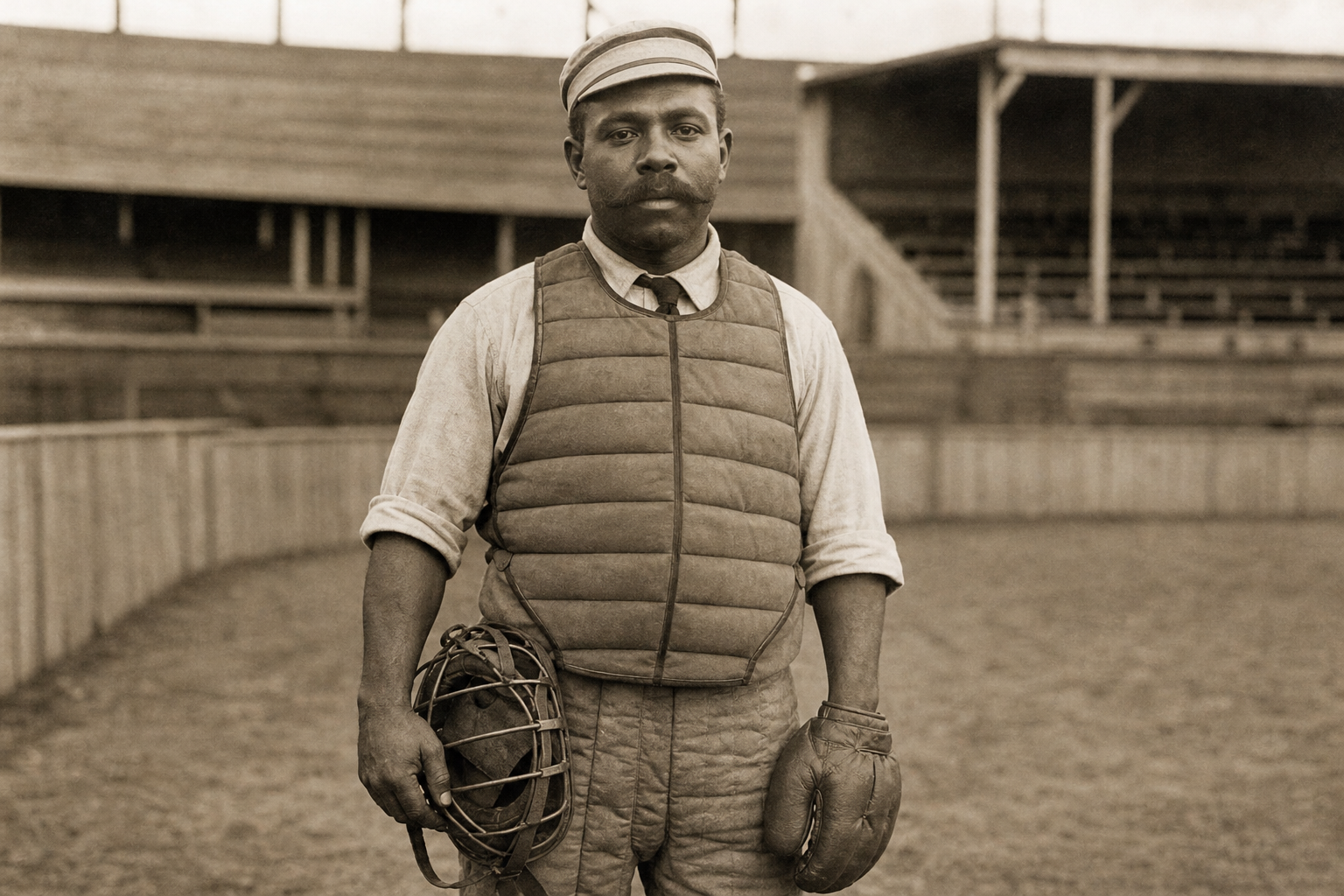
Walker made his major league debut on May 1, 1884, in Louisville, suiting up as catcher for the Toledo Blue Stockings of the American Association. For readers unfamiliar with 19th-century baseball structure, that context matters: the American Association was not a minor league. It was a fully recognized rival to the National League throughout the 1880s, competing for the same talent pool and fan base. Major League Baseball officially recognizes the American Association as a major league for statistical and historical purposes, which means Walker’s 1884 appearances carry exactly the same weight as any game played today.
He batted and threw right-handed, weighed 159 pounds, and crouched behind the plate in an era before padded catcher’s mitts were standard equipment. Walker absorbed foul tips and wild pitches with minimal protection — physical demands that made the position genuinely punishing for anyone, regardless of era. He had also attended Oberlin College and the University of Michigan Law School before turning to professional baseball, a biographical detail that matters: Walker was not a man who arrived at the game without options. He chose it, and the game ultimately chose to push him out.
His debut was not ceremonial. Walker went on to appear in 42 games that season, posting a .263 batting average with 40 hits and 23 RBIs — numbers that look even more respectable when you note the American Association’s league batting average that year hovered around .240. He was not a token presence. Toledo used him as their primary catcher during his time on the roster.
What the 1884 Season Actually Looked Like Off the Field
Walker performed above the league average at the plate and handled his defensive duties in one of the most physically demanding positions in the sport. None of that insulated him from what was happening around him.
Opposing players and fans directed racial slurs at Walker throughout the season. At least one prominent opponent — Adrian “Cap” Anson, the influential player-manager documented in Jules Tygiel’s Baseball’s Great Experiment (Oxford University Press) — refused to take the field against him, a stance Anson would continue and expand until social pressure from figures like him effectively formalized the unwritten exclusion of Black players from the professional game by the late 1880s. Anson was among the most powerful voices in the sport at the time, and his repeated, public objections to sharing a field with Black players carried institutional weight that individual acts of resistance could not easily overcome.
Toledo released Walker in 1884, with an injured hand cited as the official reason. The release itself is a documented fact. Whether the injury was the genuine motivation or a convenient exit point for a franchise feeling outside pressure is a matter historians have debated; responsible reporting separates the confirmed event from the inferred motive.
The Career Cut Short — and What Followed
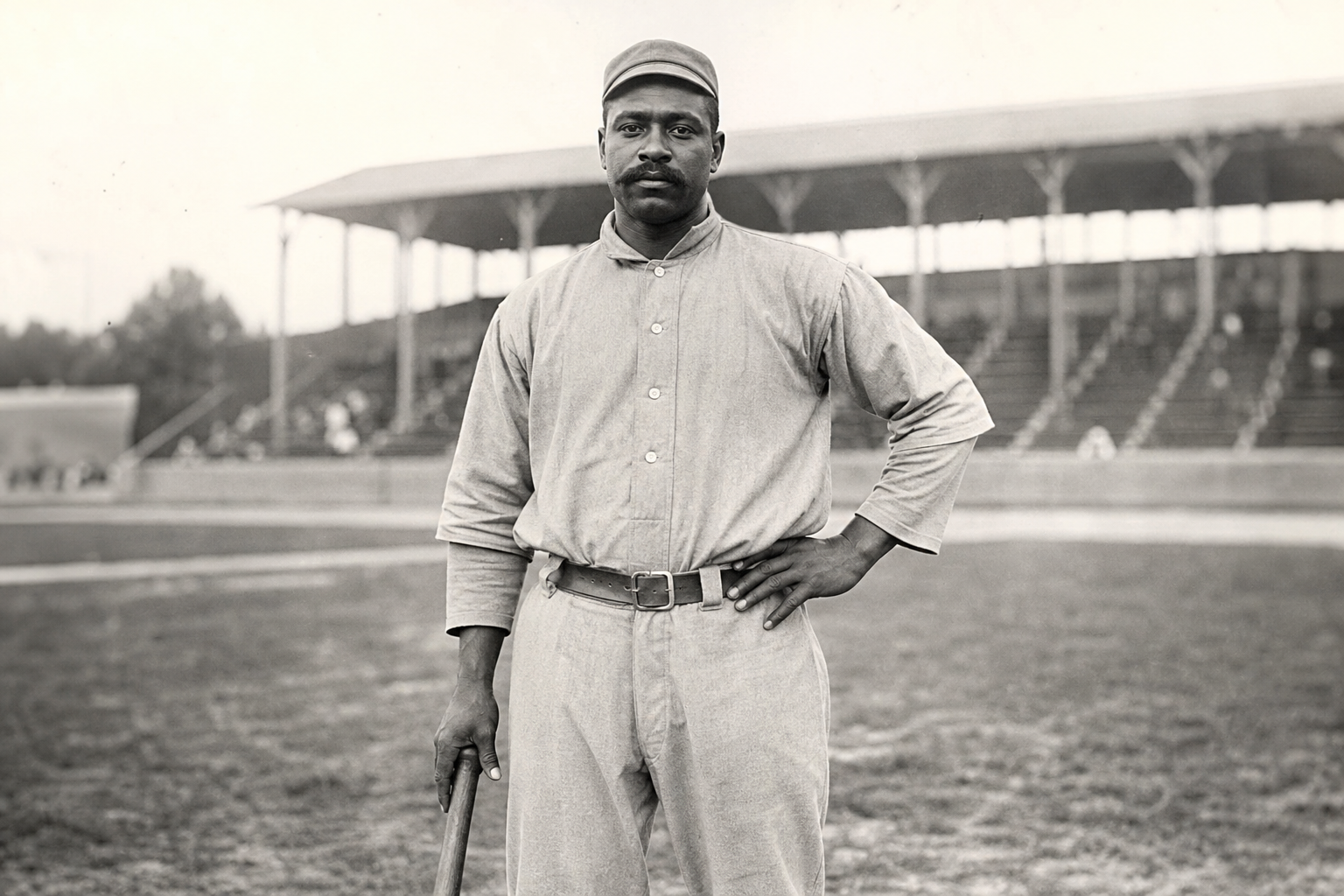
Walker’s time in the majors lasted only that single 1884 season, but his baseball career did not end there. He continued playing professionally and in semi-professional circuits until 1889 — a five-year extension that makes it plain ability was never the issue. The issue was that the doors were being closed, one by one, across organized baseball.
His brother Weldy Walker also suited up briefly for Toledo in 1884, making them the only brothers to share that particular distinction in baseball history. The Walker brothers’ connection to Toledo remains one of the more remarkable footnotes in 19th-century professional baseball.
After his playing days ended, Moses Fleetwood Walker built a different kind of life — businessman, hotel owner, newspaper editor, and eventually the author of a 1908 pamphlet titled Our Home Colony, in which he argued that Black Americans should emigrate to Africa. That document is not a curiosity; it is a measure of how thoroughly American society, including its national pastime, had shut its doors on Black citizens by the early 20th century. Walker had stared at those closed doors long enough to conclude the only solution was to leave entirely. The arc of his thinking — from integrated ballfields to emigrationist despair — is itself an indictment of the decades that separated his debut from his death.
He died on May 11, 1924. Jackie Robinson would not debut until April 15, 1947.
63 Years: What That Gap Actually Tells Us
The 63-year distance between Walker’s 1884 debut and Robinson’s 1947 arrival is not an accident of timing, a coincidence of talent pipelines, or a natural pause in progress. It is the documented result of an unwritten but actively enforced agreement among team owners and influential figures to exclude Black players from organized baseball — a process that gathered force through social pressure in the late 1880s and hardened into an effective ban that lasted generations.
The Negro Leagues were not a parallel development that existed independently of this history. They existed because of it. Generations of elite Black players — men whose credentials needed no asterisk — competed in separate leagues precisely because Walker’s precedent had been deliberately reversed. The suppression of Walker’s legacy is inseparable from the suppression of Black talent in American professional sports more broadly.
Robinson’s debut in 1947 is rightly celebrated as a turning point. But framing it as the original breakthrough does something quietly damaging to the historical record: it makes segregation look like a default state that Robinson heroically interrupted, rather than an active construction built on top of a precedent that already existed. Walker did not precede Robinson by accident. The gap between them was manufactured.
Recognizing Walker does not diminish Robinson. It sharpens the indictment against the owners and officials who spent six decades enforcing the gap between them.
Walker’s Place in the Official Record
Some historians note that John “Bud” Fowler played professionally before Walker, but in leagues that are not classified as major leagues by MLB’s official historical criteria. Walker’s claim to the specific major-league distinction is documented and uncontested by the league. Baseball Reference lists his 1884 statistics in its standard major-league database — the same database that houses Babe Ruth and Cy Young — without footnote or asterisk.
Walker was inducted into the Ohio Baseball Hall of Fame and is commemorated in his hometown of Steubenville, Ohio, where a historical marker acknowledges his place in the game. That recognition arrived long after his death and long after it would have meant anything to him personally. His story has only recently begun to receive the sustained public attention it has always warranted.
The standard integration narrative runs from the Negro Leagues to Jackie Robinson to the modern game. Walker’s story adds a missing first chapter — one that makes the arc of exclusion far more deliberate, far more calculated, and far more damning than the familiar version suggests. He played major league baseball 63 years before the man everyone calls the first. That sentence alone is reason enough to know his name.