Aden Durde says Olympic flag football can expand access worldwide
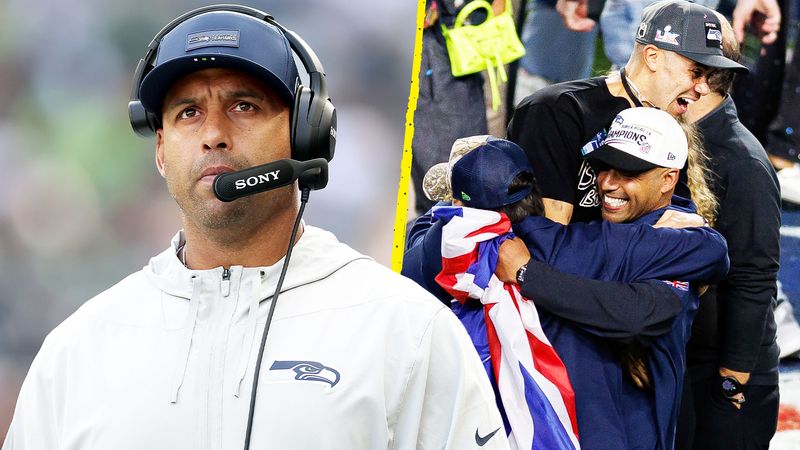
Aden Durde measures flag football by distance, not just trophies. In North London, teams could disappear when coaching or funding dried up, and he sometimes had to travel about two hours across London just to get on a field. That is why the Olympic debut in Los Angeles hits him as an access story first: if the sport is going to grow, it has to become easier to see, easier to reach and easier to imagine as a future.
Olympic recognition changes the frame
The International Olympic Committee put flag football into the Los Angeles 2028 program at its 141st Session in Mumbai on October 16, 2023, alongside baseball and softball, cricket in the T20 format, lacrosse in sixes and squash. That move did more than add another event to the calendar. It put flag football under the same global spotlight that has long turned niche sports into something young athletes can picture themselves entering.
Flag football will be played from July 15-22, 2028, at Exposition Park Stadium, right in the first week of the Los Angeles Games. The broader Summer Olympics run from July 14-30, 2028, which means the sport’s debut lands at the center of the Olympic schedule, not off to the side. For a game that has spent years fighting to be taken seriously outside football circles, that placement matters.
Durde's path explains why this moment lands
Durde’s voice carries weight because his own route into football was anything but linear. His path ran through London, NFL Europe, the Dallas Cowboys organization, the NFL’s International Player Pathway program, the Atlanta Falcons and now the Seattle Seahawks. That is the biography of someone who had to keep finding another door after the first one opened a little.
His background also shows the limits of the old model. In North London, the barrier was not talent alone, but access to training space, stable teams and consistent coaching. Olympic flag football offers a cleaner target than that messier reality: a visible destination, a recognizable stage and a chance for kids who do not come through traditional American football pipelines to see a path that actually belongs to them.

The sport already has a global footprint
The Olympic debut is not happening in a vacuum. The NFL and the International Federation of American Football have said an estimated 20 million people in more than 100 countries play flag football. That number tells you why the sport no longer looks like a novelty. It is already spread across a base large enough to support national teams, regional competition and a real international ladder.
That ladder got another push in 2024, when IFAF said 65 national representative teams would take part in continental flag football competition. Those events were part of the build toward the largest-ever IFAF World Flag Football Championships in Lahti, Finland, in August 2024. Taken together, the numbers show a sport that is no longer waiting for permission to exist. The Olympic debut simply gives that growth a brighter scoreboard.
The NFL vote turned possibility into policy
The other major shift came in May 2025, when NFL owners voted 32-0 to allow players to participate in Olympic flag football at LA28. The resolution limits each club to one player, plus each club’s designated international player for his country, and the league said it would work through the NFL Players Association, IFAF and Olympic authorities to make it happen.
That vote matters because it converts the Olympic idea from a feel-good concept into an operational one. If NFL talent can appear in Los Angeles, the event gains instant credibility with casual fans and a new level of legitimacy inside the sport. It also raises the stakes for players whose national teams could suddenly feature names that carry real weight beyond their own markets.
The calendar still has friction

The cleanest version of the story still runs into the ugly part of the calendar. NFL training camps typically open in the final week of July, which creates a potential conflict with the LA28 flag football schedule. That is not a small detail, because the same window that makes the Olympic debut visible also sits right next to the start of the league’s summer grind.
That timing problem explains why the 2025 vote was so important. The league did not eliminate every conflict, but it began the process of making Olympic participation workable for elite players, clubs and national teams. For a sport trying to move from exhibition interest to true global ambition, that administrative step is part of the story.
Why the human stakes are bigger than the medal count
Durde’s view cuts through the usual hype because it starts with who gets seen. A sport that has always depended on spare fields, volunteer coaches and patchwork local support looks different when it is backed by the Olympics. Olympic recognition gives parents, schools and young players a concrete answer to a question that has often been fuzzy: what does the next level look like?
That is the real inflection point. Flag football is still a participation sport in many places, built on low-cost entry and flexible spaces, but LA28 gives it a legitimacy boost that can pull it toward aspiration. The game does not need to pretend it is already the NFL to matter. It needs a stage large enough to show that kids in London, Los Angeles, Atlanta, Dallas and places far beyond traditional football territory can see themselves in it.
Durde understands that better than most. He came up through a system where the field was never guaranteed, and that makes him an unusually sharp guide for what the Olympic debut can unlock. If flag football is going to widen its reach worldwide, the first step is simple: let more people see it, and let them believe they belong on it.
Sources
- [1]sports.yahoo.com
- [2]olympics.com
- [3]nfl.com