Akron study shows sanding and cuts dramatically change Wiffle ball flight

Cole Lanni’s University of Akron honors project put hard numbers behind a Wiffle ball truth pitchers have traded for years: sanding and cutting change the flight. In the controlled indoor test, the 6x6 grid pattern side-cut ball produced the greatest vertical drop, while modified balls showed less defined horizontal changes and, in the case of the 2x2 flat cut grid pattern, a more consistent movement profile.
The experiment compared six ball conditions, including an unmodified ball, a sanded ball, and several cut patterns. Each version was thrown 10 times by pitching machine, then tracked by contact points on posterboards before the results were run through ANOVA with post hoc analysis. That method matters because it separates a lucky wobble from a repeatable effect, and it makes the ball itself the variable instead of the pitcher, the wind, or the bat.
The cleanest takeaway for players is cause and effect. Surface texture altered airflow and pressure differentials, and the flight changed with it. More aggressive cuts did not just make the ball move more in a vague way, they changed how it moved, with the biggest measurable effect coming vertically. Horizontal movement, by contrast, was harder to pin down, which helps explain why some Wiffle pitchers chase a sharper drop while others prize a more predictable side-to-side path.
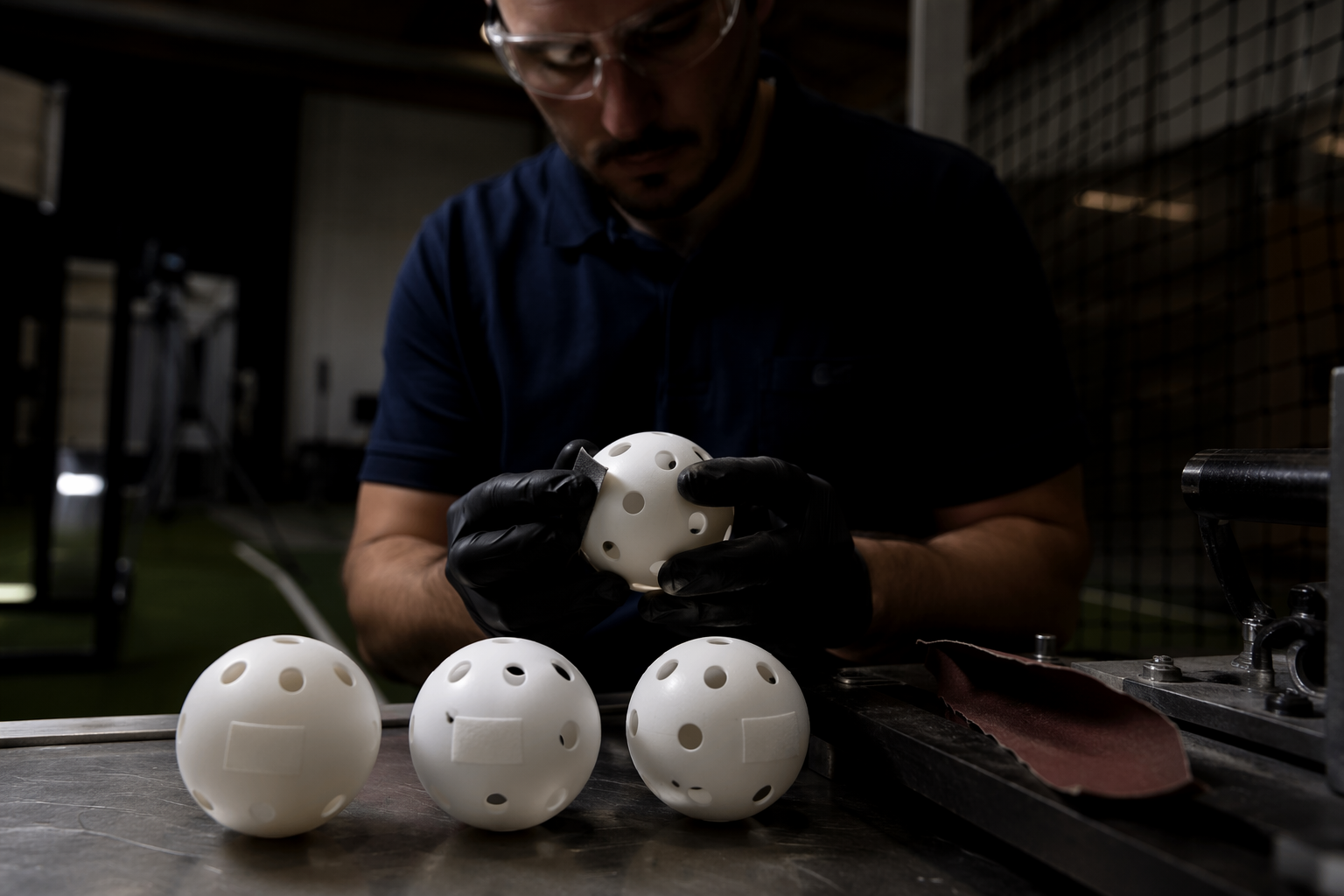
That is where useful experimentation ends and ball doctoring begins. The Akron work shows how sanding and trimming can be studied as a repeatable part of competitive preparation, but it also underlines how small surface changes can alter the ball enough to become a rules issue depending on the format. Lanni’s project even points to future tests on cut angle and spacing, a sign that the next edge in Wiffle ball may come from finer measurements rather than bigger hacks at the shell.