Analytics spotlight top PUL players after Championship Weekend
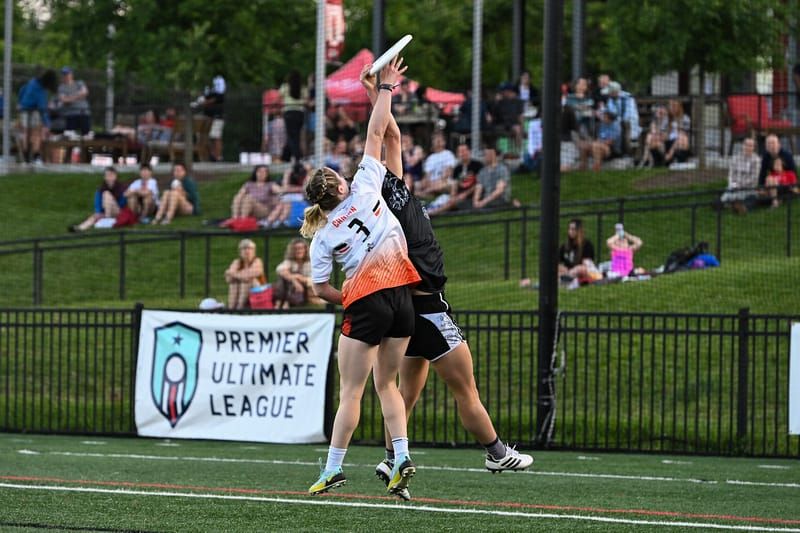
DC Shadow’s 20-10 title-game romp over Philadelphia Surge gave the Premier Ultimate League a clean final exam for value. On a sunny 85-degree afternoon in Durham County Memorial Stadium, the scoreboard matched the trophy, but the deeper story was how Ultiworld’s EDGE framework separated the players who filled highlight reels from the ones who actually bent the game.
Championship Weekend as the league’s stress test
The 2026 PUL Championship Weekend ran June 20-21 in Raleigh, North Carolina, and the field narrowed to four teams before the final: Philadelphia Surge beat Atlanta Soul, and DC Shadow handled Indy Red. By the time the championship game arrived in Durham, the matchup had become a direct test of what the league rewards, what the eye catches, and what a stat model can prove.
That matters because the Better Box Score Metrics series is built to do more than tally the obvious. Its EDGE framework turns goals, assists, blocks, turnovers, and yards gained into one performance lens, which makes it especially useful in a sport where offense, defense, and transition are constantly overlapping. In a title weekend like this one, that approach becomes a reality check: if a player or unit shapes possession after possession, the box score should show it, even when the broadcast or the headline leans elsewhere.
DC Shadow’s margin was bigger than the final
The final itself was lopsided in the clearest possible way. DC Shadow completed a perfect 8-0 season, won its second straight PUL championship, and extended a winning streak that now reaches back to the 2024 PUL Championship Game. A 20-10 title-game result does not leave much room for uncertainty about the better team, but it does leave plenty of room for disagreement about which performances were most valuable along the way.
That is where Championship Weekend becomes the best possible test for the EDGE model. Shadow’s season-long perfection and repeat title create a case study in how elite teams distribute value, while Philadelphia’s route to the final shows how a team can reach the biggest stage without every headline player being the loudest statistical force. The model’s job is not to crown the champion again, but to identify which contributors actually drove the run.
The box score lines that mattered most
Ultiworld’s recap gave Philadelphia’s Grace Maroon a line that was impossible to miss: four goals, one assist, and one block. Lisa Dang added three assists, while Lindsay McKenna finished with two assists and two blocks. Those numbers tell the story of a team that had a few players producing across multiple phases, even in a final that increasingly tilted away from them.
DC’s stat lines were even more revealing. Maya Kikuchi posted five goals and four blocks, a rare kind of two-way control that explains why a championship can swing so quickly once pressure starts forcing mistakes. Jessica Sourbeer added four assists, and Marika Korpinen contributed three goals, one assist, and one block. That spread matters because it shows Shadow winning not just with a single star turn, but with layered production from players who affected both possession and finishing.
For a model like EDGE, this is exactly the kind of mismatch that separates signal from noise. The eye test may remember the biggest catches or the most visible break opportunities, but the numbers show who kept the team moving, who created extra possessions, and who translated pressure into points. In a game defined by heavy defensive pressure rather than offensive fireworks, those distinctions become the whole story.

Why the award conversation gets sharper here
The larger question behind the column is the one ultimate keeps running into every year: who was best, and what counts as proof? Award debates in the sport often blend counting stats, eye test, and team success, and Championship Weekend gives all three a final chance to collide. The EDGE framework does not eliminate that debate, but it gives it structure, especially when championship performance can be weighed against season-long output.
That is why the most interesting players are often the ones whose impact is clearer in the metrics than in the headlines. A player like Kikuchi, with five goals and four blocks in the title game, is easy to spot. Others, such as Sourbeer’s four-assist control or McKenna’s two-assist, two-block balance, matter because they reflect the hidden architecture of a winning performance. The model pushes the conversation past reputation and toward possession value.
Raleigh, Durham, and the league’s broader picture
The PUL announced Raleigh as the Championship Weekend host on April 30, 2026, then delivered a two-day showcase that fit its own mission. The league says it was founded in 2019 and exists to achieve equity in ultimate by increasing accessibility and visibility for women, transgender, intersex, non-binary, genderqueer, and genderfluid people through competition, leadership, and community partnerships. Hosting the championship in North Carolina gave that mission a visible stage, with Durham County Memorial Stadium serving as the final’s centerpiece.
Raleigh Radiance added another local layer to the weekend. The South Division club says it was founded in 2018 and was the 2023 PUL champion, a reminder that the league’s competitive history is still short enough that recent champions remain part of the active conversation. That matters in a league where the competitive window is tight and the difference between contender and champion can be a single point, as Ultiworld noted in its February 27 schedule coverage.
The visibility push keeps growing
Championship Weekend was only one part of the league’s broader push for reach. The PUL and Western Ultimate League are set to renew their All-Star rivalry at the 2026 Ultimate Frisbee Association Championship Weekend, with the game scheduled for Friday, August 28, at Breese Stevens Field in Madison, Wisconsin. The league says fans can vote for the 2026 PUL All-Stars until July 10, 2026 at 11:59 p.m. ET, and that the game will stream free on YouTube.
That visibility drive has already produced proof of concept. The 2025 PUL-WUL All-Star Game drew a record crowd of more than 1,500 fans, which the leagues described as the largest crowd ever for a professional women’s ultimate game. Put next to Championship Weekend, it shows a league building both its competitive credibility and its public footprint at the same time.
That is the larger takeaway from Raleigh and Durham: the PUL is no longer asking only who won. It is asking which players, units, and performances can stand up when the pressure is highest and the metrics are stripped down to their most telling shape.