Anthony Abundanzo sizes up 15th Summer Classic betting lines and contenders
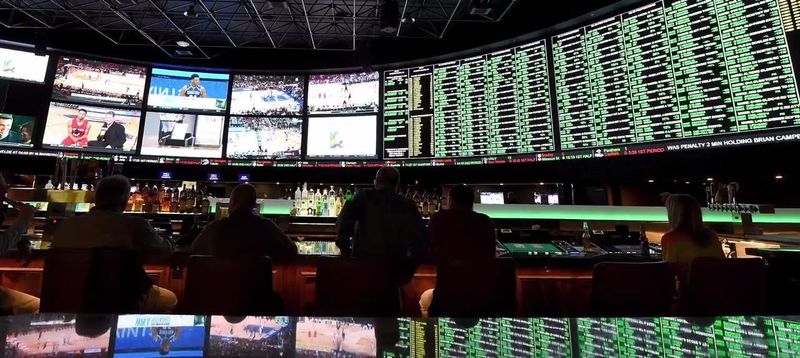
Anthony “Three Fingas” Abundanzo is treating the 15th Summer Classic like a board you can actually beat, and the line is revealing more than a gimmick. With up to 32 teams heading to Little Fenway in Essex, Vermont, his numbers point to a field with a few clear pressure points, a handful of live contenders and enough volatility to make the whole thing feel like legitimate betting theater.
Abundanzo reads the field like a bookmaker and a scout
The appeal of the line is that it is not pretending the Summer Classic is random. Abundanzo leans into the same colorful, Brooklyn-style voice that made the feature stick in the first place, but the angle underneath it is serious: if a roster has changed too much, if pitching looks shaky, or if a club has the kind of depth that travels in a tournament setting, the odds should move with it. He also pushes back against the idea that the smart money has to lean under, which gives the preview a real argument instead of simple showmanship.
That tension matters because Abundanzo is not coming at the event as a newcomer. The Summer Classic betting-line format has become a recurring part of SLAMT1D’s coverage, and the 2025 version already established the same style, complete with a reminder that there were 32 teams that year and that he lost money on the Staten Island Yankees in the semifinals. The 2024 feature used the same frame as well, when the tournament field was smaller at 27 teams. In other words, this is not a one-off joke. It has become part of how the tournament is read.
What the numbers say about contenders and value
The line itself gives away the hierarchy. A trade-heavy club sitting at 8-1 reads like a team with talent but enough roster movement to keep the market cautious. Even money suggests a team the board sees as fully live, the kind of group that can win without needing a perfect bracket draw. The 7-1 play looks undervalued if the roster has the right combination of speed, pitching and lineup depth, while the 12-1 number attached to uncertain pitching feels like classic high-variance territory: dangerous if the arms are sharp, vulnerable if they are not.

That is why Abundanzo’s reads matter beyond the entertainment value. In a tournament format, a single roster change can flip the math fast. A club that seems expensive at first glance may be worth the price if it can handle three guaranteed games and survive into single-elimination play, while a long shot can look attractive only because the field is deep enough to hide weaknesses until the wrong matchup exposes them. The betting line is really a shorthand for how fragile tournament certainty is in Wiffle Ball.
There is also a human layer to the preview. The story notes a player being ruled out and other names expected to matter in the build-up, which underscores how much these events depend on personnel availability. When a roster loses one contributor or gains another at the last minute, the balance of power shifts immediately, and that is exactly the kind of change a sharp line tries to capture before the first pitch is thrown.
Little Fenway gives the theater real credibility
The Summer Classic can support this kind of odds-making because the setting already has its own mythology. SLAMT1D says the 15th Annual Summer Classic runs August 7-9, 2026 at the Little Fenway Complex in Essex, Vermont, with up to 32 teams, three guaranteed games and single-elimination playoffs. The weekend also includes a Home Run Derby, announcers, music and food, which makes the tournament feel less like a casual pickup event and more like a full summer showcase.
The venue carries weight too. SLAMT1D says it purchased the Little Fenway complex in 2022, but the site’s roots go back to 2001, when Pat O’Connor and friends built Little Fenway. The complex now includes Little Fenway, Little Wrigley, Little Field of Dreams and Little Yankee, and the Little Field of Dreams setup still relies on a volunteer crew led by Larry Riegert transplanting more than 1,400 stalks of corn each year to form the famous outfield wall. That sort of detail is why the tournament has a real sense of place instead of just a logo and a bracket.
The fundraiser is part of the competitive energy

The betting-line feature works because the Summer Classic is not only about who wins on the field. The fundraiser page lists a suggested $5,000 team fundraising target and a $600,000 overall campaign goal, with $195,400 raised when the page was captured. SLAMT1D says its wiffle ball tournaments have raised millions of dollars since 2011 for people living with type 1 diabetes, and that mission gives the competition a sharper edge than a standard summer circuit event.
That is also where the line earns its credibility. When a tournament helps fuel a larger fundraising push, every team carries more than a score to settle. The market talk, the rivalries and the swagger all feed the same machine: players want to win, the event wants attention, and the charity benefits when the field and the story both feel worth following. Abundanzo’s odds are playful, but they also fit a tournament that has turned its own culture into part of the draw.
Why the Abundanzo frame keeps working
Abundanzo’s value is that he turns uncertainty into a read on the room. He sees the kind of roster churn that can push a team to 8-1, the kind of stability that justifies even money, and the kind of pitching question that turns a 12-1 price into a real gamble. The Summer Classic has enough history, enough structure and enough personality to make that exercise feel earned, not forced.
That is the real story behind the line. The favorites are not just the teams with the loudest reputation, and the long shots are not just filler. In a tournament built on depth, movement and pressure, Abundanzo’s board is another way of saying what the Summer Classic has become: a serious competition disguised as summer theater, and a fundraiser that knows exactly how to make both sides matter.
Sources
- [1]slamt1d.org
- [2]pro.gofundme.com