Argentina’s FootGolf scene turned into a professional pathway by 2015
Argentina did not treat FootGolf like a weekend stunt for long. The sport moved from a March 19, 2010 launch at La Reserva Cardales to a structured professional league by 2015, and that is the real story: not novelty, but infrastructure. The Asociación Argentina de FootGolf built a system with repeat events, rankings, and a clear path from exhibition to championship play.
The federation came first
The first thing Argentina got right was governance. The Asociación Argentina de FootGolf says the sport took its first steps in the country in 2010, and the federation was founded that same year with a mandate to develop, promote, and spread the game nationwide. That matters because FootGolf did not grow on vibes alone, it grew under a named organizer with a national brief.
The sport’s public launch came on March 19, 2010 at La Reserva Cardales, with professional footballers, rugby players, and sports journalists on site. That mix was more than ceremonial window dressing. It gave the new code immediate cultural credibility in a country where ball sports already carry serious social weight, and it signaled that FootGolf was entering the sports conversation as something players and media figures were willing to take seriously.
Repeat competition created the base
The first year is the best proof that Argentina was building a real calendar, not staging a one-off show. In 2010 alone, the country held five open tournaments across three different golf courses. That kind of repetition is what separates a curiosity from a sport with staying power, because players need regular starts, courses need a booking rhythm, and organizers need a structure they can run again and again.
Those five opens also show how the Argentine model formed early. The federation did not wait for a perfect system before putting events on the ground. It used open tournaments to establish a competitive loop, and that loop became the foundation for everything that followed: player recognition, ranking logic, and eventually a professional tier.
2015 is when the sport stopped pretending to be casual
By 2015, the Argentine scene had produced what the federation calls its first major step into professionalism, the Liga Profesional de FootGolf. The league presentation says it emerged after five years of adaptation and was built around player performance and ranking. That detail is the key to understanding why Argentina got ahead of the curve: the sport was no longer judging players only on who showed up, but on how they performed over time.
The first season had 27 players, which is a small field by mass-market standards but a meaningful one for a niche sport trying to build a professional ladder. Sebastián Pelliccioni became the first Argentine professional champion in FootGolf history, while Juan José Tenaglia won the senior category. Those names matter because they mark the first players to benefit from a system that had moved beyond open-entry novelty and into title-driven competition.
Why the ranking model changed the game
A league built on performance and ranking gives FootGolf what every emerging sport needs: consequence. Once points and standings matter, every round carries more weight, and every player has a reason to return. That is how a niche pastime becomes a viable pathway, because talent can be measured over a season instead of being judged only by isolated results.
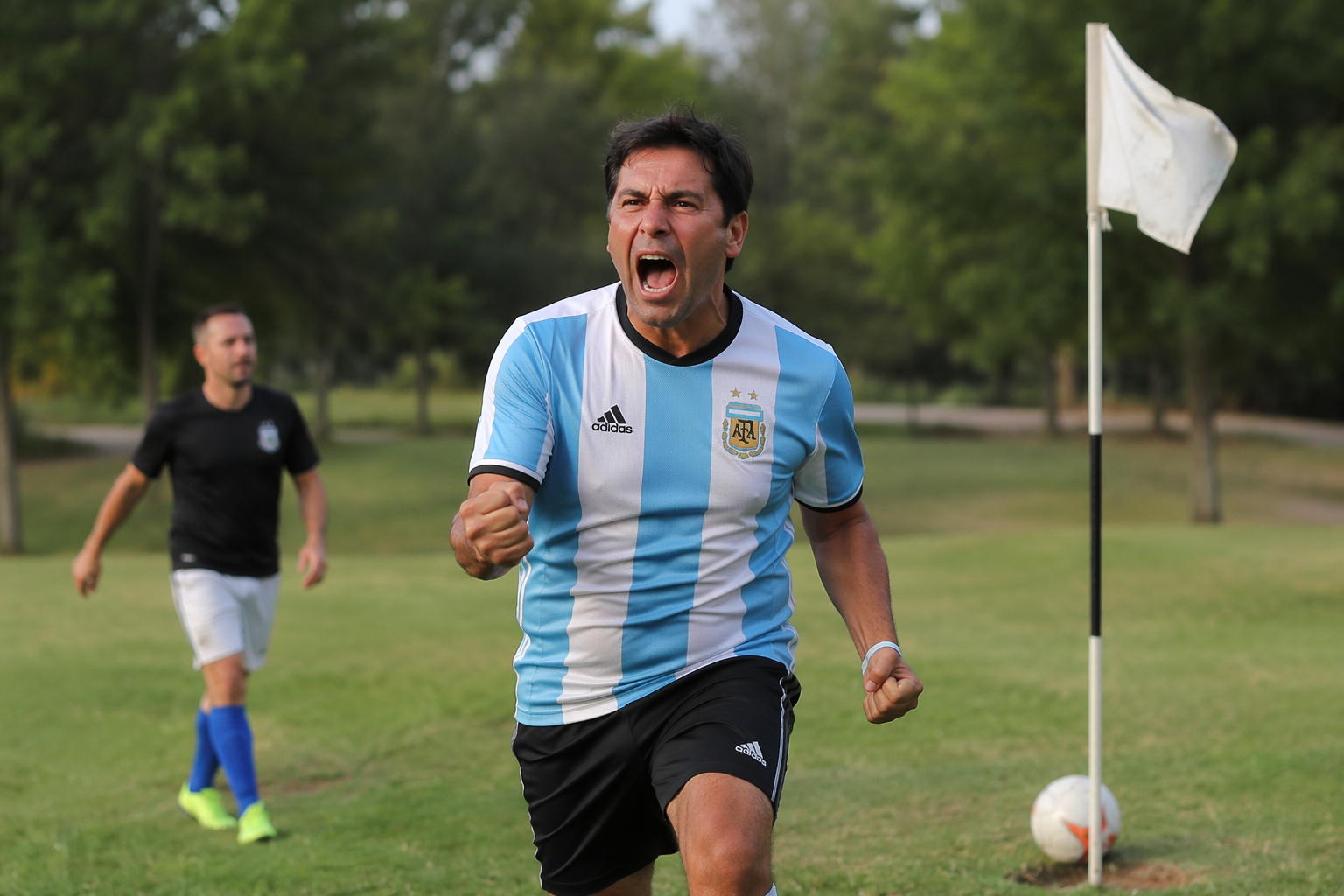
Argentina’s league structure also gave the sport a cleaner identity. Open tournaments had already shown that FootGolf could be staged regularly, but the professional league told players there was now a higher level to chase. For a sport trying to convert attention into careers, that jump from casual participation to formal classification is the decisive one.
The 2016 World Cup proved the system could scale
Argentina’s next major test came on the world stage at Pilar Golf Club from January 5 to January 10, 2016. The event was the second FootGolf World Cup and, at the time, the largest tournament in the sport’s history. It brought together 227 players from 26 countries, which is the kind of turnout that only makes sense if a domestic base already exists strong enough to host a global event.
The format mattered too. The championship combined an individual 54-hole medal play competition with a country-vs-country match-play event using four-player teams. Christian Otero won the individual title with 198 strokes, and the United States defeated Argentina 11-6 in the team final. That structure showed how far FootGolf had come in Argentina: the country was no longer just introducing the sport, it was helping define the highest level of its competitive format.
Cultural legitimacy is not a side note
Argentina’s FootGolf growth was not just administrative. The launch at La Reserva Cardales included professional footballers, rugby players, and sports journalists, which gave the sport an immediate bridge to the country’s existing sporting culture. In a market where football is part of daily life and rugby carries its own status, that kind of participation helped FootGolf look like a serious offshoot rather than a parody.
The 2016 World Cup added another layer of legitimacy through ceremony and scale. The presence of the AAFG president, the FIFG president, and local sports authorities told players and fans that the event belonged inside the broader sports ecosystem. That matters because professional pathways are not built by competition alone. They also require recognition from the institutions and figures that define what counts as a real sport.
What actually made the pathway sustainable
Argentina’s formula had four working parts, and each one pulled its own weight. The federation provided structure. The 2010 open-tournament calendar gave the sport repetition. The 2015 professional league created rankings, titles, and a clear climb for players. The 2016 World Cup proved the system could host elite international competition without losing its identity.
Not every ingredient was equally important. The biggest driver was the league, because that is where FootGolf stopped being an event and became a career track. But the league would not have mattered without the federation, the early tournament calendar, and the cultural legitimacy earned by mixing launch-day players, media figures, and serious international competition. Argentina did not just popularize FootGolf. It built the machinery that let players treat it like work.