Atlantic League ballparks map a compact, road-trip-friendly regional footprint
The Atlantic League began with one pitch in Atlantic City and has grown into a 10-park circuit that is built for weekend mileage as much as league standings. Frank Boulton founded the league in 1998 with six teams, mostly in the Northeast, and the current structure gives it North and South divisions, a 126-game schedule, and a claim as the highest level of professional baseball outside Major League Baseball.
A compact circuit with a wide reach
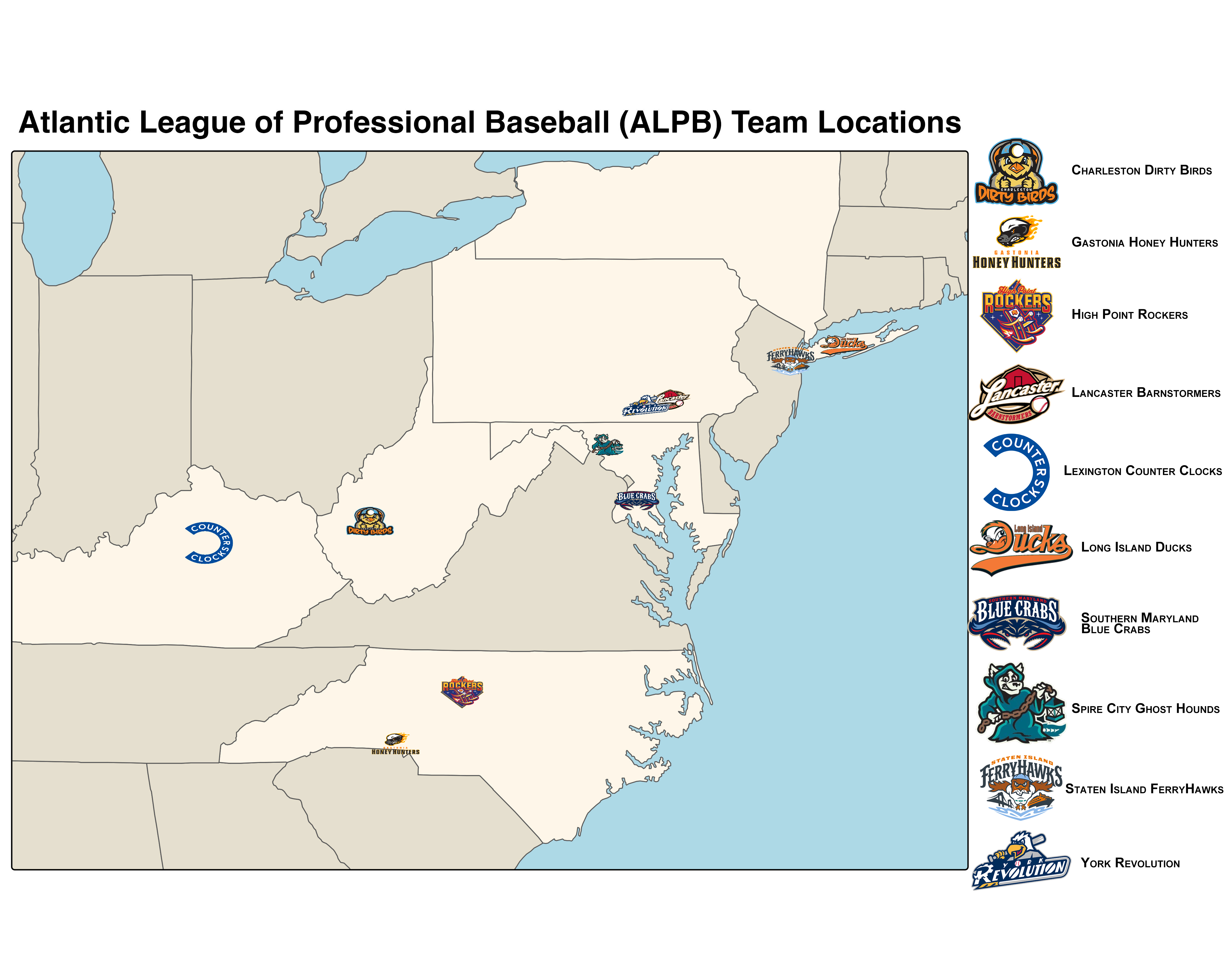
The league’s official directory shows how that footprint works in practice: Lancaster Barnstormers at Penn Medicine Park in Lancaster, Pennsylvania; Charleston Dirty Birds at GoMart Park in Charleston, West Virginia; Long Island Ducks at Fairfield Properties Ballpark in Central Islip, New York; Hagerstown Flying Boxcars at Meritus Park in Hagerstown, Maryland; Southern Maryland Blue Crabs at Regency Furniture Stadium in Waldorf, Maryland; High Point Rockers at Truist Point in High Point, North Carolina; York Revolution at WellSpan Park in York, Pennsylvania; Lexington Legends at Legends Field in Lexington, Kentucky; Staten Island FerryHawks at Staten Island University Hospital Community Park in Staten Island, New York; and Gastonia Ghost Peppers at CaroMont Health Park in Gastonia, North Carolina.
That map stretches from New York to North Carolina, with a western edge in Kentucky and an inland stop in West Virginia, yet it still feels manageable for a fan on the move. The league’s first official pitch, thrown by Jose DeJesus at 7:49 p.m. on May 20, 1998, at Atlantic City’s opening-night game, still serves as a clean reminder that the circuit’s identity has always been tied to its venues and the cities around them.
The Northeast corridor still sets the tone
The northeastern parks remain the league’s most recognizable spine, and they offer the clearest road-trip cluster. Long Island, Staten Island, Lancaster, and York all sit within a day’s drive of one another, and each park has built a distinct identity around its setting. The New York-area stops bring the densest urban feel, while the Pennsylvania clubs carry the kind of strong local following that makes a midweek game feel like part of the city’s routine.
Long Island gives that part of the circuit one of its clearest attendance stories. The Ducks entered their 25th anniversary season in 2025 and their 26th season in 2026, opened Opening Day with gates at 5:35 p.m. for a 6:35 first pitch, and said they had led all MLB Partner Leagues in total attendance for five consecutive seasons with 721 sold-out games all-time. That kind of crowd history makes Fairfield Properties Ballpark feel less like a stop on a map and more like a steady civic event in Central Islip.

Lancaster brings a different kind of gravity. Penn Medicine Park holds more than 8,000 fans, and the club has described it as a three-time Ballpark Digest MLB Partner League Ballpark of the Year winner. The Lancaster Stormers, founded in 2005, give the park a rare mix of longevity and credibility, which matters in a league where the ballpark often becomes the franchise’s most durable asset.
York adds another benchmark. The Revolution said in July 2025 that they were approaching their four millionth fan at WellSpan Park since the franchise’s inaugural 2007 season, and home crowds of 4,565 and 4,816 in May and June 2026 showed the ballpark still draws. Staten Island rounds out the New York presence with a distinctly metropolitan stop at Staten Island University Hospital Community Park, a venue that keeps the league connected to one of the country’s most baseball-saturated regions.
Maryland gives the league both continuity and novelty
The Maryland pair shows how the Atlantic League can mix established stops with brand-new infrastructure. Southern Maryland Blue Crabs at Regency Furniture Stadium in Waldorf give the state a steady suburban anchor, while Hagerstown’s Meritus Park is the league’s freshest addition and one of its most important developments. That contrast matters for fans planning a trip, because one park reflects a mature market and the other shows how the league still grows through new buildings.
Meritus Park opened in 2024, and the Flying Boxcars announced plans for their first homestand from May 4 to May 6, 2024, with initial capacity restrictions for the first six-game homestand. The ballpark was built along Summit Avenue and named through a partnership with Meritus Health, which makes Hagerstown a strong example of how independent baseball increasingly leans on local institutional support to create a downtown-style game-day draw.
The southern and inland stops widen the personality of the league
Once the map turns south and west, the league’s character changes without losing its regional logic. High Point, Gastonia, Lexington, and Charleston stretch the circuit beyond the Northeast core and give it a broader cultural range, from the Piedmont of North Carolina to Kentucky and West Virginia. The result is a footprint that still works as a road trip but never feels like the same ballpark repeated four times.
Gastonia is the clearest example of how branding and place can merge. The Ghost Peppers took their name from the Carolina Reaper chili pepper, which the team described as the hottest chili pepper in the world from 2013 to 2023, and the club recorded an attendance high of 4,017 during its first Ghost Peppers home series in August 2024. That kind of identity turns CaroMont Health Park into more than a venue name; it becomes part of the city’s baseball story.
High Point’s Truist Point, Lexington’s Legends Field, and Charleston’s GoMart Park fill out the rest of the map with markets that broaden the league’s regional voice. These parks may not carry the same headline attendance markers as Long Island or York, but they matter because they show the Atlantic League operating as a true multi-state circuit rather than a collection of isolated teams.
What makes these parks worth the trip
The business side of the league is visible in the ballpark names themselves. Penn Medicine Park, Fairfield Properties Ballpark, WellSpan Park, Meritus Park, and CaroMont Health Park all point to local corporate partnerships that help stabilize the venues and tie them to regional institutions. That matters in independent baseball, where naming rights, community identity, and game-day access are all part of the same value proposition.
The social side is just as important. The Atlantic League’s own branding emphasizes family-friendly ballparks, and the attendance figures from Long Island, York, Lancaster, and Gastonia show that the parks are functioning as community gathering places, not just sports facilities. Fans can build a trip around a night in Central Islip, a stop in York, a first look at Hagerstown’s newer park, or a summer visit to Gastonia, and the league’s compact geography makes those choices practical.
That is the Atlantic League’s real edge: its parks are spread out enough to feel regional, but close enough together to make baseball feel like a road itinerary with a clear destination at every stop.