Atlantic League rulebook details rainouts, doubleheaders and playoff format
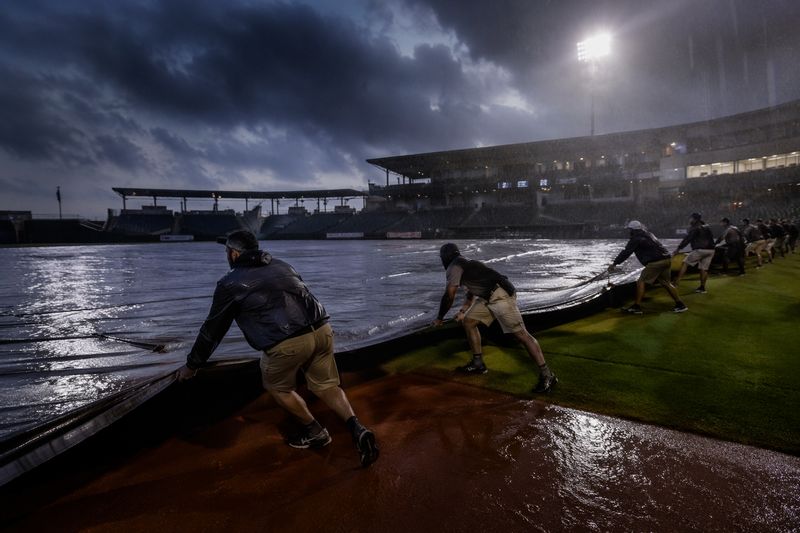
When weather knocks out a night in the Atlantic League, the answer is already written down. The league’s 2025 Umpire Edition, ratified by the Atlantic League Board of Directors on March 28, 2025, sits on top of Major League Baseball Official Baseball Rules but adds the practical instructions that decide whether a game is finished, resumed or wiped from the slate. For clubs, umpires and scorekeepers, that means rainouts, doubleheaders, curfews and replay are not left to improvisation.
Weather does not trigger one generic response
The rulebook draws sharp lines between different kinds of weather disruption, and those distinctions matter from the first drop of rain. It separates pre-game postponement, weather postponement, suspended games and canceled games, then pairs those situations with separate makeup-date rules. That gives the league a cleaner way to handle the messy reality of a storm system moving through, a tarp sitting on the infield, or a game that cannot continue after it has already started.
The practical effect is easy to see in the middle of a homestand. A club does not just know that a game was lost to weather; it knows whether the game never began, was stopped partway through, or was formally canceled. That difference determines how the standings are affected, how the game is rescheduled, and how managers plan the next two or three days of pitching, travel and roster usage.
Doubleheaders come in more than one shape
The Atlantic League does not treat a doubleheader as a single catch-all solution. The 2025 rulebook breaks the concept into twilight doubleheaders, day-night doubleheaders and optional split doubleheaders, which gives the league a more exact language for compressed schedules and travel-heavy stretches.
That distinction is more than administrative clutter. A twilight doubleheader can compress a day’s work into a shorter window, a day-night doubleheader stretches the clubs across two distinct game starts, and an optional split doubleheader gives the league another tool when makeup dates stack up. In a circuit that plays a full professional schedule outside the MLB structure, that kind of specificity helps teams protect pitching staffs, organize gate times and keep fans from guessing about when the second game will begin.
For writers covering the league, the format tells you a lot about the week ahead. A two-game day is not just a pair of scores on the board; it is a roster-management problem, a travel issue and, often, a test of depth.
Curfews, ties and forfeits all live in the same manual
The same rulebook that handles rain and doubleheaders also covers league curfew rules, tied-game statistics and standings effects, forfeits and exhibition games. That is where the Atlantic League’s game-management approach becomes clear: the book is built to answer the odd, inconvenient questions that decide whether a night ends cleanly or has to be revisited later.
Curfews can force clubs and umpires into uncomfortable decisions late at night, especially when extra innings drag on or weather has already eaten into the schedule. Tied-game statistics and standings effects matter because a game that ends without a winner does not disappear into the accounting. It still has to be categorized, recorded and folded into the league table in a way every club understands.
Forfeits are part of the same system because the league has to define what happens when a team cannot continue under the rules, while exhibition games sit outside the regular race for the championship. The Atlantic League says its member clubs contend annually for that championship, so the rulebook has to make clear which games affect the standings and which ones do not.
No replay changes how close calls land on the field
The 2025 Umpire Edition also includes a dedicated No Replay section, and that is one of the most revealing entries in the whole document. In a sport where replay has become part of the conversation at the highest levels, the Atlantic League spells out that some calls will not be sent for a second look.
That changes the rhythm of a game in a very direct way. A bang-bang play at the plate, a trapped ball in the outfield or a swipe tag at second does not become a long pause for review. The game stays in the hands of the umpires and keeps moving, which fits the league’s larger emphasis on pace of play and on rules that are meant to be enforced in real time.
The no-replay setup also fits the Atlantic League’s identity as a league that has long treated game flow as part of the product. League president Rick White has been tied to pace-of-play initiatives that influenced Major League Baseball, and the rulebook’s structure shows that attention to tempo is not separate from the rest of the game management system.
The rulebook sits inside a much bigger baseball experiment
The Atlantic League says it became a reality on May 20, 1998, and it describes itself as the highest level of professional baseball outside MLB. MLB, in turn, calls it an official MLB Partner League, and the two sides announced a formal experimental-rules partnership in 2019 that allowed MLB to test new playing rules and equipment during Atlantic League games.
That partnership is part of why the league’s rulebook carries extra weight. MLB said the 2019 experiments included the Automated Ball-Strike System, limits on defensive shifts, mound-visit restrictions, shorter inning breaks and larger bases. The Atlantic League says innovation tested in its parks has also included defensive-positioning changes, ABS, enlarged bases and modern extra-inning formats. More than 1,400 players have moved from the league to MLB organizations, which makes the day-to-day operating rules matter not just to fans in the stands but to scouts and front offices following the talent.
Governance is built for uniform enforcement
The league office says the Atlantic League of Professional Baseball is governed by a Board of Directors, with each club represented by a Director and an Alternate. Rick White oversees day-to-day operations, which helps explain why the rules book is so detailed and why the league keeps a single manual for postponed games, suspended games, doubleheaders, pace of play and replay.
That structure is what makes the Atlantic League feel different from a generic independent circuit. The rulebook is not just a list of procedures for bad weather; it is the operating system for a league that has used regulation as part of its identity. When the sky opens, the lights fail, or the game stretches into a curfew, the answer is already inside the book.
Sources
- [1]atlanticleague.com
- [2]mlb.com