Atlantic League turns into a bustling player pipeline to MLB and beyond
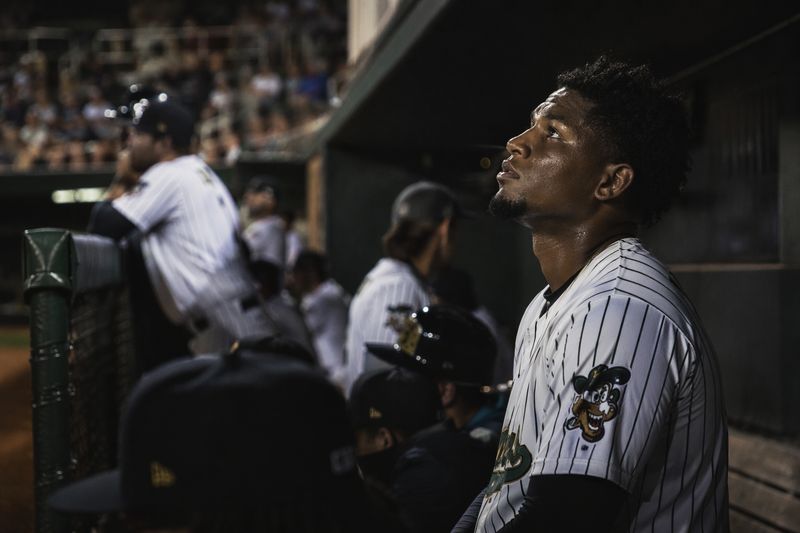
Atlantic League Baseball is easiest to read when you stop treating it like a standings race and start treating it like a transfer market. Every hot streak can become a purchase, and the league’s own transaction pages show players moving from High Point, Lancaster, Long Island, Staten Island, Southern Maryland, and other clubs straight into MLB organizations and overseas baseball.
The transaction log is the real scoreboard
The league’s Player Contracts Purchased archive makes the economy plain. In 2024 alone, Steven Engler moved to Minnesota, Raynel Espinal to Aguascalientes, Mason Martin to the Los Angeles Angels, Dan Straily to the Chicago Cubs, Chris Ellis to Arizona, Niko Hulsizer to Quintana Roo, Kyle Barraclough to Texas, and Brandon Leibrandt to Cincinnati. That list is not a novelty act. It is the business model, line by line, with the Atlantic League functioning as a place where a strong month, a healthy arm, or a power bat can turn into a new contract somewhere else.
The 2026 transfer feed shows the same machine running in real time. Lyle Lin went from High Point to Nippon, Adam Hackenberg from Lancaster to the Blue Jays, Jose Atencio from High Point to the Angels, Jamari Baylor from Southern Maryland to the Mets, Juan Yepez from Long Island to Chihuahua, and Carter Holjes from Staten Island to the Twins. The destinations are spread across Japan, Canada, MLB organizations, and the Mexican League, which tells you this is not a one-way path to affiliated baseball. It is a market with multiple buyers and multiple exit ramps.
Who gets bought first
The names on those lists are not random, and the player profiles are not subtle. Catchers, right-handed pitchers, and power-oriented bats show up again and again because those are the tools that translate fastest when another league starts shopping. Hackenberg and Lin are catchers, Atencio and Holjes are right-handed pitchers, and Baylor and Yepez are first basemen, the kind of profiles that can swing a lineup or stabilize the mound fast enough for a buyer to move.
The 2024 archive widens the pattern. Mason Martin, Niko Hulsizer, and Juan Yepez bring middle-of-the-lineup muscle, while Straily, Ellis, Barraclough, and Leibrandt bring the kind of pitching track record that can interest an MLB front office or a foreign club looking for innings now. The Atlantic League does not just export prospects. It exports usable major league depth, veterans chasing another look, and players whose performance can be graded quickly because the league’s scouting footprint is built for exactly that.
Why clubs can chase wins and auditions at once
This is where the Atlantic League’s identity gets interesting. MLB’s 2019 partnership with the league gave MLB transfer rights from Atlantic League clubs to MLB organizations and expanded scouting coverage with radar tracking in all eight ballparks. MLB and the league also tested the Automated Balls and Strikes system, pitch-clock-related changes, shift restrictions, mound-visit limits, and 18-inch bases under game conditions.
That matters because the league is not simply a passive showcase. It is a partner league, and MLB’s glossary lists the Atlantic League alongside the American Association, Frontier League, and Pioneer League as one of four professional Partner Leagues. MLB describes that structure as a place for development opportunities for young players and second chances for veterans trying to get back to MLB. In practical terms, that means Atlantic League clubs are always doing two jobs at once: trying to win on the field and trying to put players in the best position to get purchased.
Rick White captured the tone when the league became MLB’s first Partner League, saying the league was “thrilled” by the designation. MLB put the relationship in equally direct terms, calling Atlantic League clubs and players “great partners” in testing ways to make the game more interesting and engaging to fans. Those lines are not marketing fluff. They explain why the league’s best roster construction is often a balancing act between present tense and future value.
The club strategy hidden inside the standings
The teams that surface most often in the transfer stream are the ones that keep producing players who can pass the next test. High Point appears twice in the 2026 examples, with Lin and Atencio leaving the club. Lancaster loses Hackenberg, Long Island loses Yepez, Southern Maryland loses Baylor, and Staten Island loses Holjes. That tells you the talent is spread around the league, but it also tells you where the pressure lives: clubs can build a contender and still watch the most marketable pieces disappear before the final stretch.
That is not a failure of the league. It is the structure working exactly as designed. A roster in the Atlantic League can include a veteran starter like Dan Straily, a hard-throwing reliever like Kyle Barraclough, or a bat like Mason Martin, and all three can be useful in the same week for different reasons. One player helps you chase wins in June, another gets a look from an MLB organization in July, and another gets shipped overseas because the timing and the role fit better there.
The league’s scale makes the pipeline real
The Atlantic League says it was founded in 1998 by Frank Boulton with six teams and has grown to 10 teams by 2026, playing a 126-game schedule. It also says it has sent more than 1,400 players to MLB organizations, a figure MLB repeats in its partner-leagues glossary. This is not a fringe circuit that occasionally loses a player. It is a sustained talent market with enough volume to matter every season.
The attendance numbers back up the footprint. The league says its all-time attendance tops 47 million fans, and its attendance page lists 1,492,896 fans across 589 openings for a 2,535 average per game. The Long Island Ducks have become the first Atlantic League club to reach 9 million fans and have led the league in attendance 17 times, with the Lancaster Barnstormers and York Revolution also showing up as major draws. That local base is part of the reason the league can keep functioning as both entertainment and audition stage.
The first official pitch in league history came at 7:49 p.m. on May 20, 1998, when Jose DeJesus threw for Atlantic City against Somerset and Donald Broach took it for a strike. More than two decades later, the same league is still built around the same idea: players perform, scouts watch, and contracts move. In the Atlantic League, the transaction log is not a sidebar to the baseball story. It is the story.
Sources
- [1]atlanticleague.com
- [2]mlb.com