Atlantic League's Drake ball blends history, innovation and identity
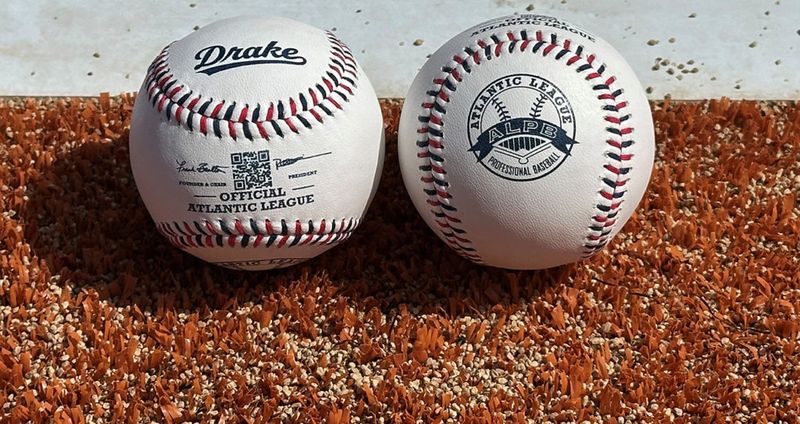
The Atlantic League built its identity around the baseball itself. In 2021, it introduced the Drake as its official ball, and by 2022 it was using that ball in every game, a rare move for any pro circuit and one the league describes as the first time in more than 100 years that a professional league manufactured its own official baseball.
A ball with a name, and a point of view
Drake is not a marketing flourish bolted onto a generic product. The ball is named for Ellis Drake, born February 16, 1839, in the Dry Pond section of Stoughton, Massachusetts, and died in 1912, the inventor the league credits with the two-piece, interlocking figure-eight cover that helped standardize the modern baseball. That detail matters because the Atlantic League is not just invoking a deadball-era footnote. It is claiming a direct line from the game’s material past to a league-run product that players actually use.
The league’s own explanation also places Drake inside the broader evolution of baseball construction. Before standardization in 1872, baseballs varied widely in size and weight, and the earlier orange peel style was fragile and inconsistent. The Drake name turns that history into a living object, one that sits in the glove of a pitcher, comes off a hitter’s bat, and gives managers and coaches a visible symbol of what the league wants to be: inventive, but still grounded in baseball’s core mechanics.
What the league says it built, and why that matters
The Atlantic League says the Drake project took more than three years of research and development, followed by laboratory, factory, and game-day testing. It says the ball continues to be tested annually and meets or exceeds professional specifications. Those are the kinds of details that matter most to the people who live with the ball every night, because any change in construction can affect grip, movement, carry, durability, and the way pitchers trust the seams.
That is where the Drake story becomes more than memorabilia. The baseball is the league’s chance to control one of the most important variables in the sport. When a league owns the ball, it owns a piece of the playing environment itself, from the feel in a pitcher’s hand to how long the cover holds up over a long season. The Atlantic League has built a reputation for experimentation, but this is a different kind of experiment: one that starts with a physical object, not a rule sheet.
History stitched into a modern product
The ball also carries a visual identity that links the Atlantic League to baseball’s past. It includes red and blue stitching inspired by early-20th-century American League balls, and the league says that red-and-blue stitching has been part of the ALPB ball since 2015. That choice gives the Drake a recognizable look, but it also signals intent. The league is not trying to hide the ball inside an anonymous modern standard. It wants the ball to be seen as Atlantic League property.
That visual distinction deepens the branding. A logo can sit on a scoreboard or a jersey, but a stitched baseball is a daily object, touched on every pitch and every play. By putting its own identity on the ball, the Atlantic League is making a statement about who sets the terms of the product on the field. In a sport where equipment is often assumed rather than discussed, that kind of ownership is meaningful.

A league that keeps pushing the edges
The Drake ball fits a larger pattern. The Atlantic League says it is Major League Baseball’s first Professional Partner League, and it has grown from six teams to 10. Over its 25-year history, the league says it has sent more than 1,400 players to MLB organizations and drawn more than 47 million fans. That scale matters because it puts Drake in the context of a league with real reach, not a novelty circuit looking for attention.
Rick White, the league’s president, is credited on the league’s leadership page with developing the proprietary Drake baseball. The league also launched DugoutTV in 2026, a dedicated streaming platform, which reinforces the same theme: control the product, control the presentation, and control more of the fan experience. Drake is part of that broader strategy, a baseball that says the league wants to define itself not only through who plays in it, but through the equipment those players use.
From museum case to game-night reality
Baseball history is full of objects that carry more meaning than they seem to at first glance. The National Baseball Hall of Fame and Museum treats bats, baseballs, gloves, spikes, and uniforms as central to understanding the sport’s history and cultural impact. Drake fits that lineage because it is both a working piece of equipment and a statement about how the Atlantic League sees itself.
The league has kept adding layers to the ball’s identity. In 2025, it became the first league to place a QR code on its official baseballs, with customizable QR codes on Drake balls. That move pushed the baseball even further into the league’s commercial and storytelling infrastructure, turning a game object into a platform for information and sponsorship. The league later created a sponsorship program for the official baseballs used in all 1,300-plus games, showing that Drake is now woven into the season’s business model as much as its baseball operations.
There was also a practical scale to the launch. A secondary report said the initial production run was 108,000 balls, and the balls were not intended for retail sale at that time. That detail underlines the point: Drake began as a league tool, not a souvenir. The Atlantic League made its own ball because it wanted to shape the game it was selling, from the seams on the ball to the identity wrapped around them.
The result is a baseball that carries the league’s history, its branding, and its ambitions in one stitched package. In a sport where small details can change the way a game feels, the Drake ball gives the Atlantic League something most leagues never claim: a direct hand in the game’s most basic object.