Backyard Wiffle Ball League builds a lasting baseball-style institution
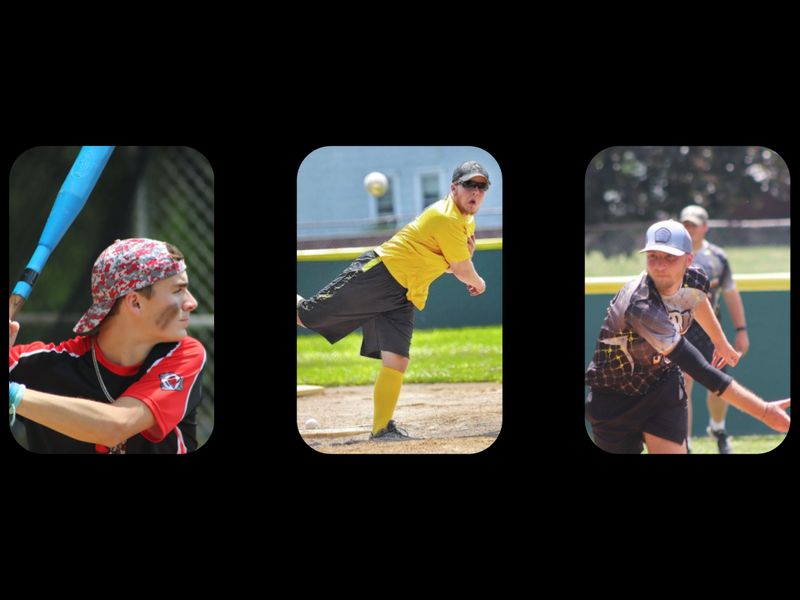
The Backyard Wiffle Ball League made itself durable by treating a backyard pastime like a real sports property. Founded by Kevin Sickle and Tom Hannon in 2004, the Wilkes-Barre, Pennsylvania, league is officially sanctioned by The Wiffle Ball, Inc. and built around a structure that looks more like a baseball operation than a pickup game, with news, schedules, standings, awards, a Hall of Fame, rules, and stats and records.
The league starts with structure
BWBL’s public framework gives the sport a calendar and a spine. Its three main events are the BWBL Charity Classic, the league season, and the Autumn Classic, and the Charity Classic always benefits a charity. That matters because the league is not organized around one-off gatherings; it is built around recurring dates, a competitive season, and a charitable event that returns every year in the same slot.
The league also identifies itself as a medium-pitch wiffleball league, which signals that the product is standardized rather than improvised. That kind of clarity is one of the reasons BWBL reads less like a casual neighborhood game and more like a local institution with its own operating model.
A rulebook that makes the game repeatable
The rulebook is where BWBL turns familiarity into consistency. The rules page was last updated on June 26, 2025, and it starts from a simple premise: fun and sportsmanship come first, including postgame handshakes. From there, it gets precise enough to support seasons across years, not just a single summer.
The field standards are exact. BWBL requires a 45-foot infield square, foul lines of at least 75 feet, center field at least 100 feet away, and an outfield wall between 3 and 15 feet high. The equipment rules are just as specific: the official ball must be made by The Wiffle Ball, Inc., and approved bats include the yellow Wiffle bat, the Loco Bat, WhatABat, Nerf bat, Blitzball bat, Louisville Slugger bat, and Moonshot bat.
That level of detail creates a stable competitive language. BWBL’s rules also spell out protests, conduct, pitching regulations, suspended games, and playoffs, which is exactly what a league needs once it wants results to mean something beyond a single afternoon.
Diamond City Park gives the league a home
A permanent field changes the status of any local league, and Diamond City Park is BWBL’s clearest signal of permanence. Construction began on Monday, August 20, 2012, and the park officially opened on Saturday, September 29, 2012. A field page says it was built with a $10,000 grant from the Pepsi Refresh Foundation and took almost a year of work to complete.
The park also carries the league’s memory. BWBL says Diamond City Park began as a dream in the minds of the Sickle boys back in 1989, which gives the field a longer origin story than the league itself. The design draws on classic Major League parks, with elements inspired by Fenway Park, the Polo Grounds, and Ebbets Field. That blend of nostalgia and local construction gives BWBL a home field that feels intentional rather than improvised.
Records and awards create a real history
Legitimacy in sports depends on memory, and BWBL has built a deep one. The league’s award history goes back to 2004 and includes champions, Cy Young honors, Season MVP, Playoff MVP, Rookie of the Year, and Sportsman of the Year. Those categories matter because they do more than crown winners, they preserve a hierarchy of performance and character.
The records pages push that archive forward season by season. BWBL’s public record pages show archived results through Season 22 in 2025, with American and National divisions documented along the way. That kind of recordkeeping is one of the clearest signs that a local league has crossed from activity to institution, because it allows players and fans to measure one season against another.
The league keeps its own media cycle alive
BWBL does not disappear when games end. Its News & Media presence includes the Weekly Walkoff Podcast, Artie’s Power Rankings, and active channels on Instagram, TikTok, YouTube, X, and Facebook. Those outlets keep the league visible between series and make the season feel continuous.
That media layer matters because it turns a local competition into a year-round conversation. Rankings, highlights, and social clips create a sense that the league is being watched and interpreted, not just played. For any local circuit trying to grow past pickup status, that’s a crucial step, because attention helps formal rules and archived results feel like part of a living sport.
Charity gives the games civic weight
BWBL’s charity events show how a sports format can pull community support into the same orbit as competition. Recent events have supported Shannon Levandoski-McCann during her battle with multiple myeloma, the Tyler Winstead Fund, the Colleen Shea Foundation, Sears’ Heroes at Home, and the North Wilkes-Barre Little League. The league has also staged events with names such as Adopting Baby Dane, which makes the charity calendar feel tied to real local needs, not abstract fundraising.
That approach gives the league more than a loyal following. It gives it a public role. When a wiffleball tournament becomes a vehicle for causes like these, it stops being only about who won on the field and starts becoming part of how the community organizes support.
BWBL sits inside the sport’s original story
The league’s authority is stronger because it is linked to the game’s own history. Wiffle Ball dates to 1953 in Fairfield, Connecticut, when David A. Mullany and a friend improvised the game with a perforated plastic golf ball and a broomstick handle. The Baseball Hall of Fame and Smithsonian have both documented that origin story, and The Wiffle Ball, Inc. says every Wiffle Ball has been manufactured in Connecticut, with the company headquartered in Shelton.
That lineage gives BWBL a useful foundation. It is a sanctioned league using the official ball from a sport born in a backyard, then formalized through rules, a field, awards, records, media, and charity. Other leagues can copy the same building blocks: set written standards, build a home field, archive every season, name awards, and tie one event each year to a local cause. BWBL shows that permanence in wiffleball does not come from scale first. It comes from repetition, recordkeeping, and a community that keeps showing up.
Sources
- [1]bwbl.net
- [2]leaguelineup.com
- [3]facebook.com
- [4]baseballhall.org
- [5]smithsonianmag.com
- [6]wiffle.co
- [7]blwwiffleball.com
- [8]youtube.com