Bandeja vs víbora: the overhead choice that shapes padel rallies
The best padel rallies are often decided long before the ball lands in the corner. A high lob forces the overhead choice, and that choice, bandeja or víbora, usually determines whether the team keeps net control or gets dragged into defense. In modern padel, the story is not how these shots look in isolation, but when elite players use each one to hold position, pin an opponent, or force a weaker return.
The overhead fork that shapes the rally
Padel’s governing structure makes this tactical decision feel more universal than stylistic. The International Padel Federation, the sport’s world body, sets the Rules of Padel and says it continually monitors the game with the ability to recommend changes. That matters because the overhead game sits inside a standardized rule set, yet the shot selection keeps evolving as players search for better ways to control the net.
That is why bandeja and víbora sit at the center of modern padel vocabulary. HEAD places both among the game’s core shots alongside the volley, lob, back-wall play, and drop shot, and coaching systems such as PadelMBA group them inside the aerial game because they are technically demanding responses to a lob. These are not decorative overheads. They are the pressure points where possession of the net is won or lost.
Why the bandeja is the control overhead
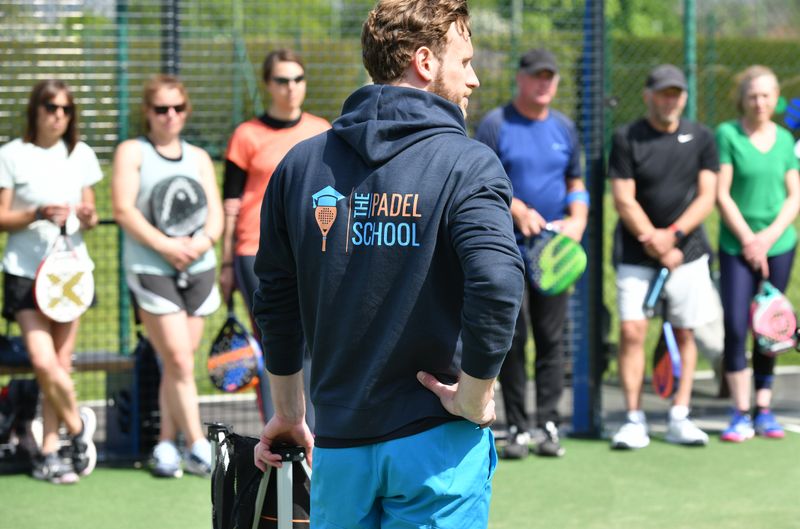
The bandeja is the safer, more structural choice. Padel.fyi describes it as a defensive overhead, often hit with slice, designed to keep opponents deep in the court, while The Padel School frames it as the shot to use when you are near the net after an opponent’s lob and want to stay in formation rather than chase a low-percentage finish. The practical logic is simple: keep your partnership advanced, slow the opponent’s recovery, and avoid giving away the net.
UK Padel’s technical explanation sharpens that picture. The bandeja uses backspin or slice, which helps the ball stay awkward and low after it lands. In live play, that means you are not trying to end the point immediately. You are trying to make the next reply uncomfortable, often when the lob has already forced you into a compromised contact point and your best value comes from preserving court position.
PadelUSA adds an important historical layer. The bandeja was originally created so attacking players could remain at the net instead of going for a risky smash. That origin explains why it remains one of the game’s most practical shots: it is built for control, not spectacle. Even as some players now hit it harder and with more effect, the core purpose remains the same, protect the net and make the opponents hit up.
Why the víbora is the pressure overhead
The víbora lives on the aggressive end of the same decision tree. Padel.fyi says the name means viper in Spanish, and the shot uses side spin rather than the slice or backspin that defines the bandeja. UK Padel describes it as a more wristy action with a chop-like motion, which is part of why it produces harder, nastier replies for the defending team.
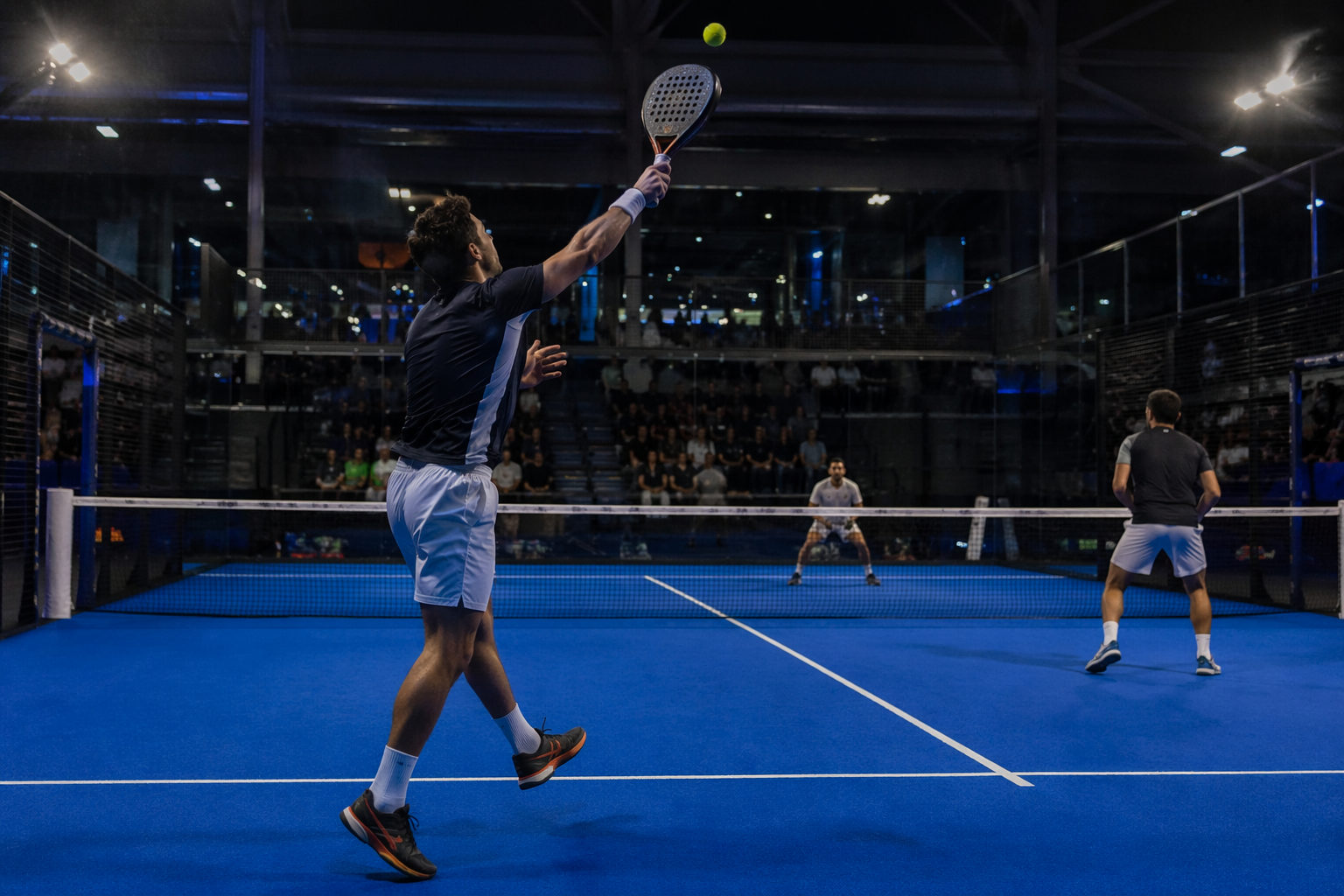
The Padel School is direct about the tactical difference: the víbora is the more aggressive option and is used when a player is balanced enough to go after the rally. Instead of merely keeping the point under control, the shot is intended to stress the returner, create a difficult bounce, and pull the point closer to attack. It is still an overhead built from a lob response, but it changes the tone from preservation to pressure.
That difference shows up in the situations that matter most. When an opponent is pinned in the corner or late on the recovery path, the víbora can turn a neutral overhead into a forcing shot. When the lob is difficult but the hitter still has balance and time, the víbora can set up a weaker ball that allows the net player to stay on the front foot. The risk is higher than with the bandeja, but the payoff is a more unstable return and a faster route to opening the court.
The tactical scenarios that decide which shot to hit
The clearest way to read the choice is through three common match scenarios.
• A difficult lob arrives when you are already close to the net. The bandeja is usually the safer answer because it lets you recover balance, maintain your position, and avoid donating the point with a rushed finish.
• The bounce comes fast and the contact point is still manageable. That is where the víbora becomes attractive, especially if you can strike with balance and use side spin to make the ball jump unpredictably off the glass or side fence.
• The opponent is pinned in the corner or recovering late. In that case, the víbora can be the more punishing option because it creates a nastier first bounce and a more awkward second contact, increasing the odds of a weak reply.
This is why high-level padel is less about choosing the most powerful overhead and more about choosing the overhead that protects your court shape. A bandeja says, stay advanced and continue the point from the net. A víbora says, keep the net but make the next ball uncomfortable enough to force a mistake or a floating defense.
Why coaching systems treat them as essential, not optional

The coaching ecosystem treats these shots as core rather than exotic. PadelMBA’s aerial game curriculum specifically includes bandeja, víbora, and smash variations because winning near the net is central to attacking padel. Padel.fyi also groups both shots inside the broader overhead family of responses to lobs, which gives players a clearer framework: these are not isolated tricks, but the main tools for dealing with a ball that has been lifted over the attacking team.
That framework matters for club players as much as it does for professionals. A player who only thinks in terms of “smash or no smash” misses the real strategic layer of padel. The better question is whether the situation calls for preservation or disruption, because the bandeja and víbora sit on opposite sides of that line while still serving the same net-preservation mission.
How elite play has made both shots central to the sport’s image
Premier Padel’s official match clips routinely showcase bandejas and víboras in decisive rallies, and that visibility tells its own story. These are not niche coaching terms tucked away in lesson plans. They are live-match weapons in the sport’s most visible stage, where the overhead choice often decides whether a team stays in control long enough to finish the point.
That elite exposure has also shaped how the wider padel market talks about the sport. Equipment brands, academies, and coaching programs now present the aerial game as a defining part of padel identity, not an advanced afterthought. The bandeja and víbora have become shorthand for the sport’s strategic personality: one shot protects structure, the other tries to break the opponent’s balance without surrendering the front of the court.
The decision that separates control from chaos
Padel’s overhead game is often explained as technique, but the real dividing line is tactical. The bandeja is the choice when the point is about keeping the net, resetting the opponent’s court position, and avoiding unnecessary risk. The víbora is the choice when the player has enough balance to turn the same lob into pressure, speed, and a harder defensive reply.
That is why this decision keeps showing up at every level of the sport. The lob creates the question, and the overhead answers it: protect the formation with a bandeja, or tilt the rally with a víbora.
Sources
- [1]thepadelschool.com
- [2]padelfip.com
- [3]padelmba.com
- [4]padel.fyi
- [5]ukpadel.org
- [6]padelusa.com
- [7]premierpadel.com