Ben Clarke emerges as footgolf's dominant force, eyes Harry Kane challenge
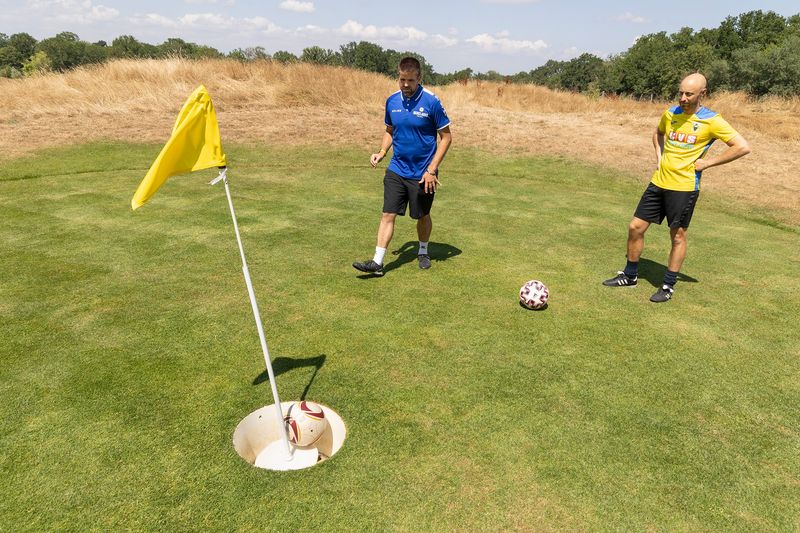
Ben Clarke left a PE teacher’s desk for the tee box, and footgolf has not stopped rewarding the gamble. The switch turned him into the sport’s most recognizable winner, a player with enough authority to make a challenge to Harry Kane sound less like a gimmick and more like a credibility test.
Clarke’s path from school sport to the top tier
Clarke’s rise matters because it came from the same grassroots place as the sport itself. He was not imported as a celebrity crossover or handed a shortcut into the field; he built his reputation through repetition, technical control, and results that kept coming. A FIFA profile dated Dec. 4, 2019 said he had recently won his third straight FootGolf World Tour title, a run that put him at the front of a sport still fighting for mainstream recognition.
That same profile added a detail that says a lot about footgolf’s short history and Clarke’s speed through it: he did not even know the sport existed in 2014. In five years, he had gone from discovering the game to beating the field at the world level. FIFA also noted that he was competing against ex-footballers including Roberto Ayala, a useful reminder that Clarke’s peers are not casual weekend players but athletes with serious ball-striking pedigrees.
Britclip described Clarke as the world’s number one footgolfer in an October 21, 2020 video, and said he quit his job as a PE teacher to go full-time in the sport. That is the real marker here. Footgolf had become worth a career decision, which tells you the competition had grown beyond novelty and into something that could justify sacrificing a steady profession for a shot at dominance.
What footgolf actually demands
The simplest mistake in footgolf is assuming football skill alone solves everything. It helps, but the sport is played with a size five football on golf courses, with 21-inch holes, so the target is tiny relative to the ball and the field of play is huge. That combination rewards striking quality, but it also punishes the kind of loose control that can be hidden in a normal kickabout.
Elite footgolf, at Clarke’s level, hinges on four things:

• Clean striking that sends the ball on the right line • Distance control, especially on long approaches • Reading the ground for slopes, bounce, and roll • A calm putting mindset once the ball is close enough to finish
That is why Clarke’s dominance is so useful to the sport’s image. A fan can understand a strong strike in football, but footgolf makes every shot a precision problem. The ball has to travel, stop, and settle in ways that expose touch, patience, and course management.
Why Harry Kane is the right crossover name
Clarke’s interest in challenging Harry Kane works because Kane sits at the center of the football audience footgolf wants. Kane is one of the most recognizable names in English football, so even a playful match would pull the sport into a bigger conversation without pretending it belongs to football’s top tier. That is the kind of attention footgolf needs if it wants people to stop treating it like a novelty and start treating it like a serious discipline.
The interesting question is how much elite football would actually translate. Kane’s clean contact, balance, and ability to hit different surfaces would absolutely matter. But footgolf asks for more than a big boot and a famous name, because the scoring pressure comes from repeated execution across a golf course, not a single highlight strike.
That is where Clarke’s edge would still matter. He has spent years learning how the ball behaves on turf, how far it runs after landing, and how to manage the final touch into a 21-inch hole. A superstar footballer might arrive with better raw power or better first-touch instincts, but Clarke already knows the sport’s angles and tolerances. That difference is why the challenge feels entertaining without being insulting to Clarke’s own resume.
The record behind the swagger

Clarke’s confidence is backed by a trophy haul that is already being framed in major-league terms. His Instagram bio identifies him as a 5x World Tour Champion, 6x European Tour Champion, 6x UK Tour Champion and 11x Major Champion. Those are not the numbers of a specialist who got hot for a season; they are the numbers of someone who has set the standard across multiple circuits.
Britclip also said Clarke won the 2017 and 2019 European Championships with Team UK at Celtic Manor Resort, the former Ryder Cup venue. That detail matters because it places footgolf in a setting borrowed from golf’s established prestige, which is part of how the sport keeps building legitimacy. When the game is played on a course with the history of Celtic Manor Resort, the argument that footgolf is only a backyard diversion gets a lot harder to make.
The institutional side is catching up too. FIFG describes itself as the world’s governing body for footgolf, and its BlueGolf tournament-results page lists Clarke with residence in Gatwick, England. That kind of record-keeping is what serious sports do. It creates a paper trail around champions, rankings, and tour standing, and Clarke’s name already sits comfortably inside it.
Why Clarke is becoming the sport’s face
Clarke’s story works because it joins sacrifice to status. Leaving teaching gave him the time to chase footgolf full-time, and the titles followed fast enough to give the move real weight. He is now the sort of player who can stand at the center of the sport’s pitch to football fans, because he has the results to back up the swagger.
That is what makes the Harry Kane angle more than a headline flourish. It is a signal that footgolf has developed a player good enough to reach outward toward the mainstream while still being rooted in the sport’s own competitive hierarchy. Clarke is not just visible inside footgolf. He is the reason the rest of the sporting world has to look twice.
Sources
- [1]observer.co.uk
- [2]inside.fifa.com
- [3]youtube.com
- [4]fifg.bluegolf.com
- [5]instagram.com
- [6]fifg.org