Benepe Cup shows how Major League Quadball became a title league

What made the Benepe Cup the trophy that matters most in Major League Quadball? It is the cleanest proof that the sport has been repackaged into a capped, summer-long league with a finish line built to feel like a real title chase. MLQ runs its season from June 1 to August 30, limits the field to 12 teams from the United States and Canada, and sends every one of them into the same championship path for one winner.
Why the Benepe Cup defines MLQ
Major League Quadball does not sell itself as a loose tournament circuit. It presents quadball in an entertaining, highly consumable format that borrows the logic of top sports leagues: standardized schedules, high-level officiating, in-depth statistics, and live and recorded footage. That matters because it changes what the championship means. The Benepe Cup is not an open-ended prize that can be chased indefinitely; it is the destination of a fixed league structure, and only one club leaves with it.
That structure gives the trophy its force. When all 12 teams qualify for the championship, the cup becomes the final answer to a season that has already been curated for television-style clarity, competitive balance, and clean narrative arcs. The league’s own framing makes the point plainly: the championship is the conclusion of the official season, not a side event hanging off the edge of the calendar.
A trophy rooted in the sport’s origin story
The name Benepe carries the sport’s earliest history with it. Quadball began at Middlebury College in 2005, created by Alex Benepe and Xander Manshel, before it grew into a global community with its own rules, culture, and pipeline of athletes. Naming the league trophy after Benepe ties the modern product back to the campus experiment that started it all.
That contrast is part of the cup’s meaning now. MLQ says quadball is played in over 30 countries, and one source places the sport at nearly 600 teams in 40 countries. The game may have traveled far beyond Vermont, but the Benepe Cup shows how the North American version has been organized into a sharper domestic showpiece.
The title lineage is starting to look like a real league history
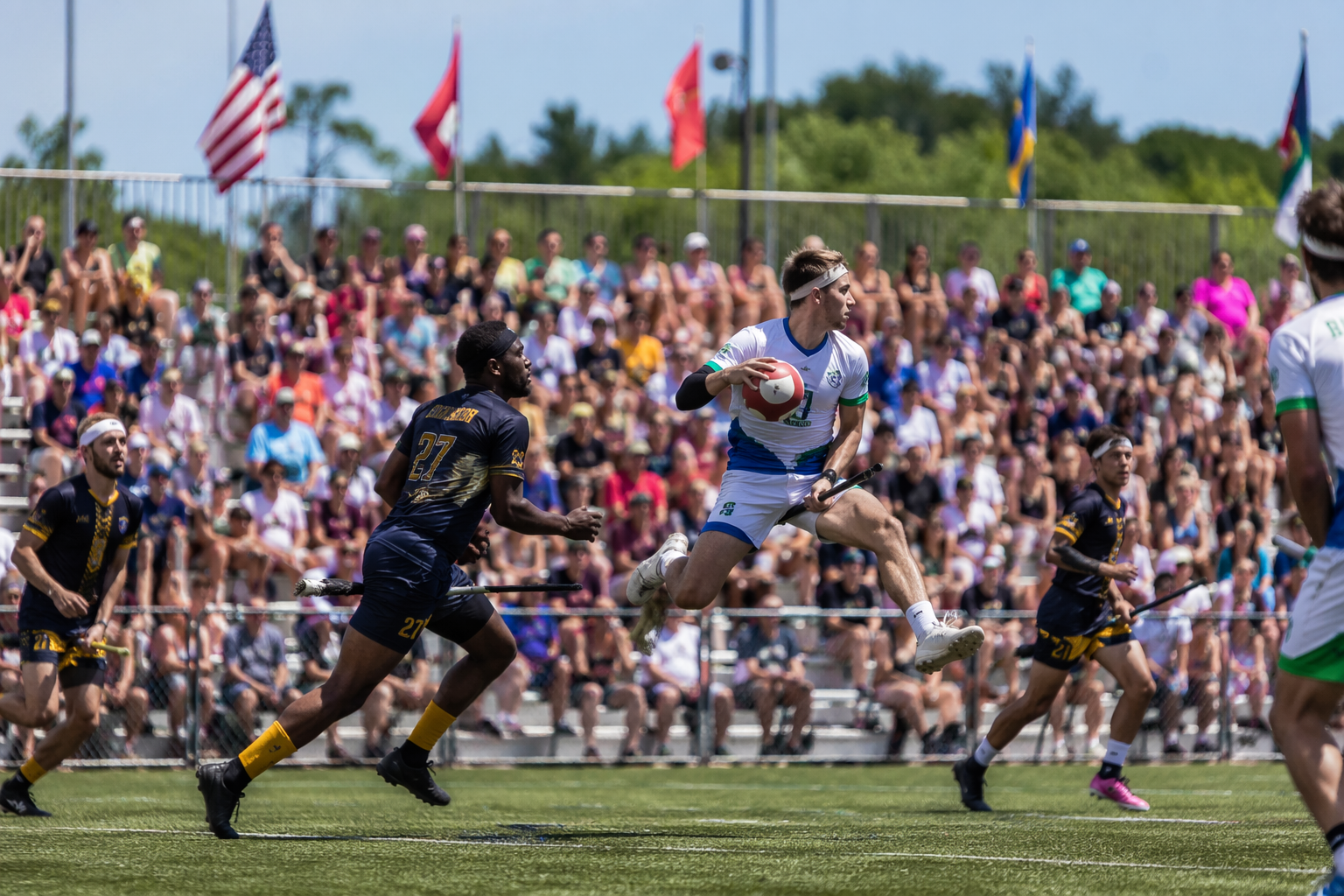
Every league needs names that carry weight, and MLQ has already built a usable title lineage around the Benepe Cup. Boston Forge were one of the first MLQ franchises, debuting in the inaugural 2015 season. They have reached five championship finals and won the Benepe Cup in 2015, 2016, and 2019, which gives the league an early dynasty and a franchise that immediately grounded the competition in history.
Austin Outlaws then took the league into a different phase. They completed the first three-peat in league history after sweeping Chicago in the finals, finishing an undefeated season in the process. That run matters because it created the first modern dominance story in MLQ, the kind of arc that turns a championship into a weekly reference point rather than a one-night outcome.
New York Titans added the next layer. They won their first Benepe Cup title in 2024 after finishing runner-up in the inaugural final and again in 2021, a path that shows how the league can produce long arcs of pursuit before payoff. San Antonio Soldados pushed the story further in 2025, winning their first title in their first finals appearance and becoming the fourth franchise to claim the cup. In the title game, they beat New York 155-100 in game one and 155-70 in game two, a clean statement that the old contender tree is no longer the whole map.
That mix is what makes the Benepe Cup feel like a proper league trophy. Boston gave MLQ its early legitimacy, Austin gave it a dynasty, New York gave it a redemption run, and San Antonio proved expansion teams can break through.
Championship weekend is built like a package, not just a final
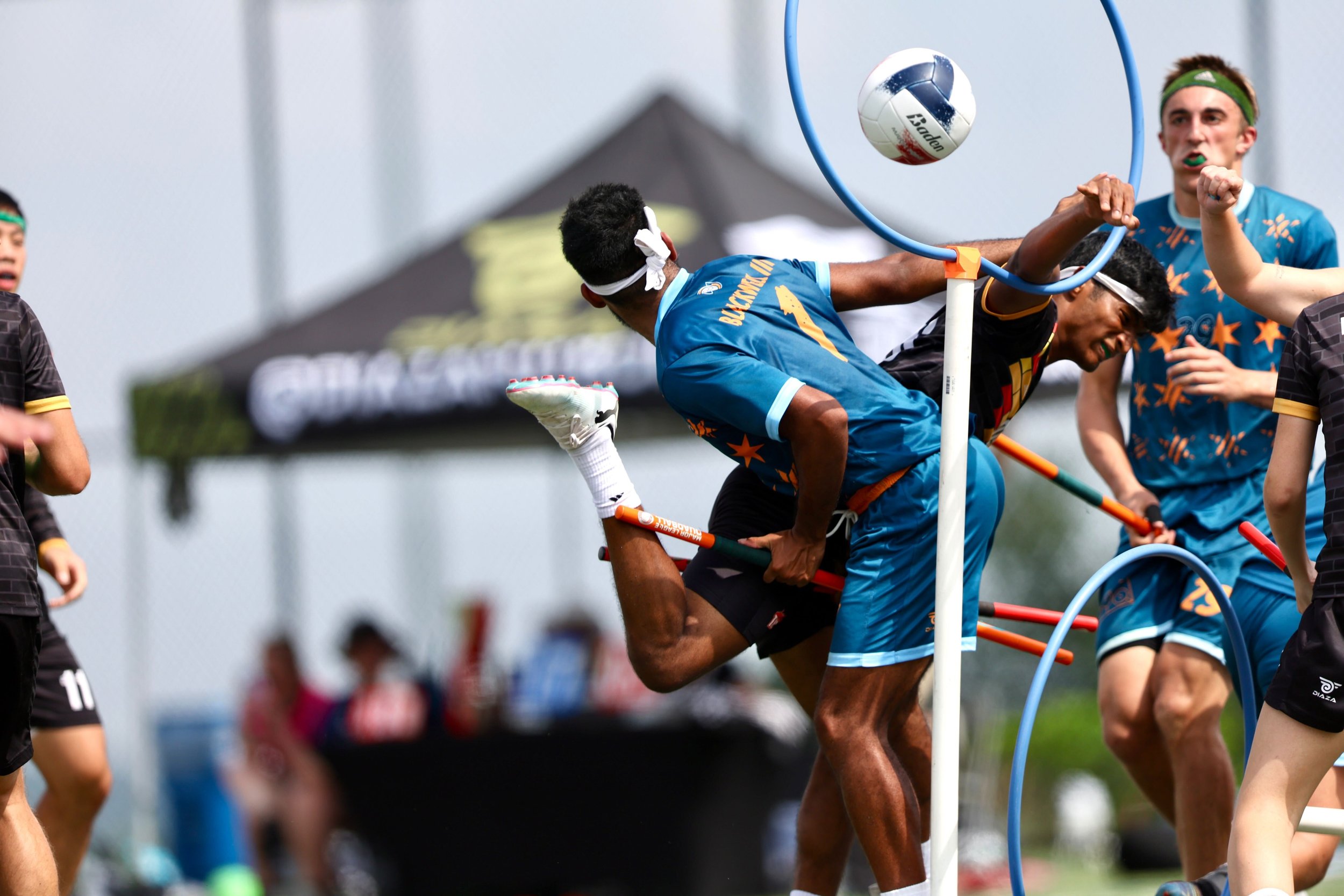
MLQ has also made the championship weekend itself part of the product. The format includes the Benepe Cup final bracket, the Next Gen Showcase, and Take Back the Pitch. The Next Gen Showcase features franchise practice-squad athletes, which gives the league a visible development layer instead of hiding its depth behind the main roster cards.
Take Back the Pitch gives the event a second purpose. It is framed as creating opportunities for gender-diverse athletes and challenging misogyny and transmisogyny in the sport, which makes the championship weekend more than a bracket. It is a statement about who belongs in quadball and how the league wants to present itself to the broader sport.
The tournament format reinforces that message. MLQ says the championship begins with play-in games, then moves into a best-of-three bracket. In 2024, the event opened with a play-in bracket on Saturday morning before the remaining eight teams entered the championship bracket that afternoon and continued through Sunday. By the time the field is narrowed, the league has already staged the season like a pro property, with elimination rounds, a defined weekend rhythm, and a trophy waiting at the end.
Why the Benepe Cup is different from the IQA World Cup
The IQA World Cup still carries quadball’s broadest international prestige. It is the game’s global crown, the event that speaks for the sport across countries and federations. The Benepe Cup is something different: it is the title that explains how quadball has been transformed inside North America from a volunteer-run campus game into a packaged league with branding, standings, championship presentation, and rivalries that can be sold all summer.
That difference is the whole story. The World Cup says quadball is global; the Benepe Cup says MLQ has become a title league. One trophy measures the sport’s reach. The other measures its maturity.
Sources
- [1]mlquadball.com
- [2]iqasport.org