Bentonville kickball rulebook reveals precise field dimensions and safety rules
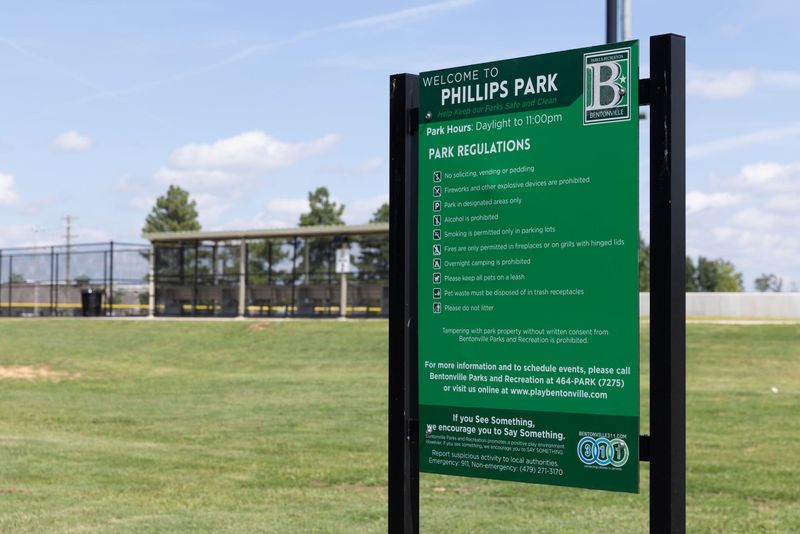
Bentonville’s adult kickball rulebook treats the field like a piece of public infrastructure, not a park-game suggestion. The pitching rubber sits 43 feet from home plate, each base is 60 feet apart, and the defense is lined up diagonally from first base to third base. Those measurements, paired with a catcher’s box set about 36 inches outside the back of the batter’s box, define where the play starts, where the defenders can stand, and where the close calls begin.
The diamond is exact for a reason
Bentonville Parks and Recreation uses WAKA rules unless the local rulebook says otherwise, and that matters because kickball only looks loose from a distance. The standard geometry keeps the game readable: a familiar baseball-shaped diamond, but with a rolling pitch, a diagonal defensive line, and a catcher’s box that creates space behind the plate instead of crowding the kicker. The setup is designed to keep base paths consistent for every league night, every park, and every crew that has to draw the lines.
The diagonal defense from first to third is one of the clearest signs that this is not backyard kickball. It gives the defensive team a fixed alignment and reduces the arguments that erupt when players drift too close to home or clog the infield. Bentonville also says the field must be judged safe enough for play to “reasonably avoid injury,” which puts a parks staffer’s judgment at the center of the setup before the first roll reaches the plate.
That geometry lines up with WAKA’s broader framework. The official game format uses 10 fielders and 7 innings if time allows, which turns the sport into a structured adult league game rather than a free-form pickup session. WAKA also frames the game around a strike zone that extends 1 foot on all sides of home plate and above it, with two base coaches allowed, bouncies permitted, and force outs built into the flow of play. Those details are why the field markings matter as much as the scorebook.
Safety starts at first base and on the feet
The most collision-prone moment in kickball is often the simplest one: the runner beating the throw to first. Bentonville addresses that with a safety base on some fields, where the runner uses the orange base and the defender uses the white base. That split prevents the first baseman and the kicker-runner from arriving at the same piece of plastic at full speed, which is exactly the kind of pileup that turns a rec-league game into an injury report.
Footwear gets the same practical treatment. Closed-toe shoes are required, rubber molded cleats are allowed, and metal or metal-tipped cleats are banned on synthetic turf. That distinction reflects how often kickball lives on multipurpose municipal fields instead of purpose-built facilities, where one weekend game can share space with soccer, softball, and youth recreation. When parks staff are juggling different surfaces, the shoe rules protect both the players and the turf.
Bentonville also leaves room for the social side of the sport without losing control of it. Teams may wear matching uniforms or costumes, but they are not required, which fits the rec-league atmosphere without turning appearance into a compliance issue. The important line is behavioral, not cosmetic: unsportsmanlike conduct can lead to ejection and suspension, a reminder that the league expects the same discipline on a kickball field that it expects on any other organized playing surface.
How the ball, the outs, and the innings are actually handled
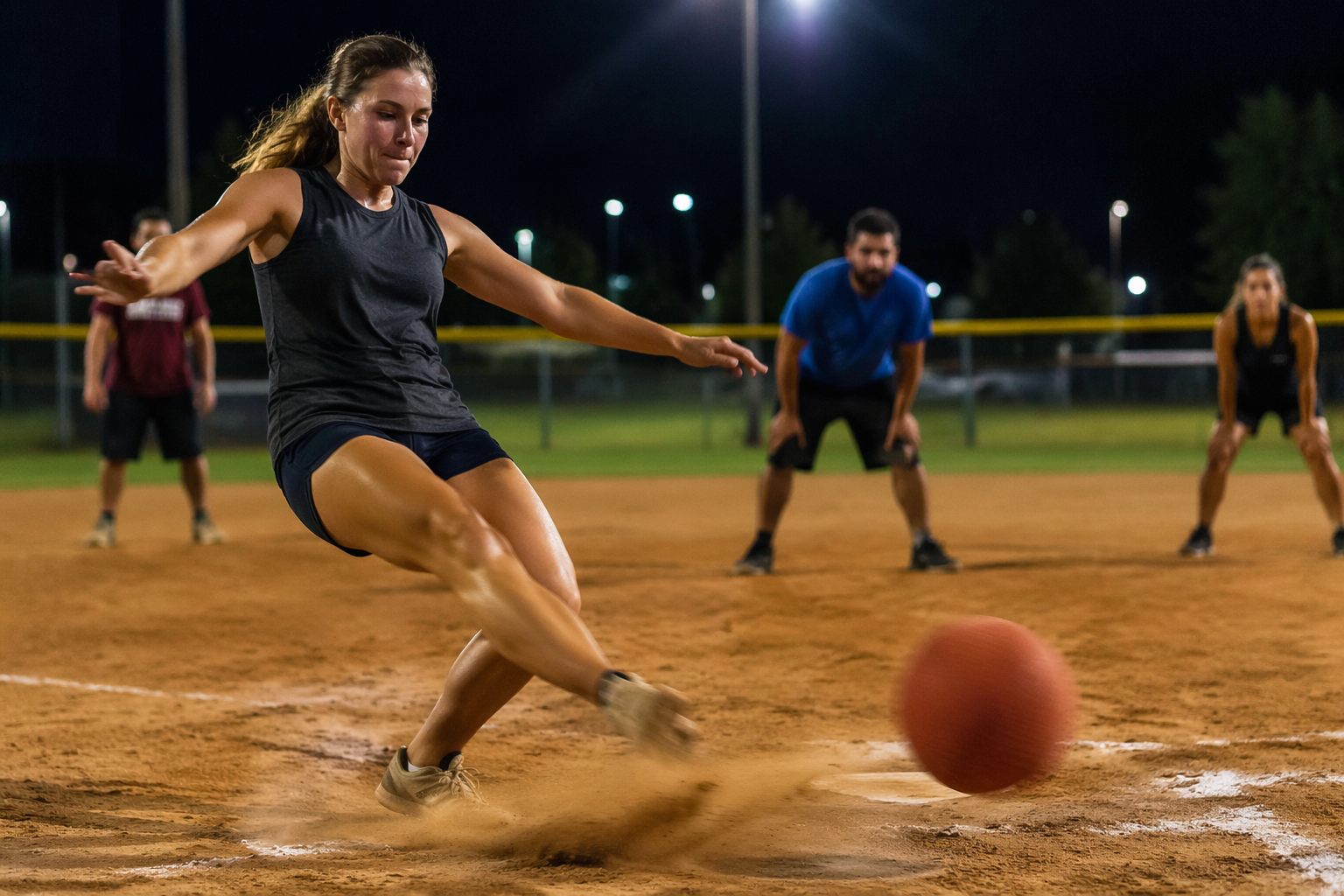
WAKA’s official ball is a red, 10-inch ball inflated to 1.5 pounds per square inch, and that specification matters because kickball is built around a ball that can be rolled cleanly and kicked with control. The sport’s mechanics start when the pitcher rolls the ball to the kicker, and the play can end in the same familiar ways that baseball fans understand: a catch, a force play, or a tag. The structure is simple enough for new players to follow and formal enough for league organizers to enforce consistently.
The strike zone and the pitching setup help define the pace. With the strike zone set 1 foot on all sides of home plate and above it, the pitcher and kicker both know the space they are working in before the roll begins. That clarity cuts down on disputes, especially in leagues where mixed experience levels and informal rosters can make every close pitch feel negotiable.
The WAKA rule set also sharpens the sport’s pace with limits on how the defense can respond. One base is awarded on an overthrow, and forced outs remain part of the game, so a defensive mistake does not automatically turn into chaos. Those mechanics reward clean fielding and quick decisions, but they also keep the game moving, which is part of why adult kickball has scaled from neighborhood leagues into a more standardized format.
Why this setup feels casual but operates like a real league sport
Kickball has always carried a public-school and playground identity, but its modern adult version is more organized than its reputation suggests. A commonly cited history timeline credits Nicholas C. Seuss with inventing “kick baseball” in Cincinnati in 1917, then traces wider use through American schools and playgrounds in the 1920s and 1930s. That lineage explains why the game still borrows a baseball-like field even as the rules bend toward rolling pitches and open baserunning.
The modern adult-league era arrived much later. The same timeline points to the late 1970s in Virginia as the moment the first organized adult kickball league formed, long before WAKA launched in 1998 and helped turn adult kickball into an international pastime through ClubWAKA. That growth is the reason Bentonville’s rulebook reads so carefully: once a recreation game becomes a league product, the field has to be drawn the same way every time.
YMCA of Greater New Orleans uses the same WAKA framework, which reinforces how widely the standards travel. The 10-fielders, 7-innings format, the strike zone, the safety rules, and the clear equipment standards all work together to make league play portable from city to city. For parks staff and captains, the lesson is straightforward: a clean kickoff to the season depends on drawing the 43-foot pitching distance correctly, keeping the bases at 60 feet, respecting the diagonal defense line, and enforcing the shoe and safety-base rules before the first inning starts.
That is the hidden architecture of kickball. The sport stays approachable because the rules are exact, and the game stays safe because the field is built to keep runners, defenders, and parks crews from guessing where the next collision might happen.