Betty Weed, Diane Heims shaped racquetball’s early women’s outdoor scene
Betty Weed did more than win the first women’s Outdoor National Singles title in 1974. By beating Joy Koppel in the inaugural event, she gave the division a starting point, a champion, and a record that made the competition feel established before the field had even settled. When Diane Heims followed by taking the 1975 title, then Martha McDonald edged Weed for the crown in 1976, the early women’s outdoor scene began to look less like a novelty and more like a real ladder.
Weed’s inaugural win gave the division a starting point
USA Racquetball’s Betty Weed Hall of Fame page fixes the key detail that matters most for the sport’s memory: Weed won the very first women’s Outdoor National Singles division in 1974, defeating Joy Koppel in the inaugural event. That result matters because first titles do not just fill a line in a record book. They create the baseline that later champions are measured against, and they tell the rest of the field that the event is worth entering, following, and building around.
Weed stayed in the center of the conversation as the division matured. In 1975, she finished second to Diane Heims, and in 1976 she again reached the final before finishing second to Martha McDonald. That run of results shows a player who was not merely the first champion but part of the sport’s early structure, returning as the field deepened and helping define what elite women’s outdoor racquetball looked like in practice.
Heims made rapid ascent look normal
Diane Heims is the perfect counterweight to Weed in this origin story because her profile captures how open the early game still was. USA Racquetball describes Heims as one of the bold early women’s outdoor players, and the record attached to her name is striking: four major outdoor titles overall, including three singles championships and one doubles championship. She did not just win once. She helped establish a standard of repeated success that made outdoor racquetball feel durable.
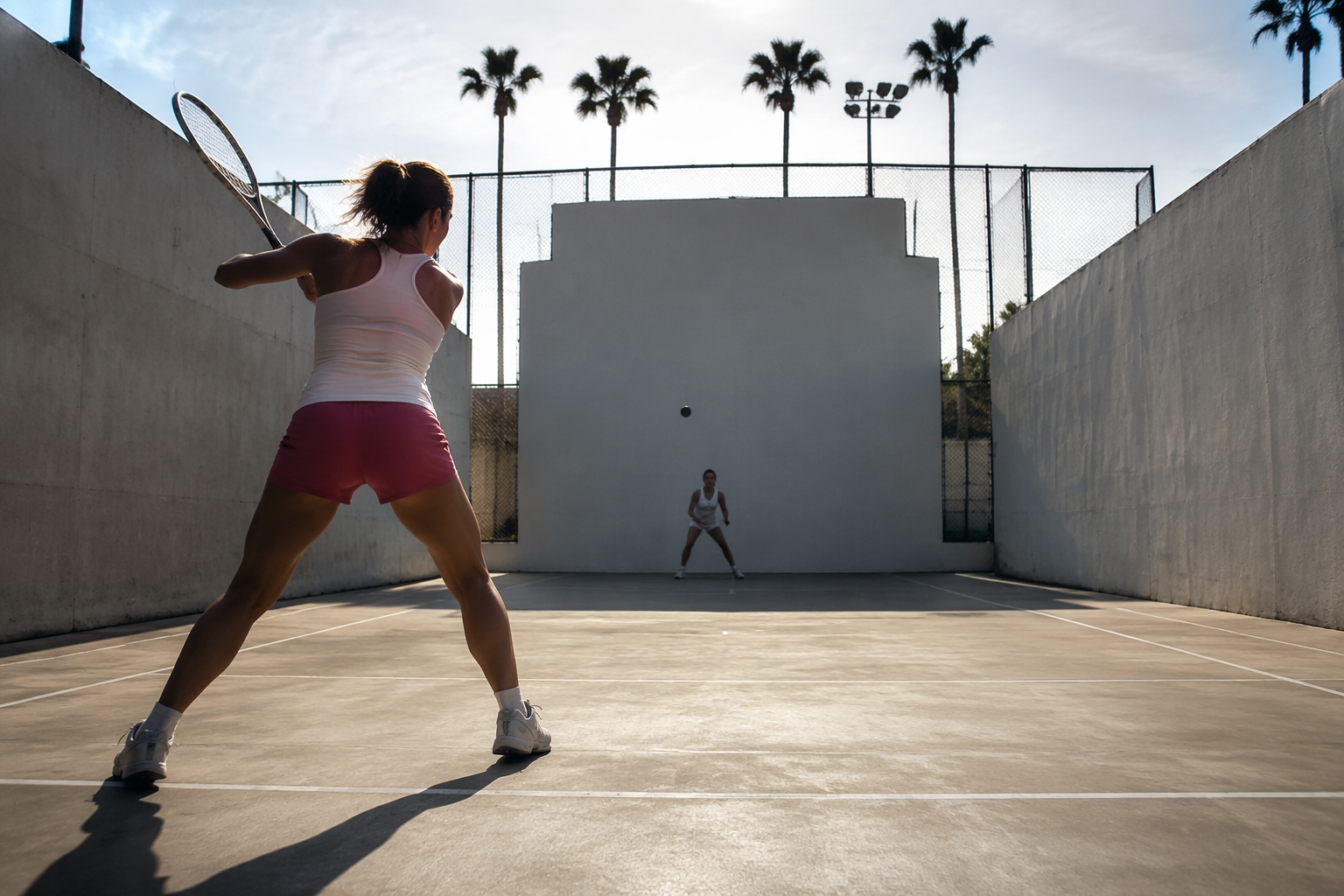
The most revealing detail is how quickly she arrived. Heims won the 1975 women’s singles title about six months after picking up a racquet. In a mature sport, that kind of ascent would look impossible. In outdoor racquetball’s early years, it shows how fresh the competitive ecosystem was, and how quickly committed athletes could move from newcomer to champion. Her title over Weed in 1975 gave the women’s outdoor draw another layer of legitimacy, because it showed that the inaugural champion could be challenged and beaten by someone new, and the event would only gain stature from it.
Repeated finals turned the division into a real competition
The early women’s outdoor nationals mattered because they produced continuity, not just one-off winners. Weed’s 1974 title, Heims’s 1975 championship, and Weed’s return to the final in 1976 against Martha McDonald created a visible chain of results that made the division legible to players and fans alike. A sport becomes credible when its best names keep meeting, when the title changes hands, and when the final itself becomes a reference point.
That sequence also shows how reputation was built through competition. Weed became more than the first winner because she kept appearing in the decisive rounds. Heims became more than a newcomer because she converted a very short introduction to the sport into a major title. Martha McDonald’s 1976 win over Weed added another name to the early championship map and showed that the women’s draw was already expanding beyond its first stars.
The broader outdoor scene helped women’s titles carry weight
The women’s division did not develop in isolation. USA Racquetball’s Greg and Martha McDonald Hall of Fame page says Greg and Martha met on the University of Florida’s outdoor courts in August 1973, and that they were part of the first-ever National Outdoor Championships played in California in the mid-1970s. That detail matters because it places the women’s early titles inside a broader outdoor culture that was still taking shape across courts, coed pairings, and cross-country events.
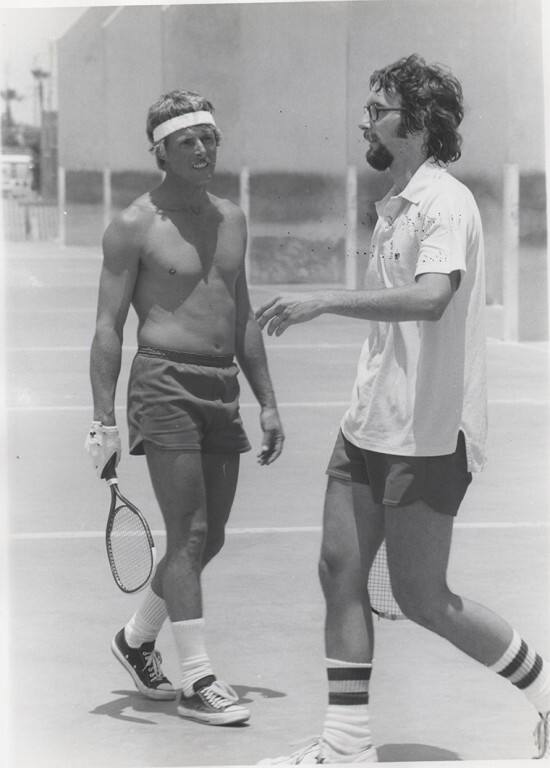
The same page notes that Greg and Martha McDonald became one of outdoor racquetball’s most enduring and decorated men’s and mixed doubles tandems. That kind of staying power is important to the women’s story because outdoor racquetball’s identity was being built through partnerships, repeat appearances, and a public scene that rewarded both singles champions and players who showed up again and again. The sport was not waiting for credibility to be handed down from elsewhere. It was creating it through the people who kept returning to the courts.
Brumfield helped bring elite indoor status into the outdoor game
Charlie Brumfield’s Hall of Fame page adds the last piece of the legitimacy puzzle. USA Racquetball says Brumfield was one of the founding fathers of both indoor and outdoor racquetball, and that he helped legitimize outdoor racquetball within the indoor pro community by encouraging many top indoor pros to compete in the initial outdoor championships. That mattered because elite participation changes how a format is perceived. If top indoor players were willing to cross over, the outdoor game could no longer be dismissed as a side attraction.
That crossover pressure helped the women’s titles mean more. Weed’s first championship, Heims’s rapid rise, and the McDonalds’ early involvement all unfolded inside a competition that was trying to prove it belonged alongside the indoor game, not beneath it. The women were not peripheral to that effort. They were central to it, because their finals, rivalries, and repeat appearances helped turn outdoor racquetball into a recognizable, competitive scene with its own standards and its own history.
The early women’s outdoor game became credible because its best players kept making it look serious. Weed gave it the first title, Heims gave it a fast-rising challenger with real range, and the early finals against Koppel and McDonald turned that first championship into the start of a durable competitive identity.