British Dodgeball explains the official five-ball court size and setup
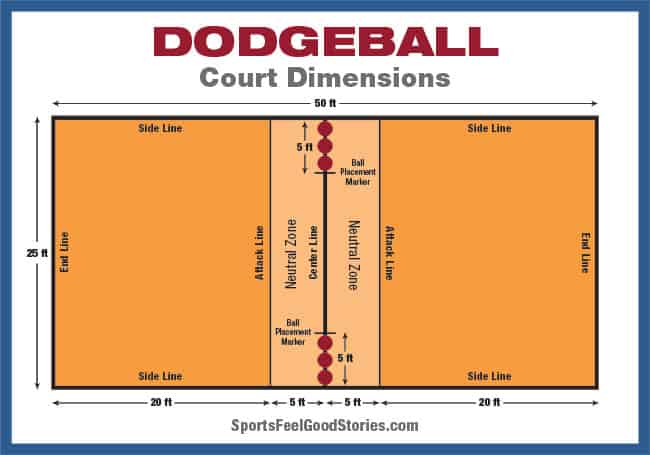
British Dodgeball’s five-ball court is 17 meters by 8 meters in the standard setup, with the width fixed and the length allowed a narrow range when venues do not fit the ideal. It is measured, marked, and adapted with tactical purpose.
The standard five-ball court is smaller than most casual players expect
When a hall cannot fit the full 17 meters, the permitted length still has to sit between 16 meters and 17.99 meters, but the width stays fixed at 8 meters. That fixed width is the key detail casual players often miss: dodgeball is not just about how far a ball can be thrown, it is about how much lateral ground each team must defend.
A narrower or wider court changes the rhythm immediately. In British Dodgeball’s format, the width controls team separation and side-to-side movement, so even a small change in floor space can alter the entire feel of a match. A shorter court compresses reaction time and makes the opening rush more dangerous, while the standardized width preserves the same side-to-side challenge from venue to venue.
Length can flex, but the court never loses its structure
British Dodgeball’s 2023/24 court diagrams build the official layout to adapt when indoor space is limited. The diagrams include a full-size court, a shorter-length court, and labeled player return areas. In practice, organizers can adjust the length, but not the core shape of the game.
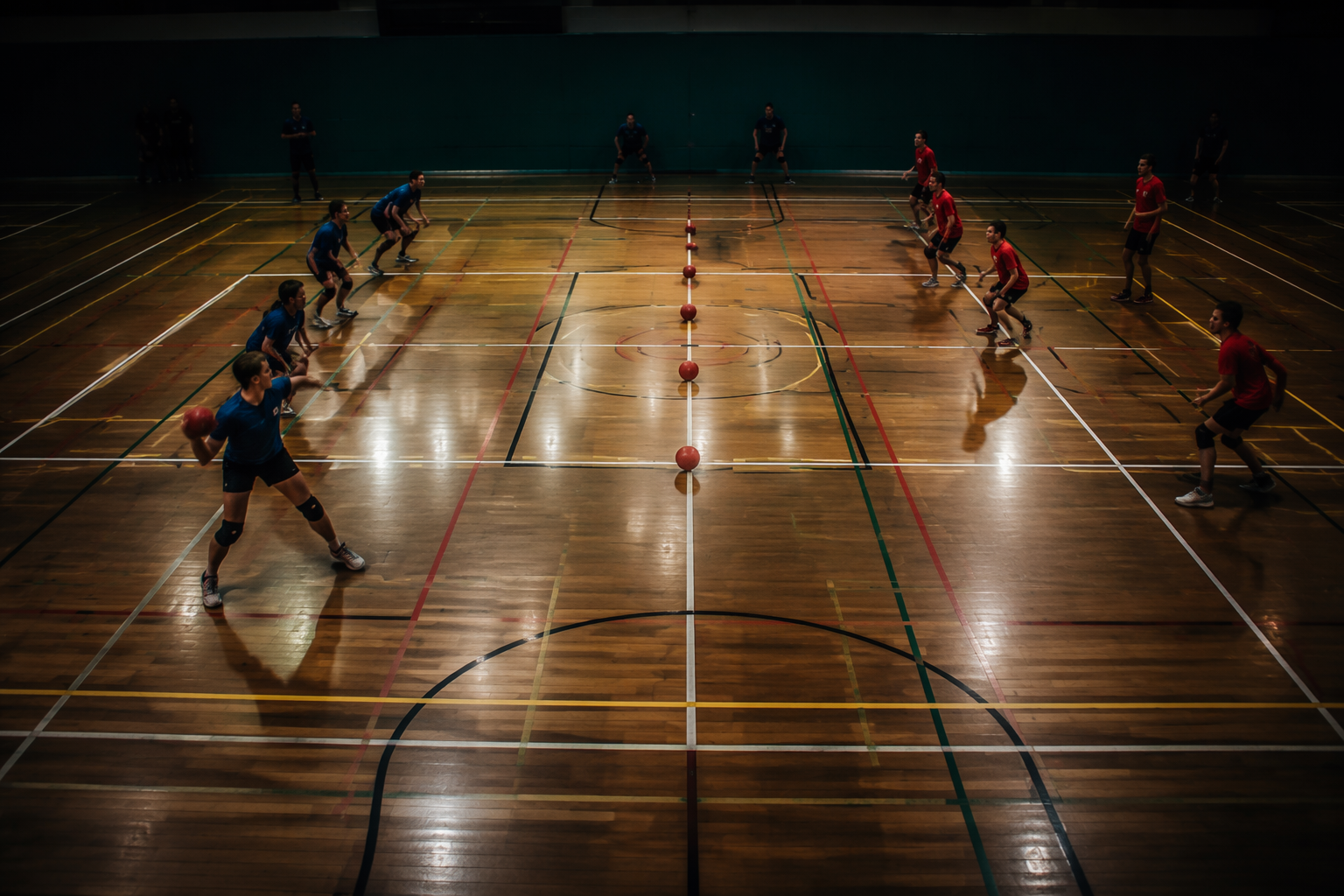
The most important threshold comes when the available length reaches 19 meters or more. At that point, play still uses a 17-meter court length, but with a minimum 1-meter retriever area at each end. If the space sits between 18 and 19 meters, retriever space is still managed as part of the setup.
Retriever areas are a pace tool, not just extra floor space
Retriever lanes are one of the most underrated parts of the layout. When they are present, they help keep the ball supply organized and reduce the scramble that happens when every spare ball is chased along the gym walls. That keeps the game fast, but it also makes the mechanics cleaner: balls are returned predictably, and the live court is not constantly interrupted by chaos at the edges.
British Dodgeball’s 2023/24 diagrams also label player return areas. Eliminated players still have a place in the system, and the same goes for ball recovery. That movement stays around the court instead of spilling into the playing lane itself.
The lines shape tactics as much as they shape officiating
Court markings are not decoration. They define where players stand, where they throw, how officials judge movement, and when a violation has occurred. British Dodgeball treats those markings as part of the rulebook because they determine how the game is actually played, not just how the floor looks before first rush.
That is why the neutral zone and player return area matter so much. The neutral zone separates the teams at the start and frames the opening rush, which is often the first tactical battle of a match. A well-marked court gives officials hard boundary lines for safety and gives players clear reference points for footwork, ball control, and pressure throws.
Court size changes the match even when the rules do not
The same five-ball rules can produce very different games depending on the venue. A shorter court shrinks the distance between teams and makes the first exchange faster and more dangerous. A more open hall creates better throwing angles, but it can also open space for dodges, catches, and cross-court pressure that would not exist on a tighter floor.
That is why width is so important. With 8 meters fixed across British Dodgeball’s setup, teams know the lateral space they have to cover. Defenders can plan their spread with far more certainty even when the length bends slightly around venue constraints.

British Dodgeball sits inside a broader rule ecosystem
British Dodgeball’s Five Ball Rules are based on the European Dodgeball Federation’s Five Ball Rules. The European Dodgeball Federation’s rules document organizes the game around the playing area, dimensions, zones, retrievers, and boundaries.
The World Dodgeball Federation’s 2022 rules document uses the same logic, with sections for the playing area, dimensions, lines on the court, and zones and areas. The World Dodgeball Association also publishes an official court diagram and a rules framework built around the playing area and court layout.
Other dodgeball formats use different dimensions
“Dodgeball court” does not mean the same thing everywhere. In Playworks’ standard school-game setup, the court is a 40-yard by 20-yard rectangle split by a center line into two squares. California State University Channel Islands uses a field at least 50 feet by 30 feet, with attack lines 3 meters from the centerline.