Campaigners push back against pay-to-play padel courts in London
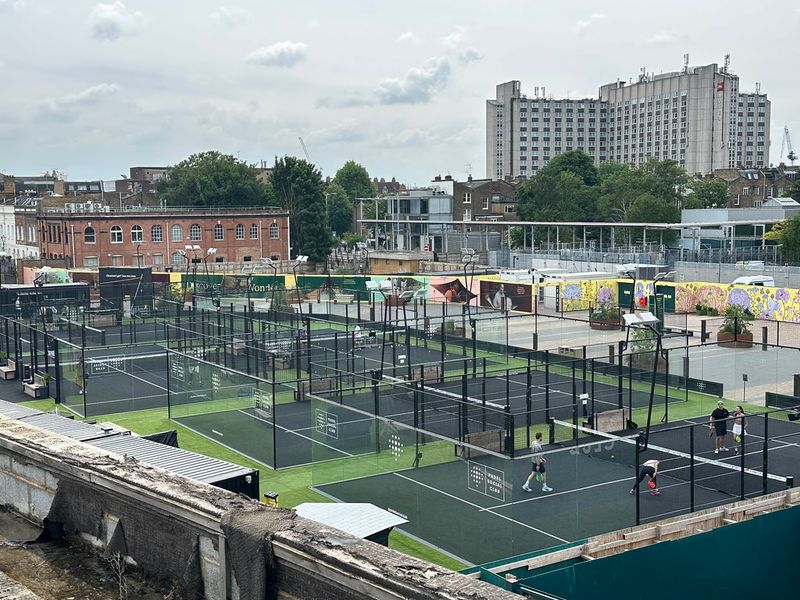
Community space has become the real battleground in London’s padel boom. What looks on paper like a fast-growing sport is, on the ground, a dispute over who gets access to land, who pays, and what gets lost when a public or low-cost facility is turned into a premium court booking.
The backlash is about space, not just noise
In February 2025, The Guardian captured a complaint that was already spreading beyond the sport itself: affluent English towns and suburbs were pushing back against the noisy rise of padel tennis. The criticism was no longer only about whether the game sounds disruptive. It had become a planning issue, with neighbours objecting to nuisance, amenity and the way a new sport can alter a local area without much say from the people who live there.
That tension is sharper in London, where every square metre carries a price and leisure developers can make a strong commercial case for padel almost anywhere. The sport’s popularity makes conversion projects attractive, but the people living nearby often see something else entirely: the quiet removal of shared recreational space and its replacement with a model that serves those who can afford to book it.
Lee Valley showed how quickly the politics can turn
The clearest sign of how sensitive padel has become came in July 2025, when plans to replace the London 2012 Olympic and Paralympic tennis courts at the Lee Valley Hockey and Tennis Centre with padel courts were shelved after a backlash. The plan had all the ingredients for a local fight: a legacy public venue, a change in use, and the sense that a community asset was being handed over to a narrower, pay-to-play model.
The Standard said a petition opposing the Lee Valley proposal drew almost 1,400 signatures, a number that showed the depth of feeling around the site. Because those tennis courts were built for the London Games, opponents framed the conversion as more than a redesign. It looked to them like a betrayal of the Olympic legacy, turning a public-facing sports facility into something more exclusive at the very moment when padel was looking for room to expand.
Bethnal Green turned access into the sharper argument
East London provided another flashpoint. The BBC reported that hundreds of people in north-east London signed a petition against a padel court in Bethnal Green, and the dispute took on a social edge because the local roller-skating community said it had been pushed out. That detail matters because it shifts the story from abstract planning policy to a very specific loss of shared culture: one group’s access to a familiar space was displaced by another group’s paid booking model.
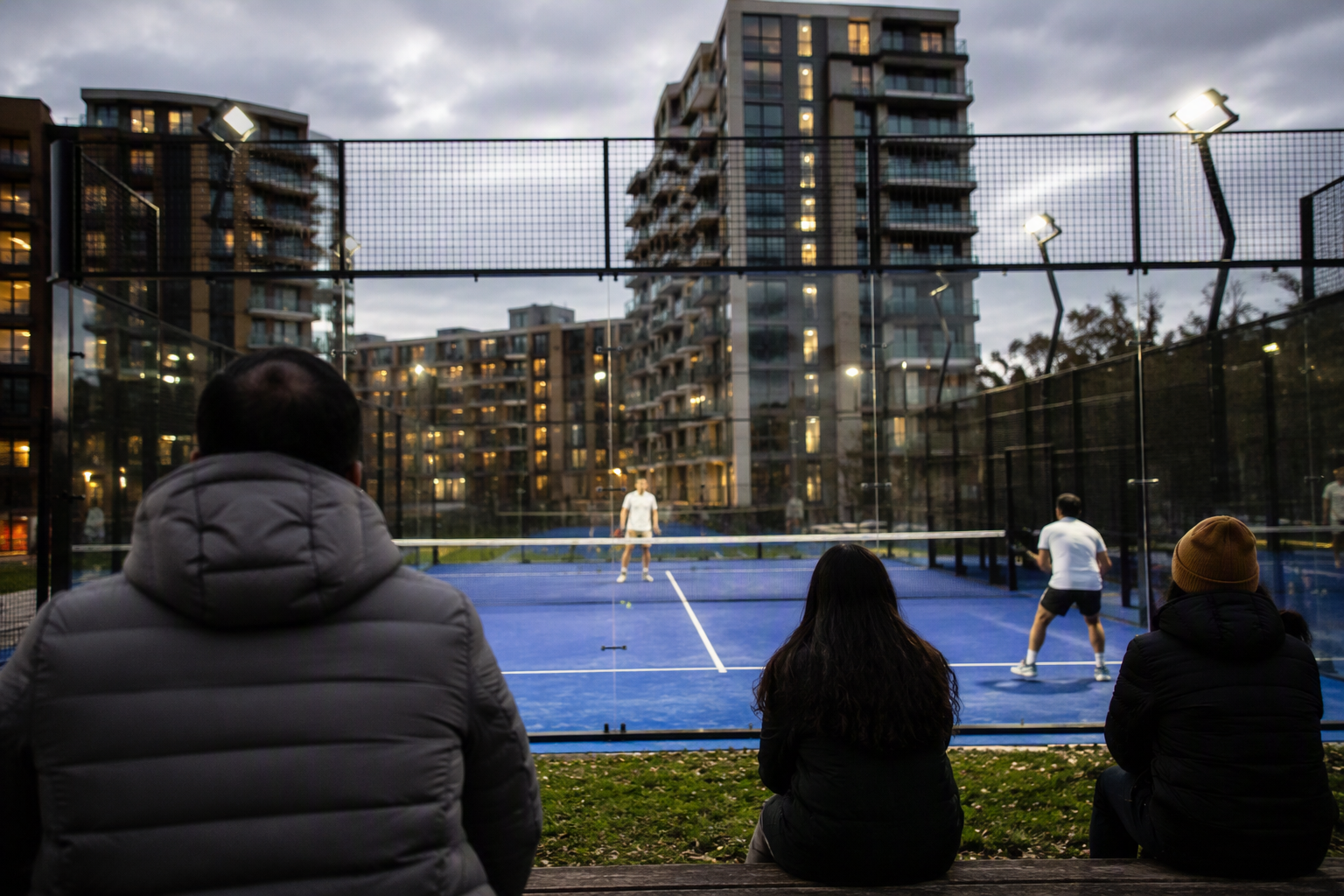
The court in Bethnal Green charged £24 an hour, a figure that crystallized the complaint. For campaigners, the issue was not simply whether padel was fashionable or well run. It was that a community area had been converted into a commercial product, leaving residents to absorb the loss while a different set of users paid for the benefit. In a city where public and semi-public recreation space is already under pressure, that kind of change is what turns a sports trend into a neighbourhood grievance.
The boom is real, which is why the pressure keeps building
The scale of padel’s growth explains why operators keep testing these conversions. The Lawn Tennis Association said in July 2025 that Great Britain had reached 1,000 padel courts across 325 venues nationwide. That marked a dramatic jump from an LTA presentation in April 2024, which put the country at about 400 courts and around 150 registered venues.
Participation has climbed with the infrastructure. In March 2026, the LTA said 860,000 people were playing padel in Britain. That growth makes the sport commercially attractive and helps explain why private operators, clubs and planners keep circling the same spaces. The governing body also said it was recognised as the national governing body for padel in Great Britain in 2020, and its 2024-29 strategy says it has supported expansion through multi-million-pound loan funding and work with local authorities on facility planning.
Those numbers tell two stories at once. They show a sport moving quickly into the mainstream, but they also show how easily that growth can run into conflict when it depends on converting existing community assets rather than adding new ones. In London, where courts can be proposed for sites already used by tennis players, skaters or other local groups, the question is no longer whether padel has momentum. It is whether that momentum is broadening access to sport or accelerating the privatization of recreation.
What London’s fights say about padel’s future
The lesson from Bethnal Green and Lee Valley is that padel does not only compete with tennis or squash. It competes with the idea that public space should stay open, affordable and shared. The sport can still grow, but every new court built on former community ground sharpens the same choice for planners: add access, or take it away.
That is why the backlash matters beyond one court or one borough. Padel may be booming, but in London it is also forcing residents to ask who gets the right to shape the city’s recreational map, and what kind of game can claim a public legacy without changing its meaning.
Sources
- [1]theguardian.com
- [2]bbc.com
- [3]standard.co.uk
- [4]ltapadel.org.uk
- [5]tiauk.org
- [6]lta.org.uk