Carrick vs Solskjaer: How Manchester United Auditions Stack Up After 13 Premier League Games
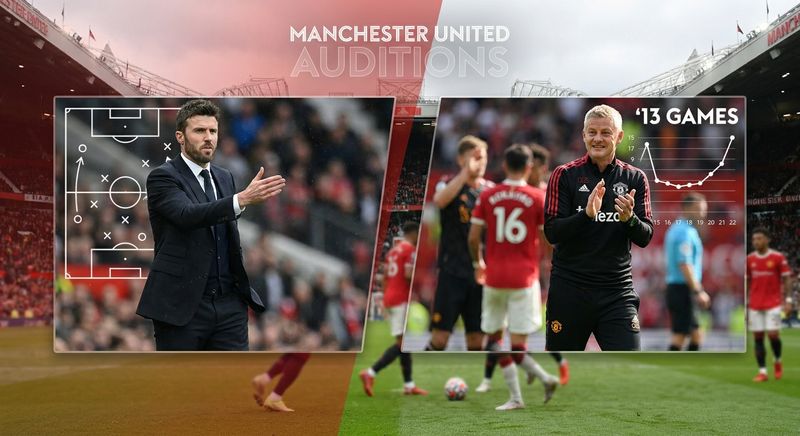
Manchester United has a storied tradition of appointing interim managers, and two of the most scrutinized auditions in recent memory have been those of Michael Carrick and Ole Gunnar Solskjaer. Both former players took over the reins at Old Trafford during periods of instability, tasked with steadying the ship and convincing the club hierarchy—and fans—that they could be the long-term answer. Their first 13 Premier League games in charge provide an illuminating comparison of their approaches, challenges, and successes.
Solskjaer, who took over in December 2018 after José Mourinho's departure, made an immediate impact. The Norwegian's tenure began with a string of victories, rejuvenating the squad and galvanizing supporters. His first 13 league matches yielded a strong run of results, propelling United back into contention for a Champions League spot. The team's attacking verve under Solskjaer saw a significant uptick, with a marked increase in goals scored per game compared to the previous regime. United's style of play was characterized by quick transitions, pace on the break, and a renewed sense of freedom for key players.
Michael Carrick, stepping into the caretaker role in late 2025, inherited a squad under scrutiny, following another period of disappointing results. Carrick’s audition, while faced with different squad dynamics and a shifting club landscape, drew immediate comparisons to Solskjaer's. Over his first 13 Premier League games, Carrick implemented subtle tactical adjustments—emphasizing greater midfield control and defensive solidity. The team’s results during this stretch reflected a cautious approach, with fewer goals conceded but also a slightly lower attacking output compared to Solskjaer's opening salvo.
Comparing the two:
Statistically, the first 13 games under each manager provide insight into their managerial DNA. Solskjaer's team averaged more goals per game and were more likely to win by two-goal margins, showcasing an attacking mindset. By contrast, Carrick’s United showed improvement in ball retention and defensive organization, aspects that may point to a more sustainable long-term structure but sometimes came at the expense of attacking flair.
The debate over which approach is more suitable for Manchester United’s long-term ambitions continues. The club’s supporters and leadership have witnessed flashes of promise under both former midfielders, but the pressure to deliver trophies and restore the club’s status among Europe’s elite remains.
As the season progresses, the lessons from these two auditions—one defined by bold attacking and the other by calculated control—will shape the club’s search for managerial stability and ongoing pursuit of silverware.
Solskjaer, who took over in December 2018 after José Mourinho's departure, made an immediate impact. The Norwegian's tenure began with a string of victories, rejuvenating the squad and galvanizing supporters. His first 13 league matches yielded a strong run of results, propelling United back into contention for a Champions League spot. The team's attacking verve under Solskjaer saw a significant uptick, with a marked increase in goals scored per game compared to the previous regime. United's style of play was characterized by quick transitions, pace on the break, and a renewed sense of freedom for key players.
Michael Carrick, stepping into the caretaker role in late 2025, inherited a squad under scrutiny, following another period of disappointing results. Carrick’s audition, while faced with different squad dynamics and a shifting club landscape, drew immediate comparisons to Solskjaer's. Over his first 13 Premier League games, Carrick implemented subtle tactical adjustments—emphasizing greater midfield control and defensive solidity. The team’s results during this stretch reflected a cautious approach, with fewer goals conceded but also a slightly lower attacking output compared to Solskjaer's opening salvo.
Comparing the two:
- Solskjaer's United netted more goals and often played with a swashbuckling style, especially in the initial weeks of his tenure.
- Carrick’s side demonstrated greater defensive resilience, resulting in more clean sheets but sometimes struggled to break down organized opponents.
- Both managers saw an immediate improvement in form compared to their respective predecessors, underscoring the impact of a managerial change at Old Trafford.
Statistically, the first 13 games under each manager provide insight into their managerial DNA. Solskjaer's team averaged more goals per game and were more likely to win by two-goal margins, showcasing an attacking mindset. By contrast, Carrick’s United showed improvement in ball retention and defensive organization, aspects that may point to a more sustainable long-term structure but sometimes came at the expense of attacking flair.
The debate over which approach is more suitable for Manchester United’s long-term ambitions continues. The club’s supporters and leadership have witnessed flashes of promise under both former midfielders, but the pressure to deliver trophies and restore the club’s status among Europe’s elite remains.
As the season progresses, the lessons from these two auditions—one defined by bold attacking and the other by calculated control—will shape the club’s search for managerial stability and ongoing pursuit of silverware.
Sources
- [1]Sky Sports