Charleston Battery embody the USL Championship’s rare continuity and legacy

Charleston Battery are one of the clearest examples of what continuity looks like in the USL Championship. Founded in 1993, they are identified by League Football Education as the oldest continuously-operating professional soccer club in the United States, a distinction that gives every home match at Patriots Point a weight most lower-division clubs never get to carry. The Battery matter because they connect the sport’s early pro era to the modern Championship, and they have done it without losing competitive edge.
A club that has outlasted multiple eras
Charleston’s longevity is not a decorative fact. It is the spine of the club’s identity, and it has survived enough league rebrands and structural changes to become proof of concept for sustainable lower-division soccer. League Football Education lists the Battery’s title history across four different competition formats: the USISL Pro League in 1996, the USL A-League in 2003, the final season of the USL Second Division in 2010, and the USL Pro Championship in 2012.
That title trail tells the story of a club that adapted with each new landscape instead of disappearing into it. The Battery’s own public materials now describe Charleston as South Carolina’s premier professional soccer club since 1993 and say the club is in its 34th season, a reminder that endurance itself has become part of the product. In a league where churn is common, that kind of institutional memory gives Charleston a rare sense of continuity.
The trophies that give the legacy its edge
Charleston’s history works because it is not just old, it is decorated. The four championships listed in the historical record are enough to put the Battery among the most successful lower-division teams in the country, and the club has continued to frame itself around that standard. Its social presence has described the Battery as four-time league champions, which aligns with the title record and helps explain why the club’s brand feels built on achievement rather than sentiment.
That matters in the USL Championship because reputation still travels. Charleston can point to titles in 1996, 2003, 2010 and 2012 and then turn around and remain competitive in the present tense. The club’s value is not only in what it won, but in the fact that it has kept showing up as a contender across generations of players, coaches and league structures.
Patriots Point as a reset, not a break
The move into Patriots Point showed how a historic club can modernize without erasing itself. On Oct. 30, 2019, Charleston announced that HCFC, LLC, led by Rob Salvatore, would take over the club and that the Battery would play at Patriots Point beginning in 2020. A February 2020 USL Championship feature on the transition said Salvatore was taking a “hands-on approach” to restructuring the Battery for long-term success, which framed the change as a rebuild designed to protect the club’s future.
The stadium shift was sharper than a routine relocation. The Daniel Island News noted that the Battery played their last game on Daniel Island on Oct. 19, 2019, and The Post and Courier reported five days later that the club would not be moving downtown and instead would play the 2020 season in Mount Pleasant. Patriots Point, in Mount Pleasant, South Carolina, became the center of that new chapter.
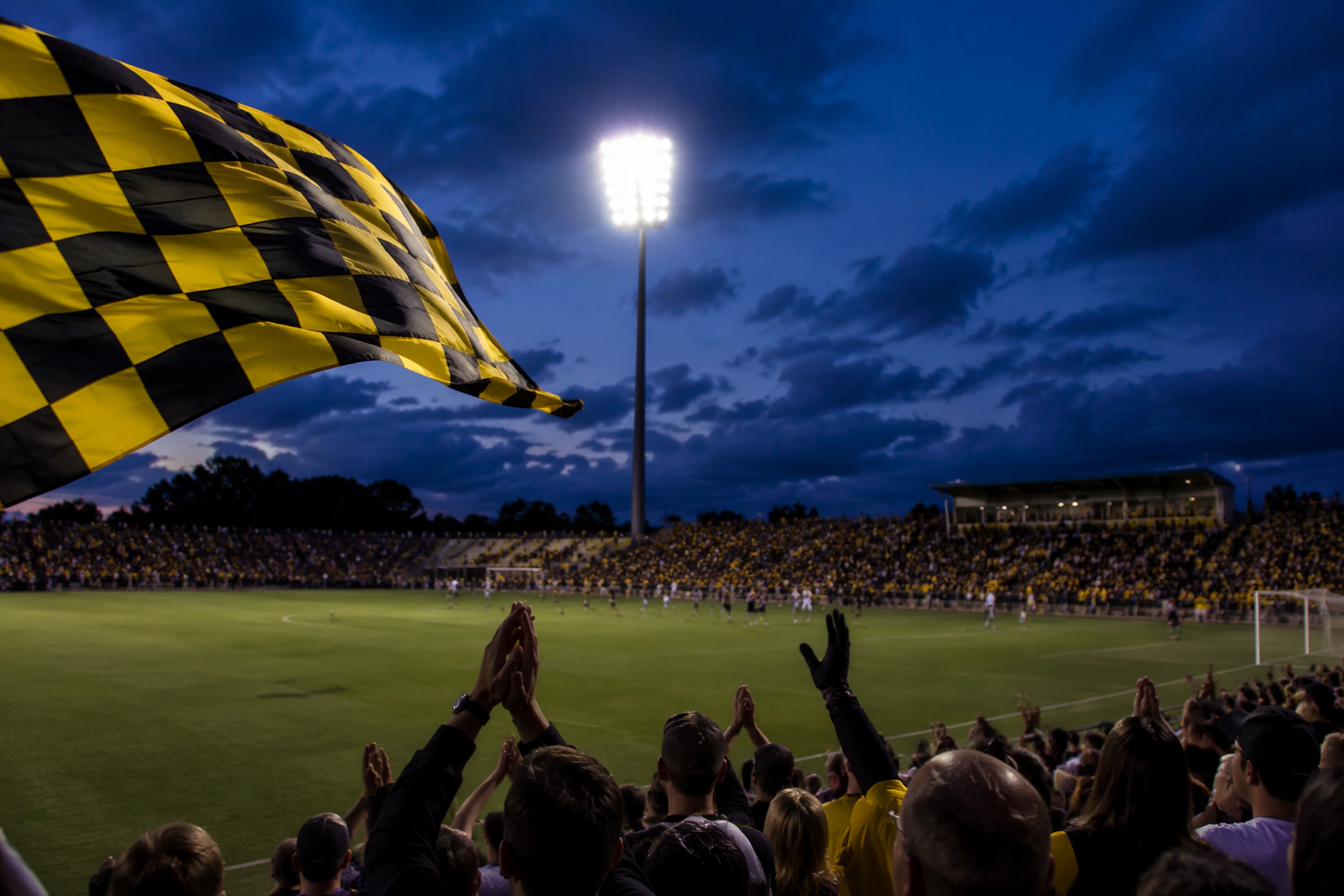
Team Marketing Report lists Patriots Point Soccer Complex as opening in 2008 with a capacity of 2,000, and the club’s own stadium profile identifies the venue as Patriots Point Soccer Stadium. That scale is part of the point: Charleston did not chase a giant footprint, it found a home that matched the club’s identity and made the atmosphere feel intentional. A 2021 Post and Courier report said the Battery reached full attendance capacity at Patriots Point, which showed the move had become a functional success, not just a symbolic one.
Competitive relevance in a league built for turnover
Charleston’s place in the Championship is strongest when the club is still fighting for titles. In November 2023, USL Championship described the Battery as preparing to play for their fifth league title, and that framing captured exactly why the club remains one of the league’s standard-bearers. Charleston is not simply surviving from season to season, it keeps returning to the final rounds of relevance.
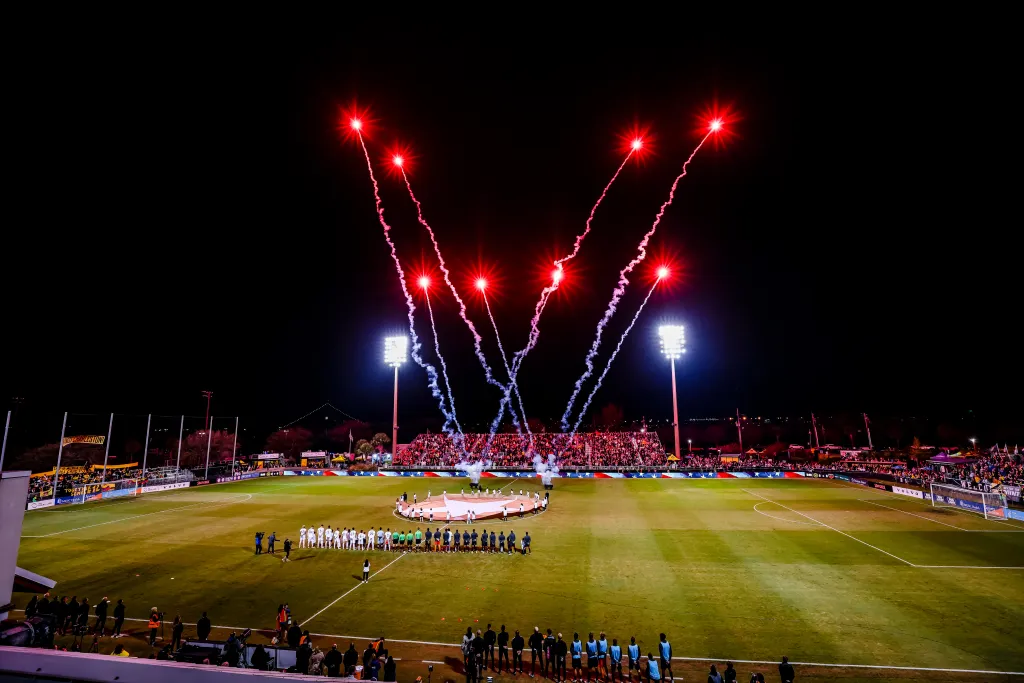
That 2023 run ended in heartbreak at Patriots Point. Charleston hosted Phoenix Rising FC in the 2023 USL Championship Final, and the match finished 1-1 after regulation and extra time. Phoenix Rising then won 3-2 on penalties after equalizing in the 90th minute, a result that left Charleston as runners-up but still underscored the club’s standing among the league’s most durable contenders.
The final was important because it tied together the Battery’s whole model. The club had a recognizable home, a clear identity, a long-running history and enough quality to reach the championship stage again. That combination is exactly what lower-division soccer often lacks, and Charleston has managed to keep all of it in the same place.
Why Charleston still matters beyond nostalgia
The Battery are not valuable because they are old. They are valuable because they have turned age into infrastructure. Their history spans the USISL Pro League, the A-League, the USL Second Division, the USL Pro Championship and the current USL Championship era, while their move to Patriots Point showed how ownership, venue and competitive ambition can be reworked without breaking the club’s identity.
Rob Salvatore’s arrival, the HCFC, LLC takeover, the shift from Daniel Island to Mount Pleasant and the push to remain title-relevant all point to the same conclusion: Charleston built continuity on purpose. In a league defined by change, the Battery have made staying power look like a competitive advantage, and that makes them one of the clearest models for what sustainable success in the USL Championship can look like.