Chengdu still building on World Games legacy one year later
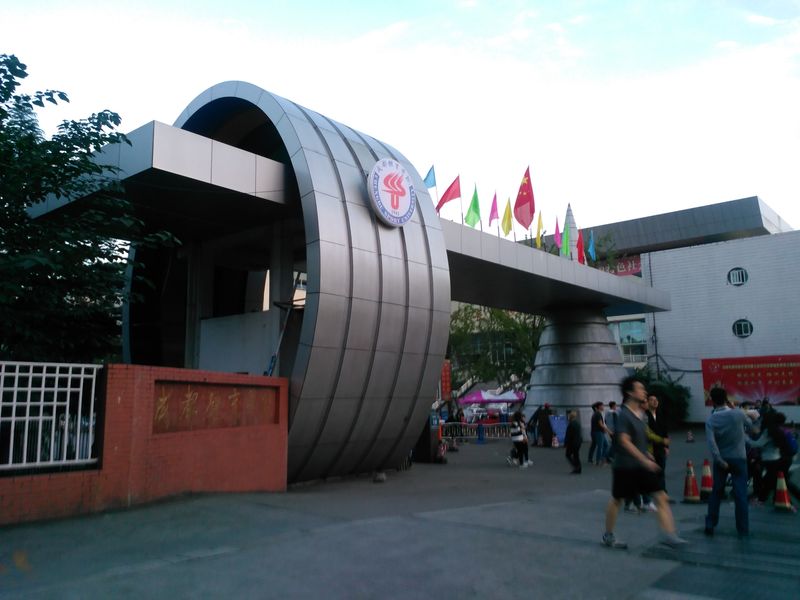
A year after Chengdu hosted The World Games, the strongest evidence of legacy for ultimate is not a medal table or a viral highlight. It is a formal partnership: the International World Games Association and Chengdu Sport University signed a memorandum of understanding to create a sports promotion and research center, a concrete sign that the city wanted the Games to leave more than temporary crowds and temporary courts behind.
What Chengdu actually hosted
The World Games 2025 ran from 7 to 17 August in Chengdu, a 10-day stretch that fit the event’s place as the IWGA’s 11-day global multi-sport showcase held every four years. Flying disc was one of 34 sports in the program, and Chengdu staged both of the discipline’s World Games branches: Ultimate and Disc Golf.
WFDF’s competition schedule put Disc Golf at Chengdu from 8 to 10 August and Ultimate from 12 to 16 August, with both disciplines split between Chengdu Sport University’s Sancha Lake Campus and Guixi Park. That matters for legacy because venue use is the most visible and measurable part of whether a host city actually builds capacity for a sport, or simply imports a competition for one week.
The ultimate event did its part on the field
Ultimate returned to The World Games competition program in Chengdu, and the final podium gave the tournament the kind of international spread that makes the event useful as a development stage. Team USA won gold, Canada took silver and France claimed bronze, confirming that the competition still functions as a world-level benchmark rather than a regional exhibition.

That ranking also gives Chengdu a clean reference point for the sport’s profile in China. Ultimate was not the only flying disc discipline on site, but it was the one with the clearest team-sport identity, the most direct spectator appeal and the strongest potential for crossover attention from a multi-sport audience. In that sense, the Games delivered exactly what showcase events promise: elite play in front of a broader public, with the possibility that some of the attention outlives the brackets.
The legacy test is bigger than the final score
For ultimate, the real question one year later is whether Chengdu created lasting playing opportunities. The documented answer is more institutional than grassroots: the MoU with Chengdu Sport University points to a research and promotion pipeline, not just a one-off field assignment. That kind of arrangement can support coaching development, athlete education and future tournament planning, but it is not the same thing as a verified spike in club numbers or youth participation.
That distinction matters because ultimate has long depended on major international stages to widen its reach. A World Games appearance can increase media attention, generate local curiosity and give national federations a reason to invest in facilities and programming. But without follow-through, the impact stays symbolic, remembered in opening ceremonies and highlight clips rather than in regular league nights or school teams.
Why the timing still matters for the sport
The Chengdu edition landed at a useful moment for that conversation. WFDF’s 2024 World Ultimate Championships coverage noted that the event returned after an eight-year hiatus, a reminder that the sport’s most important showcases are not always guaranteed to appear on a stable calendar. When elite events disappear for years and then come back, the sport loses a visible platform for athletes, sponsors and newer audiences.
That is why Chengdu’s place in the World Games story carries more weight than one tournament result. The city’s first-ever Torch Relay for The World Games, held on 26 July 2025, was part of the buildup designed to push the event into public view before competition even started. Combined with the ultimate and disc golf competitions at Sancha Lake Campus and Guixi Park, it showed how the host tried to spread the Games beyond an arena calendar and into the city’s broader sporting identity.
What is concrete, and what is still being built
On the concrete side, Chengdu has left behind a few hard markers that ultimate can point to: • a World Games venue footprint at Chengdu Sport University’s Sancha Lake Campus and Guixi Park • a formal sports promotion and research center plan tied to the city and the IWGA • a World Games appearance for ultimate, with Team USA, Canada and France on the medal stand • the return of flying disc to a major multi-sport stage that included both ultimate and disc golf
What remains less visible is the downstream effect: whether more Chinese players are entering the sport, whether local clubs are expanding, whether coaching pathways have deepened and whether the tournament infrastructure is being reused. Those are the measures that would turn a successful hosting week into a real development story.
For now, Chengdu’s legacy looks strongest where sports business legacies often begin, with infrastructure, partnerships and visibility. Ultimate got its stage there. The next test is whether the city can keep turning that stage into a place where the sport is actually played, taught and organized long after the medals are packed away.
Sources
- [1]theworldgames.org
- [2]wfdf.sport