Chicago Machine chase long-awaited men’s club title in deep field
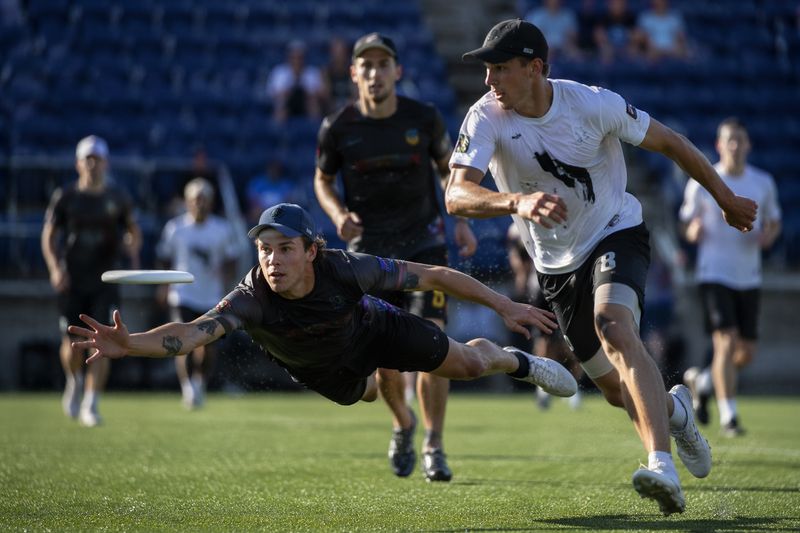
Chicago Machine enter the men’s club season with the cleanest possible definition of unfinished business. They have reached Nationals 19 straight times, made the bracket 14 straight times, advanced to seven straight quarterfinals and appeared in three finals over the last six seasons, yet the title still has not landed in Chicago.
Machine’s long wait is the storyline
That is what gives this season its edge: this is not a team trying to prove it belongs, but a team trying to turn a long record of contention into one defining finish. The club’s core problem has never been access to the bracket or comfort on the big stage. It has been the final step, the one that turns a perennial contender into a champion.
Chicago’s added pressure is also its advantage. Machine know exactly what a late-August and September run feels like because they have lived in that space for years, and the rest of the field knows it too. The question is no longer whether Machine can reach the conversation. It is whether they can keep the conversation from ending the same way it has ended before.
A roster built to break the pattern
Machine have not approached the season cautiously. The roster additions include Callahan winner Zeke Thoreson, UFA standout Eliot Hawkins and Aaron Bartlett, a three-time defending club champion whose previous titles came with Ann Arbor Hybrid and Washington DC Truck Stop. That mix matters because it gives Chicago not just more talent, but more championship habit from outside the program’s own history.
The upside is obvious: Thoreson brings the kind of all-around star power that changes matchups, Hawkins adds elite offensive experience, and Bartlett arrives with a resume built on winning at the highest club level. The uncertainty is equally real. Machine may need time to gel, and the roster may not be at full strength immediately, which means the early part of the season is about building the chemistry that will be tested when the bracket gets tight.
That balance makes Machine especially interesting. They are stacked with established names and emerging talent, but the burden of proof is different for a team like this. Adding recognizable players can raise the ceiling; it does not automatically solve the late-game habits that decide titles.
The field is deep enough to punish any slip
Machine are not chasing a weak era. Ultiworld’s July 10 men’s rankings place San Francisco Revolver first, Boston DiG second, New York PoNY third, Portland Rhino Slam! fourth, Raleigh Ring of Fire fifth and Chicago Machine sixth, with Minneapolis Sub Zero, Philadelphia Pacmen, Washington DC Truck Stop and Seattle Sockeye rounding out the top 10. That is a narrow cluster of proven teams, not a landscape with a clear favorite and a long drop-off.
The top of the division also arrives with recent pedigree. San Francisco Revolver are the 2025 champions, Portland Rhino Slam! won in 2024, and Washington DC Truck Stop remain in the mix as another recent title program. PoNY and DiG add another layer of danger because both reached the season-opening PEC East final, which only strengthens the sense that the bracket already has several teams accustomed to pressure games.
For Machine, that means the path to a title is not just about playing well enough to win one weekend. They will need to keep beating the same caliber of opponent in multiple settings, against teams that already know how to close. In that sense, Chicago’s challenge is as much structural as it is tactical: the division’s best teams have built a habit of surviving deep into the season.
The top four has not budged, and that is the warning sign
The most telling detail in the men’s division is not one team’s ranking, but the shape of the semifinal picture. For two straight seasons, the same four teams have reached the last four standing: San Francisco Revolver, Portland Rhino Slam!, New York PoNY and Chicago Machine. That kind of stability is rare, and it tells you that the division’s elite has not been shaken loose by one hot run or one lucky draw.
Machine’s place in that quartet is a compliment and a challenge. They have already shown they belong among the final four, but the sameness of the bracket also underlines how hard it has been for them to convert opportunity into a trophy. If 2026 is going to look different, it will have to start by breaking the pattern that has made the semifinal stage feel almost fixed.
That is why every matchup against Revolver, Rhino Slam!, PoNY, DiG and Ring of Fire carries more weight than a simple regular-season result. These are the teams most likely to reveal whether Machine’s additions have changed the team’s ceiling, or simply improved their depth without altering the ending.
Why the rankings calendar matters
USA Ultimate’s club rankings add another layer of pressure because they begin on July 29 and help determine regional bids, as well as how many bids each of the eight geographical regions receive to Nationals at the end of the regular season. That makes the middle months more than a tune-up period. Every result feeds into the larger map that decides who gets in and how hard the road becomes.
For Machine, a strong ranking is not just a status symbol. It shapes the tournament math that comes later, and in a division this crowded, even small shifts can alter the bracket landscape. That is one reason July and August matter so much for a team with championship ambitions: the season’s setup can influence the level of danger that waits in the regional pipeline.
Chicago’s preparation is built for repetition, not flash
Machine’s own structure fits the long grind of a title pursuit. The club traditionally practices most Saturday and Sunday mornings from May through October at Washington Park on Chicago’s south side, with additional pod workouts and strength training during the week. That schedule says a lot about the program’s identity: this is a team built on regular work, physical preparation and the kind of continuity that helps elite teams stay sharp across a long season.
The leadership group reinforces that identity. James Highsmith is listed as head coach, while Paul Arters, Nate Goff, Kyle Rutledge and Tim Schoch are the captains. That combination matters because a team with so much talent still needs a stable voice and clear internal structure to turn individual quality into a playoff identity.
Chicago now sits at the center of a division where the same names keep reappearing and the same playoff habits keep paying off. Machine have the résumé, the additions and the home-market infrastructure to make a real run. What they still need is the one thing their record does not yet show: the finish that finally closes the loop.