College ultimate rankings turn regular-season games into nationals bids

A win in March can push a college ultimate team up the national rankings, change how many bids its region gets, and open or close the road to the College Championships months later.
How the bid system turns every result into leverage
USA Ultimate lists the college division at more than 18,000 student-athletes on 800-plus teams, making it the sport’s largest division. That scale feeds a rankings model built to sort the entire season, not just one tournament. Each of the 10 geographical regions is guaranteed at least one automatic bid to the College Championships, and extra bids are awarded from rankings that track performance across the regular season.
Rankings are updated weekly, and only games between rostered teams at sanctioned events count toward them. Teams also have to play at least 10 regular-season games to be included in the rankings that affect bid allocation, so a light schedule is a mathematical risk.
Picture one realistic weekend path. A team from a crowded region goes to a sanctioned event, beats two ranked opponents, and reaches the 10-game threshold by Sunday. On the next weekly update, that team’s resume enters the national board, its region’s depth looks stronger, and the extra bid line can move from one to two. A different team in the same region then loses to an underdog the following weekend, and the whole region can feel the effect again when bids are rebalanced. In college ultimate, one upset can help the winner’s climb and quietly shrink the number of championship places available around it.
What the college season actually looks like
The college game runs in two parts: a regular season and a postseason championship series. The regular season is a 13-week stretch that begins in January and is built around independently organized tournaments across the country. The official college guidelines set the counted regular season from January 1 through March 29, then move the sport into the College Series, which runs April 11 through May 25 in 2026.
Teams move from regular-season rankings into conferences, then regionals, and finally the College Championships. The 2026 college guidelines place Conferences on April 11-13 or April 18-19, Regionals on April 25-26 or May 2-3, and the D-III College Championships on May 16-18.
The teams that get the most out of the regular season are not always the ones with the flashiest records, but the ones that schedule carefully enough to reach the 10-game line, choose events that can yield ranked wins, and avoid dead weekends that add travel without adding value. Margins matter too: a close loss to a strong opponent can still support a schedule, while a blowout can hurt the same week a team is trying to stay inside the bid conversation.
Why scheduling choices matter so much
The rankings system creates a clear incentive to be deliberate. Programs want enough sanctioned games to qualify, enough quality opponents to move up, and enough stability to survive the stretches when injuries or bad weather can tilt an event. In practical terms, that means the season rewards teams that can string together useful weekends, not just one good tournament.
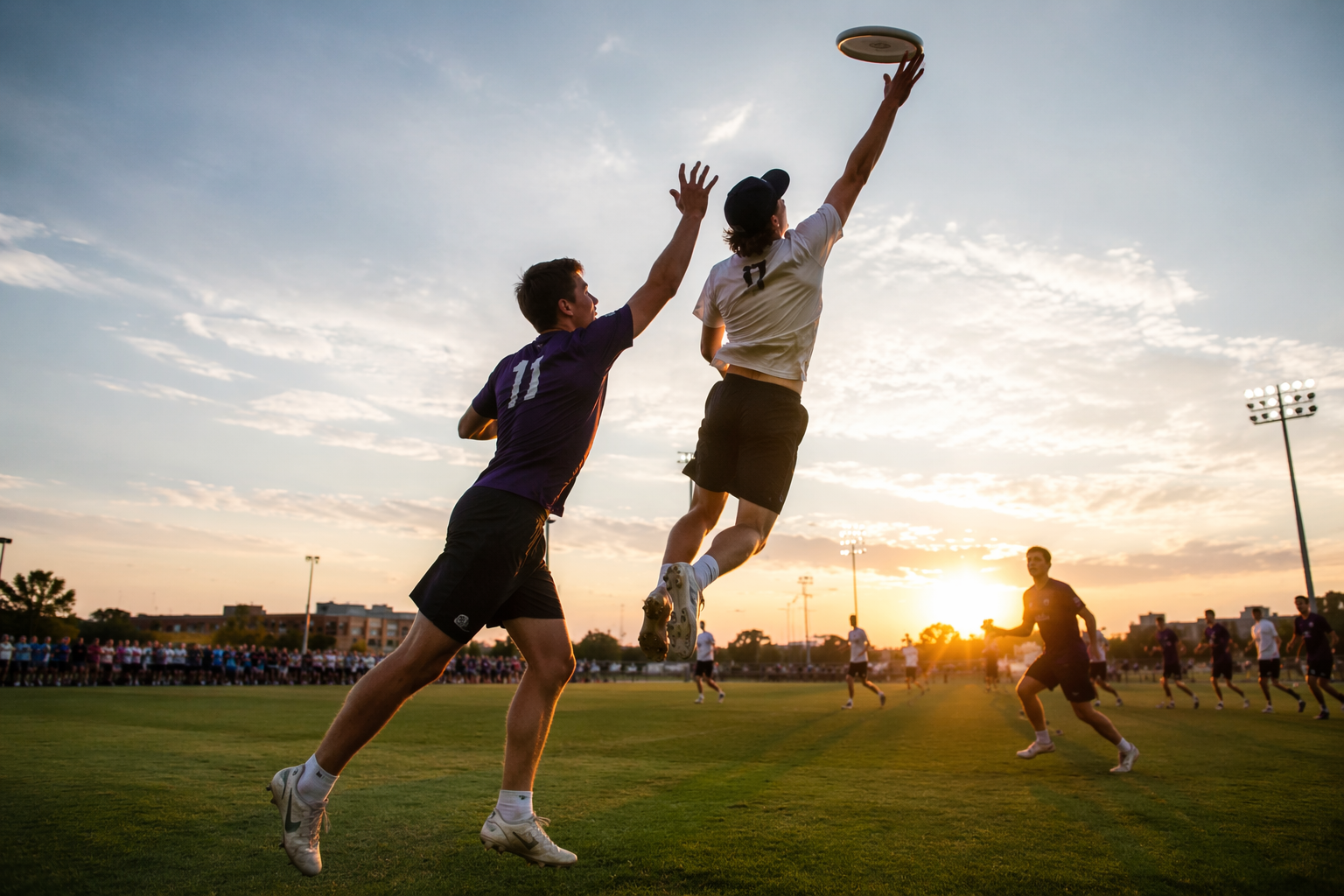
It also changes how teams think about the postseason. A deep, high-end regular season can lift a region’s bid total before conferences even begin, which means local results can affect how many schools from that region get to keep playing in May.
The system also creates different pressures for Division III programs. Under USA Ultimate’s guidelines, D-III eligible schools use the same rankings algorithm for D-III Regionals and the D-III College Championships, which means the same regular-season logic governs their path. If a D-III team later opts into D-I regionals, the bid picture can change through waitlist reallocation.
Where the sport came from, and why the stage keeps growing
College ultimate may feel modern in the way it uses rankings and bid math, but the sport’s roots go back decades. USA Ultimate dates the modern game to 1968 at Columbia High School in New Jersey, and its archives place unofficial national championships in the mid-to-late 1970s.
College championships have been streamed on ESPN3 and, starting in 2017, on ESPNU.
What 2026 showed about the system’s reach
On May 4, USA Ultimate set the field for the College Championships, with 72 teams advancing from more than 600 colleges and universities across North America. The D-I championships were held in Rockford, Illinois, and the D-III championships in Waukegan, Illinois, with the D-I event featuring 20 men’s teams and 20 women’s teams, and the D-III event featuring 16 men’s and 16 women’s teams.
Massachusetts beat Carleton for the men’s D-I title, while Carleton won the women’s championship. In D-III, Middlebury completed the first-ever sweep of both the men’s and women’s titles at the same championship.
USA Ultimate named British Columbia’s Mika Kurahashi and Colorado’s Zeke Thoreson as the 2026 Callahan Award winners, and Kurahashi became the first Callahan winner from a Canadian school.