Cranford wiffle ball league turns backyard idea into community staple
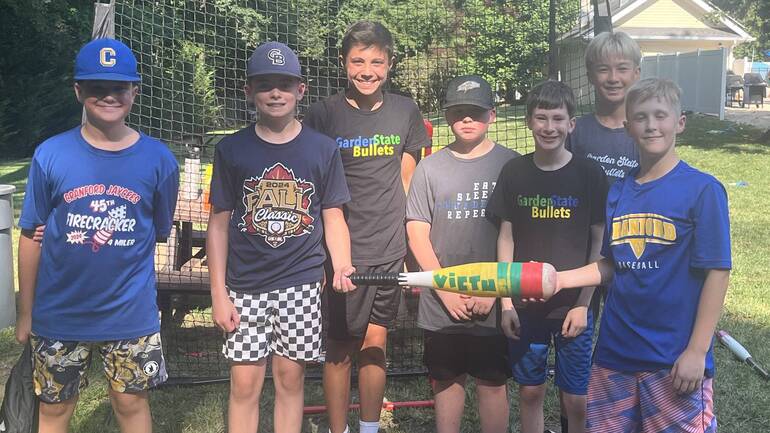
What began as a passing conversation during fifth-grade state science testing is now a real local sports operation, complete with teams, umpires, replay challenges, and a record book that already tracks firsts. The Cranford Wiffle Ball League was founded on June 17, 2023 by Brandon Pizzo, Michael Matlosz, Max Semler, and friends who are now finishing eighth grade and heading to Cranford High School this fall. That jump from backyard impulse to organized league is the whole story here, and the details show how much structure it takes to make a kids’ game stick.
Built by the kids who play it
The league’s origin matters because the organizers are also the participants. Brandon, Michael, and Matthew came up with the idea while taking fifth-grade state science tests, then turned it into something with enough shape to survive beyond one summer. That kind of ownership changes the tone immediately: the players are not waiting for adults to hand them a schedule, design a bracket, or settle a dispute. They are doing the work themselves, which is why the league has developed the habits of a real sports operation instead of a one-off pickup game.
The first CWB game set the template. Cleveland Guardians vs. New York Yankees was the debut matchup, and the Yankees won 7-5. That game now sits in the league’s history as the opening line of its own archive, and the league says the first home run in league history is part of that record-keeping too. Those are small details on paper, but they are exactly what makes a local league feel alive: score, opponent, result, milestone, repeat.
How the league actually runs
The Cranford Wiffle Ball League is not just improvised at the last minute. Its season usually runs from April through September, giving it a long enough calendar to create rhythm without turning into a full-year burden. Participation is free, which keeps the barrier to entry low and helps the league stay open to more families across Cranford.
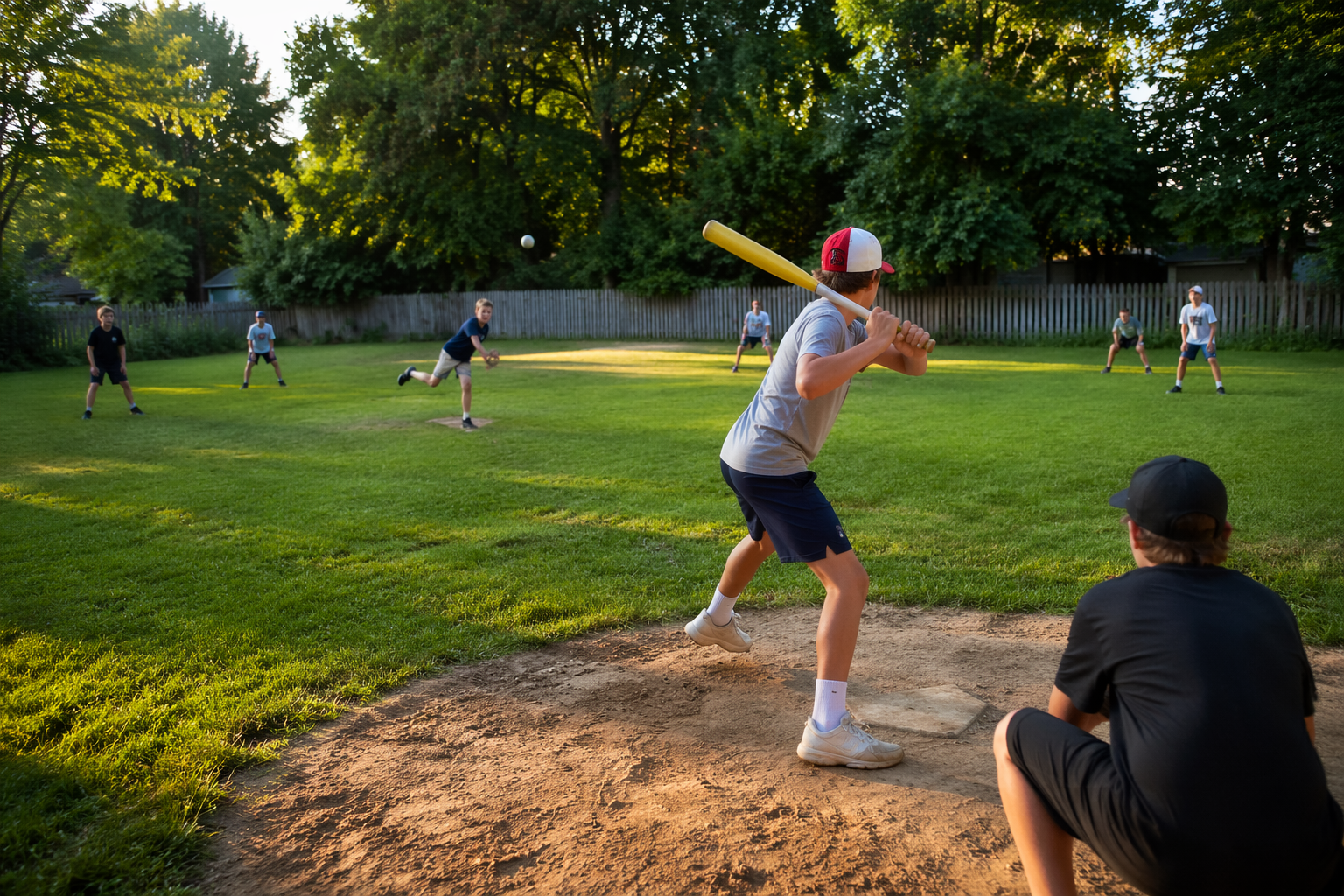
The on-field setup is customized for the sport rather than borrowed from baseball. Teams use six players, with three fielders on the field at a time. Umpires handle games, replay challenges are part of the process, and postseason playoff series give the regular season a finish line worth chasing. That combination matters because it solves the two classic youth-sports problems at once: too much chaos and too little stakes. The league keeps the fun of wiffle ball, but it also gives games consequences.
The rules also show how serious the organizers have become about consistency. Replay challenges mean players can’t just rely on the honor-system version of backyard arguments. Umpires mean calls get made and the game keeps moving. Playoff series mean the season is not just a long list of casual games, but a structure with standings and a title path.
A league that leaves a paper trail
The Cranford league is already acting like a place where history gets kept, not forgotten. Its news page lists 2025 awards with Michael Matlosz as MVP, Brandon Thomas taking Cy Young, and Brandon Thomas also named Manager of the Year. The same archive notes Silver Sluggers for Michael Matlosz, Max Semler, Kai Graichen, and Brandon Thomas. Venditti won MVP in the first All-Star Game, and the league’s first tournament took place in August 2024.
That kind of record-keeping is more important than it looks. Youth sports often disappear the second a season ends, with no memory beyond a few phone videos and a group chat. Cranford’s archive gives the league continuity, so a player can point to a first tournament, a first All-Star Game MVP, or a first home run and know it is part of a growing timeline. For a league this young, that is how you build tradition before you have years of history.
The online arm makes it bigger than the field
The league does not stop when the game ends at the park. It plays at local parks and posts highlights on YouTube, where it says it has more than 550 subscribers. That digital layer does two things at once: it gives players a place to relive moments, and it gives the league a public face that can pull in new interest beyond the immediate circle of friends.
That matters because wiffle ball is at its best when it feels both intimate and watchable. The sport was designed by The Wiffle Ball, Inc. as a backyard and street alternative to baseball, stickball, and softball, which explains why this Cranford setup fits the game so naturally. The league keeps that casual DNA, but the video archive, awards page, and subscriber base turn it into something with community reach. Kids who are not in the first group can still see the league, follow the highlights, and understand how to join the next wave.
Why the Cranford Swim & Tennis Club matters
The next step in the league’s growth points to a bigger local footprint. An upcoming tournament is scheduled for early July at the Cranford Swim & Tennis Club, a member-only club at the end of County Park Drive in Cranford, NJ. The club offers swimming, tennis, pickleball, and platform tennis, and its site says new member applications are still being accepted, though some categories have a waiting list.
That venue choice is significant because it shows the league is moving from purely informal neighborhood spaces into established community infrastructure. A club setting brings legitimacy, visibility, and the kind of shared space that can help a youth league feel embedded in town life. When a backyard game earns a slot at a member-only club, it stops being a novelty and starts looking like part of the calendar.
A model other towns can copy
Cranford’s league works because every part of it has been made repeatable. The founders showed up, set rules, gave the season a calendar, kept the games free, built a public archive, and added enough competition to make every week matter. The result is a youth league that still feels playful, but now has the bones of something lasting.
That is the real takeaway from Cranford’s wiffle ball rise: the sport did not need a perfect facility or a big budget to become meaningful. It needed organizers who treated a fifth-grade idea like it deserved a schedule, a scorebook, and a future.