Cut-throat racquetball explained, the sport’s underrated three-player format
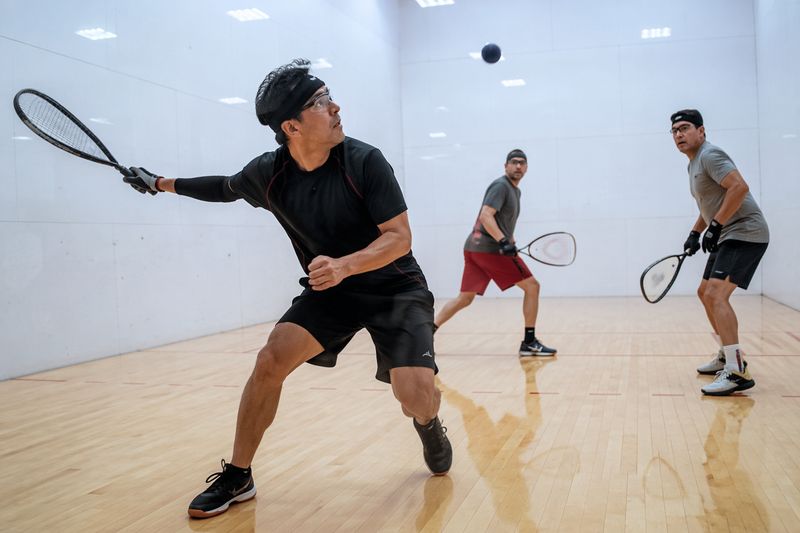
Instead of the usual two-player singles or four-player doubles, cut-throat racquetball puts one server against two opponents; the lone player scores only by winning the rally and loses the serve when the point slips away. That rotation changes the feel of the court.
Why cut-throat feels like tournament pressure
In singles, every rally is a direct duel. In cut-throat, the server is solving two problems at once, because the two opponents are active threats waiting for the serve to turn over. The identity of those opponents can change from rally to rally, so a player never settles into a rhythm where one mistake is easily forgotten.
The format demands better shot selection, quicker center-court recovery, stronger conditioning and steadier composure, because one player is always defending against two others and the court can flip status instantly. A rally is not only about winning the point in front of you, but also about preparing for the next role switch if the serve disappears.
Where the format already shows up
The format shows up in campus recreation, instructional materials and player conversation. Fort Hays State University lists Cut-Throat Racquetball on its intramurals activity page, which puts the format inside a campus recreation setting where players are learning, competing and rotating through limited numbers. The European Racquetball Federation includes it in a basic how-to-play framework.
In one racquetball conversation on Reddit, a player called cut-throat generally “3 people, each person scores their own points,” while another called it “a great way to equalize when one player is significantly better.” Cut-throat works both as a balancing tool and as a fast, competitive game when the group is uneven.
A YouTube result titled “Racquetball Clips 69 - We try some Cut Throat” describes an “elite player vs 2 B Level” setup, a useful reminder that the format can be turned into a handicap system as much as a recreational one.
How coaches can use it in training
Cut-throat is most valuable when the goal is pressure, not just repetition. If a group has exactly three players, the format keeps everyone active without the dead time that creeps into many drill lines, and it forces every rally to matter because only the server can score. The waiting players cannot relax, either, because they have to read rebounds, track angles and be ready to inherit the serve the moment the rally changes.
Coaches get a particularly useful view of decision-making. A player who over-hits, floats the ball or fails to recover center court gives away the serve and hands control to one of the other two players, so the format punishes low-percentage choices immediately. It is a strong bridge between drilling and full match play, especially when the lesson is not just stroke mechanics but how to survive under pressure.
A practical coaching use case looks like this:
• Use it when three players show up and you want everyone in a live, competitive rotation.
• Use it after a shot-selection session, because the format exposes whether a player can make the smarter, safer choice under pressure.
• Use it when fitness and composure matter, since constant role changes make recovery work harder than in a standard singles feed.
• Use it when the group has a big skill gap, because cut-throat can even out the competition without stopping the game.
The format can let a stronger player work on patience and control while giving the other two players a real chance to survive rallies and turn defense into offense.
How racquetball’s rule structure frames the format
USA Racquetball’s most recent rulebook includes seven rule changes passed by its Board of Directors in July 2023, and the biggest changes increased timeout length to one minute, limited players to two timeouts per game and reduced the time between games two and three to two minutes.
The International Racquetball Federation published official indoor racquetball rules in August 2024. Cut-throat still appears beside that formal structure in clubs, campuses and training groups.
Sources
- [1]racquetball.eu
- [2]fhsu.edu
- [3]reddit.com
- [4]youtube.com
- [5]usaracquetball.com
- [6]internationalracquetball.com