DC Fray touts Washington, D.C. kickball league as social staple
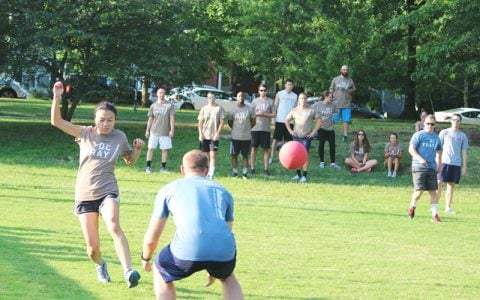
DC Fray’s kickball league works because it offers more than a game. In Washington, D.C., the organization positions kickball as its biggest league and wraps it in a simple promise: “50% Kickball + 50% Happy Hour = 100% Happiness.” That formula captures the league’s real draw for adults who want a low-pressure way to meet people, settle into city life, and have a recurring reason to show up somewhere after work or on weekends.
Kickball as social infrastructure
DC Fray markets its social sports to “fun-seeking adults” around the DMV, and kickball sits at the center of that ecosystem. The appeal is easy to see: the sport is familiar, the rules are simple, and teams form around shared schedules as much as shared athletic ability. That makes the league feel less like a test of talent and more like a structured way to build routine, friendships, and a circle outside the office.
The organization leans into that openness by asking whether players have been “playing kickball since you could kick balls and run bases.” It is a useful framing because it welcomes both people who grew up with the sport and adults who are only now looking for a casual, organized outlet. In a city where newcomers are constantly trying to find their footing, that kind of league becomes a social entry point as much as a recreational one.
How the league is built
DC Fray says its leagues traditionally run 6-8 weeks and include a regular season plus a playoff tournament. That structure matters because it gives kickball a rhythm that feels more like a season than a one-night meetup. Players can commit to a short cycle, learn the names on their team, and know there is a postseason payoff at the end.
The rules also show that the league’s social atmosphere sits inside a formal adult-sports framework. In a January 2020 kickball rules PDF, DC Fray says players must be at least 21 years old and have current, adequate health insurance. The same rules require all players to be properly registered on a team for the season in which they play, and they state that if someone is registered on more than one team within the league, that player may only play for one team in the playoffs.
Those details matter because they show the league is built to scale. A casual image does not mean casual administration. Age limits, registration rules, and playoff eligibility keep the format organized enough to support a large participant base while still selling the easygoing feel that draws adults in the first place.
Why kickball fits Washington

Washington is a city that runs on schedules, memberships, and overlapping circles, and kickball matches that pattern well. DC Fray says kickball is the biggest league in the city, and that scale points to more than novelty. It suggests enough teams, enough recurring players, and enough demand to keep a stable adult sports scene moving week after week.
The league’s marketing also ties kickball to Washington’s identity in a visual way. In spring 2024, DC Fray promoted kickball games with the National Mall as a backdrop, using one of the city’s most recognizable spaces to sell the experience. That kind of setting turns a rec league into a piece of local life, where the field is part of the story and the city itself becomes part of the selling point.
There is also a wider regional logic to the product. DC Fray’s social sports offerings are not limited to kickball; the organization lists soccer, cornhole, flag football, volleyball, bocce and more. Kickball fits inside that larger menu as a flagship option for adults who may want competition one season and a more casual social outlet the next. It is not just a standalone game. It is part of an adult recreation network that helps people stay connected across neighborhoods and work lives.
The league’s broader cultural footprint
Kickball’s social power shows up in the way outside coverage has treated DC Fray over time. A 2017 New York Times feature on social sports noted that Ms. Keenan joined a coed kickball league run by DC Fray, a reminder that the league has long been part of the broader adult recreation conversation. That kind of profile matters because it points to kickball’s staying power as a social format, not just a local pastime.
The same pattern appears beyond the District. An ARLnow sponsored article published May 6, 2025, described how a local adult sports league helped Arlington residents stay active and connected amid federal workforce shifts. That is the same basic value proposition DC Fray leans on in Washington: organized sports can double as a social anchor when work patterns change, communities turn over, and people need a dependable place to meet others.
Seen together, the details explain why kickball works so well in an urban adult-league model. The sport is easy to learn, the seasons are short, the playoff structure gives each run an ending, and the community effect is built into the format from the start. DC Fray has turned that into a signature product by making kickball feel like part sport, part routine, and part neighborhood network in the middle of the nation’s capital.
Sources
- [1]dcfray.com
- [2]facebook.com
- [3]nytimes.com
- [4]arlnow.com