Detroit's upgraded roster makes chemistry the key 2026 question
Detroit’s new look makes the central question easy to see: the Innovators have enough talent to matter, but not yet enough proof that the pieces will move together when the pressure rises. FastBreak’s 2026 preview puts the franchise in the league’s most interesting lane because last season’s 6-6 North Division record split cleanly between sharp, businesslike wins and ugly losses to the division’s best.
A roster that can beat most teams, but not yet the standard-setters
Detroit handled Toronto and Cleveland with sweeps, the kind of results that show a team can impose its structure and finish series the way contenders do. But the same group also dropped 0-3 series to Minneapolis and Chicago, and that is the gap the 2026 season has to close. In quadball terms, that split says the Innovators already know how to punish teams they can out-execute; the harder part is surviving when the opponent can match speed, spacing, and physical discipline.
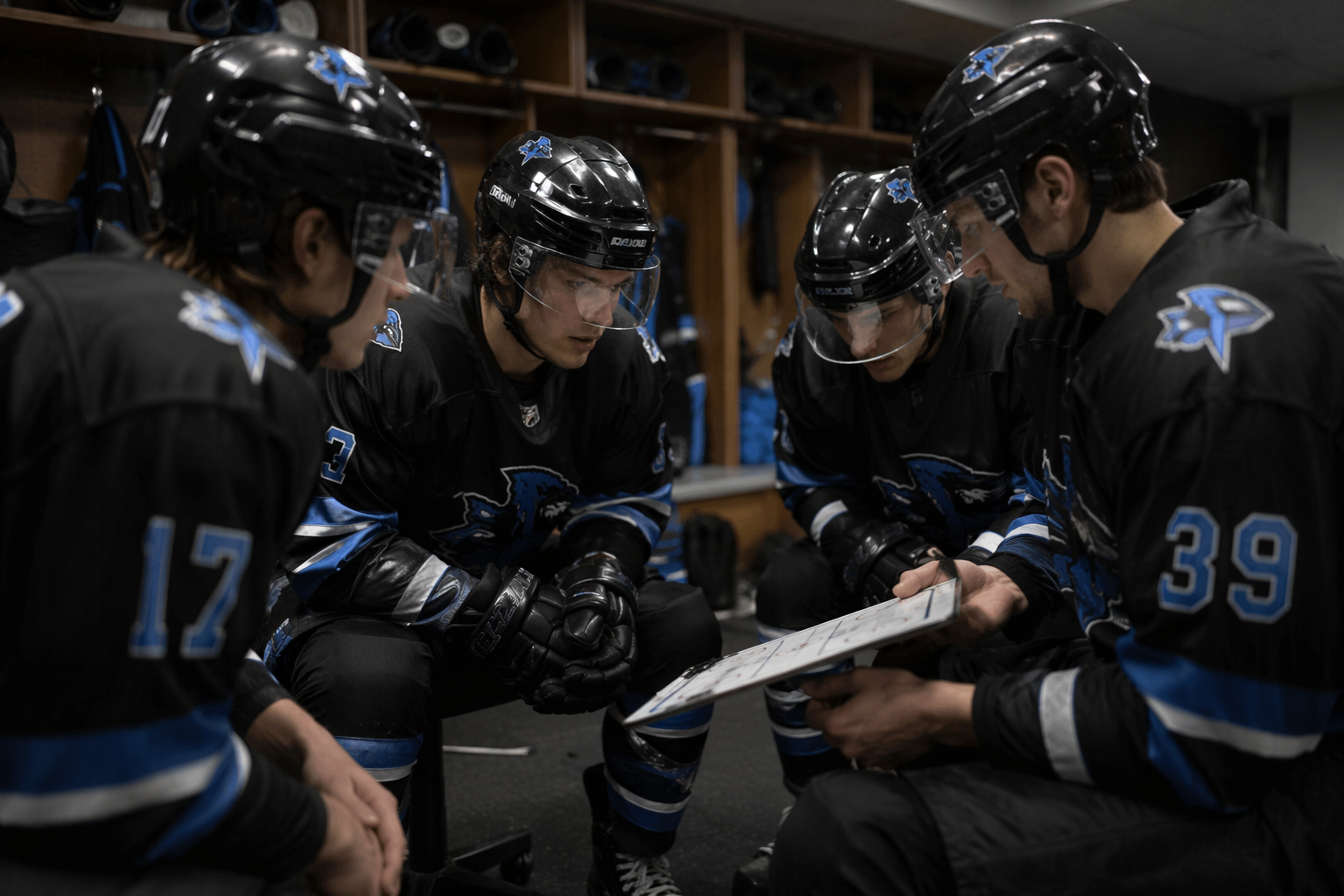
That is why chemistry sits above raw personnel. A roster can look improved on paper and still stall if the lines do not mesh, the beats are late, or players are forced into roles that do not fit their instincts. Detroit’s challenge is not finding talent. It is turning a deeper group into a more functional one before the North Division’s heavyweights expose every loose transition and every missed handoff.
Leo Fried gives the upgrade real weight
MLQ’s preseason coverage flagged Leo Fried as one of the biggest pickups of the 2024 offseason, and the later player poll gave that move a concrete statistical shape: 14 games, 46 goals, 22 assists, and 42 chaser stops. Those numbers matter because they show a player influencing the game in more than one phase, not just finishing possessions but helping stabilize them.
For Detroit, that kind of two-way production is exactly what a chemistry question looks like in practice. Fried does not merely add scoring punch; he changes how the Innovators can build lines and balance the field. If he links cleanly with the returning core, Detroit can pressure weaker teams more consistently and make stronger ones defend longer possessions. If the fit is uneven, even a productive roster will still feel segmented, with too much responsibility falling on too few players at the wrong moments.
Hsu and Brodeur remain the identity pieces
Ryan Hsu and Rei Brodeur remain central to Detroit’s beating game and its broader competitive identity, and that makes them more than names on a roster sheet. They are part of the framework that tells you how the Innovators want to play when the game is moving at full speed, and how they want to respond when opponents try to drag them into scramble mode.
That matters because Detroit’s best version is the one that keeps the ball moving cleanly and makes the opposing defense react to the first action, not the third or fourth. In a division where disorganization gets punished fast, the Innovators need their established core and newer additions to share the same timing. When that happens, Detroit looks organized and dangerous. When it does not, the team can drift into the kind of uneven possession game that has cost it against Minneapolis and Chicago.
The history behind the pressure is real
The Innovators are one of Major League Quadball’s original franchises, debuting in the league’s inaugural 2015 season, and they are based in Detroit with practices in Ann Arbor and East Lansing. That long runway gives this season a different feel. Detroit is no longer trying to prove it belongs in the league. It is trying to show that a program with a decade of history can turn occasional peaks into sustained contention.
That arc already showed signs of movement in 2024, when MLQ’s championship guide said Detroit finished second in the North Division for the first time in program history and reached the quarterfinals for the first time since 2015. The same guide noted that no team finished the regular season undefeated, which made the field unusually open and made Detroit’s breakthrough look less like a fluke and more like a team climbing into a broader title conversation. The franchise’s biggest win also came in the form of an upset of Chicago, another reminder that Detroit has already shown it can land a punch on the division’s biggest names.

Why the 2025 run still matters in 2026
Detroit’s 2025 season reinforced both sides of the story. The Innovators finished 6-6 in North Division play, while Chicago went 12-0 and Minneapolis finished 9-3, a clean reminder of where the margin still lives in the league. Yet Detroit also generated a 50-0 run against New Orleans in the championship play-in stage, proof that the team can change a game in a hurry when the speed and spacing lock in.
The problem was finishing. Detroit lost to New Orleans in the play-in bracket and was later eliminated by Kansas City, which fits the broader pattern that has followed the franchise whenever the game becomes less forgiving. MLQ’s 2025 championship format, with a play-in bracket feeding the championship bracket, created exactly the kind of pressure test that exposes whether a team is truly settled. Detroit showed enough fight to make the stage, and enough burst to threaten a comeback, but not enough late-game control to carry it through.
That is the 2026 test in one line: Detroit already has the talent to scare the league, and now it has to prove that the roster additions, the returning core, and the established identity can all function at once. If the Innovators clean up their beating, sharpen their offensive flow, and settle into clearer roles when games tighten late, they can move from interesting to dangerous very quickly. If they do not, the season will look familiar, with the same flashes of promise and the same hard lesson that in the North Division, talent only counts once it becomes teamwork.