Diana Flores leads Mexico as flag football heads to Olympic debut
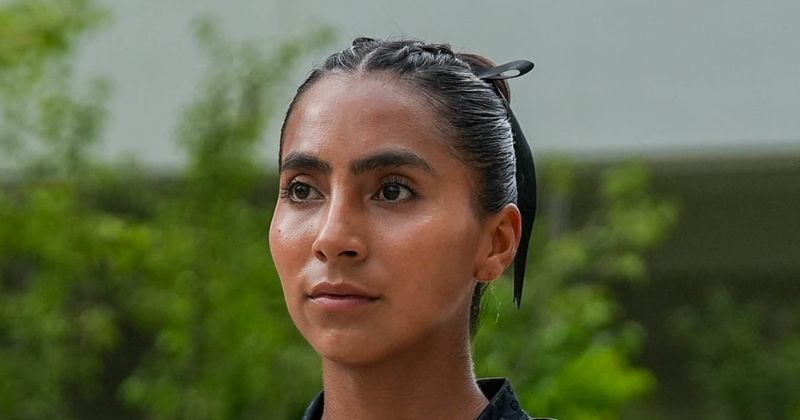
Diana Flores is the cleanest way to understand how flag football moved from a modified version of American football into a sport with its own international identity. Mexico’s quarterback and captain has become more than a star player: she is the public face of a game that is fast, technical and increasingly global as it prepares for its Olympic debut at Los Angeles 2028.
Flores and the new center of gravity
Flores matters because her profile fits the sport’s shift better than any slogan could. She leads Mexico’s women’s national flag football team, and that team’s gold medal at The World Games 2022 in Birmingham, Alabama, gave the sport one of its clearest elite milestones outside the Olympics. That victory was not a novelty result. It showed that flag football already has a meaningful international ladder, with national teams, major events and championship stakes.
The International World Games Association reinforced that point in February 2023 when it identified Flores as its Athlete of the Month and noted her as a gold medal winner from Birmingham. The recognition captured what makes her such an effective ambassador: she is an elite quarterback, but she is also a recognizable symbol of where the sport is headed. In a discipline still building its mass audience, a player who can represent both performance and possibility is invaluable.
Mexico’s gold standard and the sport’s broader map
Mexico’s World Games title gave flag football a serious reference point beyond youth leagues and recreational fields. It also underlined how the sport has taken root well outside the United States, with organized national programs producing athletes who train, compete and build careers around the game. Flores stands at the center of that development, and her success shows that flag football’s future is not limited to one country’s football culture.
That global spread is part of why her visibility matters so much. Flores has become a cross-border figure because she helps translate the sport for new audiences. Fans who know traditional football can recognize quarterback play, route timing and defensive pressure, while new viewers see a format that is easier to enter and easier to understand. Her presence gives the sport a face that can travel from Mexico to international stages without losing context.
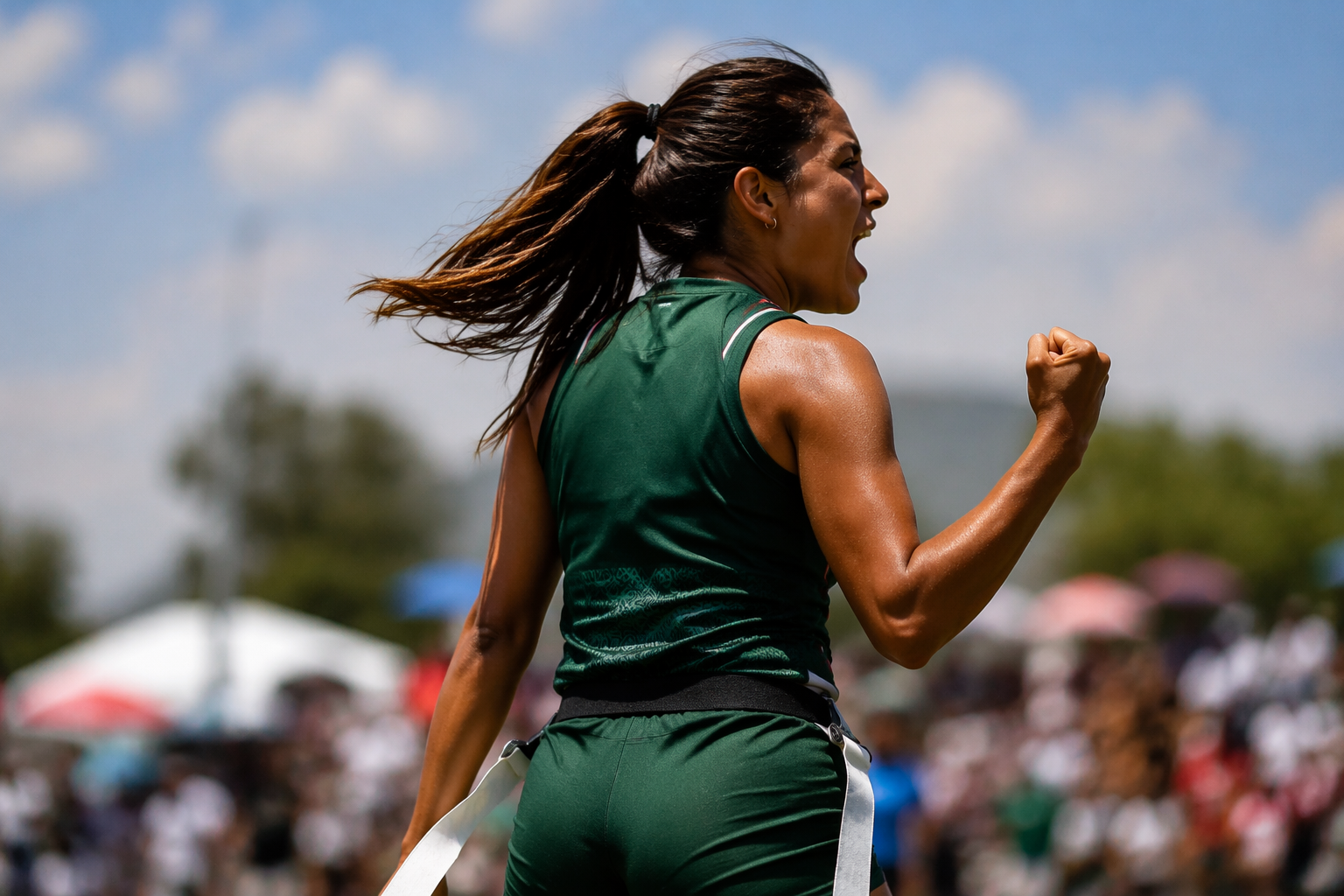
The World Games medallists were later honored at NFL Kickoff in Los Angeles, a telling sign that flag football has crossed into mainstream football spaces. The setting mattered. A sport once seen as a secondary variation was being recognized on a platform tied to the most powerful football brand in the United States, which signals how far flag football has moved in both visibility and legitimacy.
Why flag football keeps expanding
The sport’s rise is not only about elite results. Its structure makes it easier to spread. Olympics.com has described flag football as a sport that everyone can play, and Flores’s own path reflects that access. She has spoken about starting young in a sport that was not widely popular and did not offer many opportunities at the time. That makes her career a direct example of how talent can rise in a format with a lower barrier to entry than tackle football.
The differences are practical and cultural. Flag football requires less protective gear, less early specialization and more flexible spaces to play. It also supports mixed-gender and age-inclusive participation more naturally than many contact-heavy sports. That helps explain why the game has been able to grow quickly across countries and communities, and why a player like Flores can emerge as a major figure from a setting where the pathway was still developing.
At the top level, the sport still demands real football skill. Speed, spacing, route precision, quick decision-making and flag-pulling defense define the best teams. A quarterback like Flores embodies that modern version of the game. She has to process the field fast, distribute the ball accurately and command a team in a format where possession and momentum can swing in an instant.
LA28 and the Olympic reset
Flag football’s Olympic debut at Los Angeles 2028 is part of a larger program expansion that includes five new sports. Alongside flag football, LA28 will add baseball/softball, cricket, lacrosse and squash, placing the game inside a broader effort to spotlight fast-growing international disciplines. That matters because flag football is not being introduced as a one-off experiment. It is arriving as part of a wider Olympic recalibration toward sports with global participation and fresh commercial energy.

Flores is especially useful in that context because she gives the Olympic story a human frame. The sport’s inclusion is a governance decision, but her visibility makes it legible to fans. She helps connect Mexico’s success, the women’s game, the international competition calendar and the Olympic stage into one continuous narrative. For a sport building identity ahead of LA28, that kind of ambassador is not ornamental. It is structural.
Roger Goodell’s support for the sport’s Olympic move adds another layer. The NFL commissioner’s line, “What’s better than winning gold?”, captures how deeply the league sees flag football as part of football’s future. That endorsement matters because it ties the Olympic project to a larger football ecosystem with massive reach, resources and media power.
The international calendar behind the headline
The road to LA28 is already being tested in global competition. Olympics.com covered the 2024 IFAF Flag Football World Championships in Lahti, Finland, as a key checkpoint ahead of the Olympic debut. That event matters because it shows the sport’s competitive ladder is already active and organized, with international championships that help define who belongs among the best.
The World Games remains equally important. In 2025, the event moved to Chengdu, China, and flag football was previewed there as part of its continuing international growth. The geography tells the story: Birmingham, Lahti, Chengdu, Los Angeles. Flag football is no longer confined to one region or one football culture. It is moving through a global circuit that now includes recognized tournaments, national programs and Olympic planning.
That is why Flores is more than Mexico’s captain. She is a recognizable symbol of a sport learning how to present itself to the world. Her gold medal in Birmingham, her visibility through Olympics.com coverage, and her place in the sport’s most important international moments all point in the same direction. Flag football is no longer asking whether it belongs on a global stage. With Flores leading the way, it already looks like it does.