Dodgeball has many versions, and no single rulebook
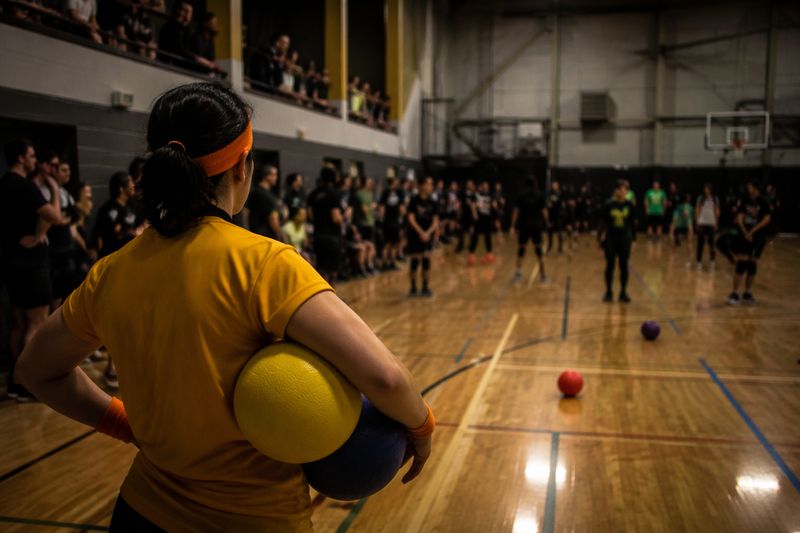
Separate cloth and foam rulebooks, no-sting balls and revival formats can all sit under the same word: dodgeball. The game is played informally in schools and pick-up games under varying rules, and formally as an international sport under rules that vary among governing bodies. That is why two people can both say they play “dodgeball” and still be talking about different sports.
The core idea is shared, not the rulebook
The family resemblance is easy to spot. Players throw to pressure or eliminate opponents, catch when they can, and try not to get tagged themselves, but the named variations keep multiplying: Bombardment, Blob Ball, Courts & Revival, Dandy shandy, Dibeke, Doctor dodgeball, Gaga and Prisonball are all part of the broader dodge-and-strike universe. Gaga is a close cousin, Prisonball adds confinement, and Courts & Revival points to the biggest fault line in the sport: whether eliminated players stay out or get back in.
One league’s “best” player may be thriving in a revival format where mistakes are forgiven, while another is grinding through a no-revive game where one bad throw ends your run.
Cloth, foam and no-sting do not play the same
The World Dodgeball Federation, formed in 2012 and headquartered in Edmonton, Canada, publishes separate rulebooks for cloth and foam dodgeball. Its 2022 rules document is organized around facilities and equipment, participants and playing formats. Even then, the ball itself changes the feel of the game.
Cloth formats, especially in British Dodgeball’s adult setup, are the main event in many organized settings. In British Dodgeball’s adult setup, the main sport is the 5 ball cloth game, played at the majority of its leagues and open events, while foam is a relatively new version in the UK and appears at a smaller number of events. Ball texture changes how hard players can throw, how much sting they absorb, and how willing teams are to take body-line risks.
No-sting sits even further along that spectrum. In the WDBF 2024 rules, the ball is specified as textured no-sting cloth with a 2 to 4 mm foam layer underneath and a butyl bladder covered by webbing inside. Softer balls encourage faster exchanges, longer rallies and more aggressive shot-making because the punishment for getting hit is reduced.
Team format shapes the whole pace of the match
School and junior versions often look very different from adult league play because the team sheet is different before the first ball is thrown. British Dodgeball’s three-ball rules were written as a stepping stone for beginner and junior players, with age groups for under-11s, under-13s and under-16s. Its play-ball instructional content also explicitly covers under-11 or primary school, high school and adult levels.
Primary-school quick-start rules show how much structure gets added at the youth level. Six players are on court at the start of a set, including a minimum of two girls, with a maximum squad size of 10. Substitutions happen between sets, substitutes can sit in the outbox or act as ball retrievers, and each team should have at least two ball retrievers and at most three if both teams agree.
In that primary-school format, a set lasts 2 minutes, the match is 2 halves of 3 sets for 6 sets total, and knockout or positional overtime is 1 minute.
Court structure is not a detail, it is the engine
Major League Dodgeball uses the World Dodgeball Federation’s standard court size: 18 meters by 9 meters. Dodgeball is a spacing game as much as a throwing game. A tighter floor compresses reaction time; a standard floor gives throwers lanes, retrievers room and defenders just enough space to gamble.
The WDBF’s rules are built around that geometry, with sections for the playing area, lines on the court and zones and areas. The same federation also frames play through formal components like scoring and timing devices. British Dodgeball’s age-group rules keep the court familiar while changing the participant rules.
Elimination, catches and revival decide the strategy
The central tension is always the same, throw, catch, shield or take the shot, but the elimination logic changes the value of every decision. If catches matter, defense can flip into offense in one touch; if revival exists, a reckless all-in throw is less expensive because the game may give bodies back.
The very name Courts & Revival tells you how much one rule can change everything. A no-revive game rewards patience, ball control and clean end-game execution. A revival game rewards pressure, risk tolerance and the ability to keep attacking even after losses, because the contest can restart with more players in play.
WDBF’s 2026 cloth rules draft includes style of play, timing and scoring, opening rush, ball position, beginning of play, false starts, outs and attempts.
Why the arguments keep happening
Britannica Kids has a dodgeball entry, which fits the way most people meet the sport first in school rather than through a federation. The sport spans local bodies and formal branches, with international rulebooks from the WDBF and age-tiered instructions from British Dodgeball. Cloth, foam, no-sting, six-on-six school play and revival-heavy variants all sit under the same label.