Dodgeball injuries send thousands of children to emergency departments
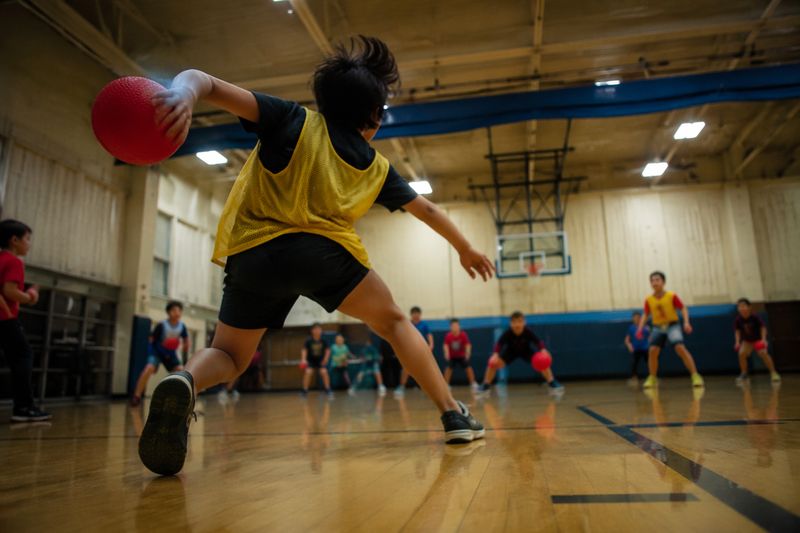
Dodgeball still gets sold as a harmless school-game sprint, but the emergency-department data give it a harder edge. In a 2020 analysis by Mathias B. Forrester and Sarah A. Richmond, 5,533 recorded dodgeball injuries translated into a national estimate of 185,382 cases, and 167,766 of them involved children.
What the national count means
The study drew on National Electronic Injury Surveillance System, NEISS, data from 2001 through 2018 to describe dodgeball-related injuries treated in emergency departments. That matters because the paper’s abstract says there was little published information on dodgeball injuries before this investigation, so the study filled a real evidence gap rather than just confirming a hunch.
NEISS is the U.S. Consumer Product Safety Commission’s primary injury-data system, and the surveillance pipeline behind it has history. In 1992, the Centers for Disease Control and Prevention’s National Center for Injury Prevention and Control and the CPSC set up an interagency agreement to begin collecting injury data through NEISS, which is why a gym-class staple can show up in national injury estimates at all.
Why the age split is the story
The sharpest number in the study is not the raw total, but who it hit. Children accounted for 167,766 injuries, or 90.5 percent of the estimated burden, while adults made up the remaining 9.5 percent. That tells you the risk is concentrated where dodgeball is most often played: schools, after-school programs, and youth recreation.
That age split should change how the sport is managed. The common image of dodgeball as a low-stakes, non-contact diversion does not match the fact that it is landing children in emergency departments in large numbers. When almost all the injuries are in kids, the default safety standards should be written for children first, not for the adult pickup game version of the sport.
What the severity data say, and what they do not
Emergency-department surveillance does not mean every injury is catastrophic, and British Columbia’s Active & Safe evidence summary is careful on that point. It says serious injuries are uncommon, but accidents do happen, which is a much more accurate way to frame the sport than either blanket panic or blind nostalgia.
That is where the public-health lens matters. The British Columbia Injury Research and Prevention Unit, BCIRPU, was established in August 1997 by the Ministry of Health and the Minister’s Injury Prevention Advisory Committee, and it sits within the Evidence to Innovation research theme at BC Children’s Hospital. Supported by the Provincial Health Services Authority and the University of British Columbia, BCIRPU gives dodgeball the same injury-prevention treatment that schools already apply to other common youth activities: measure the harm, then adjust the setting.
The mechanism problem hiding in plain sight
Dodgeball’s basic structure creates the injury mechanism. Players throw at each other, dodge incoming balls, and move fast in tight spaces, which leaves room for impacts, awkward landings, and collisions when games get chaotic. The sport’s reputation for being simple is part of the problem, because simple games often get the loosest supervision.

That is exactly why the emergency-department numbers matter more than anecdote. A game that produces 185,382 estimated injuries over the study period is not a fringe problem, and the 2001 to 2018 window shows this is not a one-off fluke. The injury pattern is broad enough to warrant rules that match the risk, especially in youth settings where the exposure is clearly concentrated.
What coaches, schools, and rec leagues should change
If dodgeball is going to stay on courts and in gymnasiums, the safest response is to treat it like a structured activity, not a free-for-all. The data point one way: children are the main group getting hurt, so the burden of prevention belongs with the adults running the game.
At minimum, programs should tighten the way the sport is staged:
• Keep the game in age-grouped settings, especially for elementary and middle-school players, since children account for 90.5 percent of the estimated injuries.
• Put a coach, teacher, or referee in charge of every session, because the sport’s fast pace and close spacing leave little room for casual supervision.
• Use only controlled, clearly defined court boundaries and stop play when space is crowded or the activity turns into uncontrolled collisions.
• Treat equipment choice as part of safety planning, not an afterthought, since the game’s impact-based structure is what drives the emergency-department burden.
Those changes do not make dodgeball boring. They make it fit the evidence. The sport can still be fast and competitive, but the numbers say the people setting the rules should stop pretending it is just a playground joke.
The bottom line for youth sports
Dodgeball is not the most dangerous game in school sports, but it is dangerous enough to leave a measurable mark in national injury surveillance, and most of that mark is on children. That is the core lesson from the 2001 to 2018 NEISS data, the BCIRPU safety frame, and the public-health history behind injury reporting: if the sport is going to be played widely, it should be managed like a real risk, not excused as harmless fun.