Dodgeball shines outside worlds at European Sport for All Games
Dodgeball’s most effective audience-grab rarely happens inside its own world championship bubble. In Perugia, Emilia-Romagna and Birmingham, the sport stepped into mixed-sport festivals that put it in front of amateurs, first responders and traditional-sport audiences who might never buy a ticket to a standalone dodgeball event. The result is a different kind of growth, one built on exposure, participation and federation reach as much as medals.
Perugia turns dodgeball into a public-facing sport
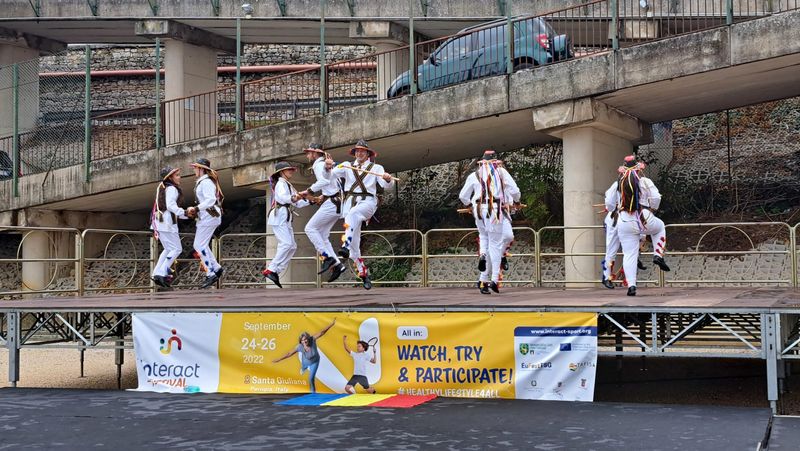
The 2nd TAFISA European Sport for All Games in Perugia, Italy gave dodgeball a stage that looked nothing like a championship final. The event featured more than 40 sports from 20 countries, with Traditional Sports and Games presented at Santa Giuliana stadium and across Perugia’s historic city centre, including demonstrations in Pian di Massiano. That setting matters because it places dodgeball inside a citywide celebration of physical culture, where spectators encounter the game alongside other movement traditions rather than as a one-sport specialist audience.
TAFISA describes the European Sport for All Games as a celebration for participants of all ages, abilities and backgrounds, which broadens the sport’s reach beyond the usual competitive ladder. The World Dodgeball Federation matches that tone in its own mission, saying it promotes dodgeball with “unifying, educational, cultural and humanitarian values.” In practice, that means the sport is being framed not only as a competition, but also as a portable part of a wider festival of sport and culture.
That distinction is the first piece of dodgeball’s audience-growth playbook. A world championship asks people to care about a bracket; a city festival asks them to stumble into the game, watch a demonstration in a public square and leave knowing that dodgeball exists. For a sport still building mass recognition, that kind of encounter can matter as much as a title.
The CSIT Games show how inclusivity changes the scale
If Perugia shows the cultural side of the strategy, the 2023 CSIT World Sport Games in Emilia-Romagna show the operational side. Dodgeball debuted there with 15 teams, more than 100 athletes and 47 matches played over three days, a compact but substantial footprint for a first appearance at a major multi-sport event. Athletes and officials came from Austria, Ireland, Italy, Norway, San Marino, Sweden, Turkey, Canada and Tunisia, which gave the competition a genuinely international feel without requiring the narrow, elite structure of a world championship.
The event ran through Sept. 9, 2023, and brought about 4,000 athletes and 1,000 accompanying persons to Italy. CSIT positions the World Sports Games as a biennial event for amateurs rather than top athletes, with sport, cultural exchange and a festival atmosphere at the center of the experience. That amateur focus is exactly why dodgeball fits so cleanly there: the format lowers the barrier to entry while still offering enough competitive structure to make the matches matter.
The most revealing detail is the format shift. The federation says the sport moved away from a planned European Foam Championships concept so more teams and more divisions could participate. That is not just a scheduling note; it is a growth decision. Dodgeball gained more match volume, more national representation and more ways for players to see themselves inside the event, which is often how a sport converts a one-time appearance into future federation ties and deeper international participation.
World Police & Fire Games open a different door
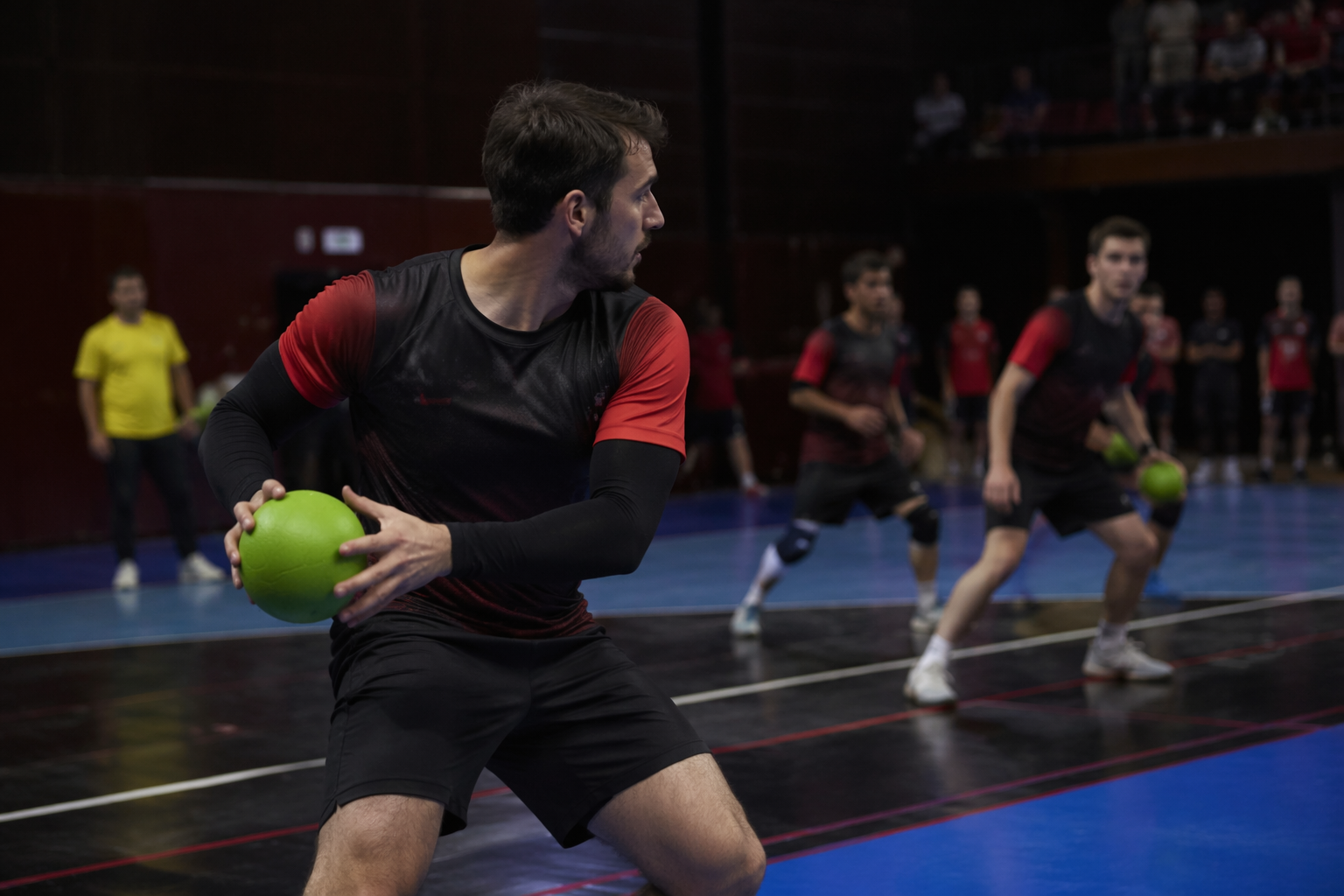
Dodgeball’s reach widens again at the World Police & Fire Games, where the sport returns to an audience that is neither traditional-sport festival goers nor elite international specialists. The World Dodgeball Federation says dodgeball came back to the WPFG in 2022, and it appeared again when Birmingham, Alabama hosted the 2025 Games from June 27 to July 6, 2025. The Birmingham event drew more than 8,500 athletes from more than 70 countries, while the city’s own tally cited more than 7,500 first responders from 72 countries, including about 700 from Alabama.
That scale came with 60-plus sports and more than 1,600 medal events, which helps explain why dodgeball travels so well in that environment. The WPFG is a biennial competition for active and retired law enforcement and fire service personnel, so the sport reaches a built-in community with strong occupational identity, team culture and competition experience. In that setting, dodgeball is not selling itself as a curiosity. It is showing that its rules are simple enough for immediate adoption and its pace is sharp enough to hold a crowd inside a sprawling multi-sport calendar.
The implication is practical. Every appearance at a place like Birmingham exposes dodgeball to federations, local organizers and athletes who may later seed clubs, clinics or sanctioned events in their own countries. The sport’s value is not only in the medals awarded in Alabama, but in the institutional familiarity it builds with every return visit.
World championships still anchor the sport’s elite pathway
The broader festival route does not replace dodgeball’s own world championship system. The World Dodgeball Federation says it has run the Dodgeball World Championship since 2012, giving the sport a clear elite spine and a repeatable pathway for title play. That championship structure is where rankings, national pride and high-level competitive credibility live, and it gives the sport a standard that multi-sport appearances can feed into.
Toronto in 2017 is the cleanest example of how that elite ecosystem works. At the world championships there, Malaysia’s women defended their title, while the men won gold by beating host Canada after a dramatic semifinal path against the United States. Those results matter because they show a mature championship hierarchy, one that rewards national programs, sustained training and tournament experience at the highest level.
The comparison with the festival circuit is the point. World championships decide who is best; the European Sport for All Games, the CSIT World Sport Games and the World Police & Fire Games decide where new eyes land on the sport first. Dodgeball’s growth strategy works because it can do both at once: preserve an elite championship core while meeting fresh audiences in settings built for discovery, participation and cultural exchange.

What these appearances actually convert into
• New participants, because amateur and all-abilities settings let players enter through low-friction events rather than a closed championship ladder.
• Federation ties, because multi-country festivals create contact points with organizers from Italy, Canada, Tunisia, Austria, Ireland and other national programs.
• Public visibility, because Perugia’s stadiums, city center and public demonstrations put the sport in front of mixed audiences, not just specialist fans.
• Competitive depth, because formats like the CSIT debut reward more teams and more divisions instead of narrowing the field too early.
• Championship contrast, because the world titles in Toronto still define the sport’s top tier while the festivals expand its footprint far beyond that circle.
Dodgeball keeps proving that its strongest growth story is not confined to one bracket or one final. It is a sport that can survive the pressure of championship play and still adapt itself to the broader festivals where the next wave of players first sees what it looks like in motion.