Fairfield Properties Ballpark anchors Long Island Ducks’ Atlantic League identity
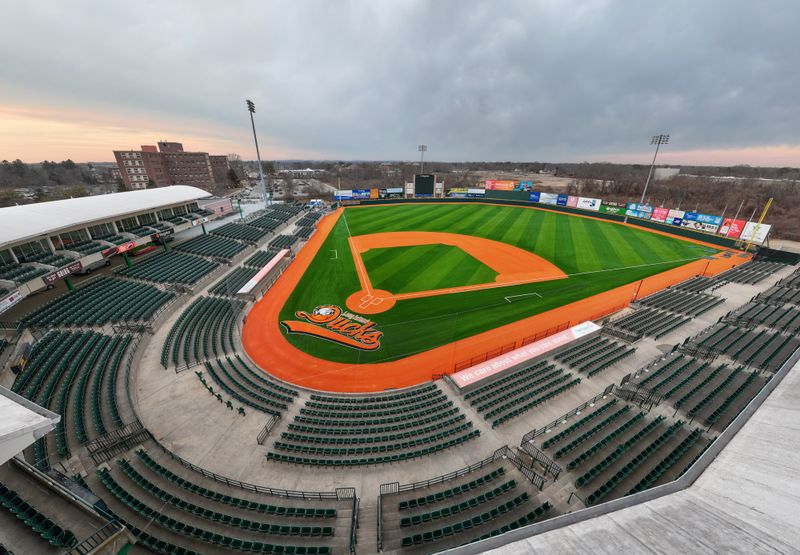
Fairfield Properties Ballpark gives Long Island Ducks baseball its clearest sense of place. Opened in 2000 at 3 Courthouse Dr. in Central Islip, New York 11722, the park has spent more than two decades shaping how Atlantic League Baseball looks and feels on Long Island. Its 325-400-325 dimensions, plus a naming history that runs through EAB Park, Citibank Park, Suffolk County Sports Park, Bethpage Ballpark, and now Fairfield Properties Ballpark, make it a useful template for what fans should notice across the league.
What defines the Ducks' home stage
The Long Island Ducks built their home around this ballpark, and the relationship began with a concrete milestone: the first regular-season game there came on May 14, 2000, when the Ducks hosted the Aberdeen Arsenal. That date matters because it marks the venue not as a generic ballpark that later found a tenant, but as a purpose-built home that opened with the team already central to its identity. The Ducks still present the building as their home ballpark, which is why the park reads less like an arena and more like the franchise's physical signature.
That connection also explains why Fairfield Properties Ballpark appears on regional tourism listings such as I LOVE NY and Discover Long Island. The venue is part of Long Island's travel and entertainment landscape as much as it is part of the Atlantic League schedule. For a fan planning a visit, that means the trip works on two levels: baseball first, but with a clearly defined place in the broader Long Island experience.
The dimensions tell you how the game breathes
The simplest way to understand the park is through its outfield line: 325 feet to left, 400 to center, and 325 to right. That shape is balanced on paper, but the 400-foot center field creates a real demand on hitters and outfielders alike. Balls hit to the deepest part of the park do not leave easily, so line drives, gap shots, and aggressive baserunning matter more than in a park built for easy power.
The shorter corners keep pull power in play without turning the venue into a hitter's toy. That balance is exactly what makes Atlantic League parks worth comparing from site to site: a lineup that leans on opposite-field contact or speed will look different here than in a place with shallower alleys or a tighter center field. A fan watching the Ducks should pay close attention to how balls carry at night, how outfielders position themselves in the gaps, and how pitchers attack the lower half of the zone when the center-field alley can swallow a deep fly.
The names map the ballpark's history
The park's different names are more than branding trivia. EAB Park, Citibank Park, Suffolk County Sports Park, Bethpage Ballpark, and Fairfield Properties Ballpark mark a sequence of sponsorship eras and local uses, not a series of new buildings. That matters in Atlantic League Baseball because durable facilities often accumulate identity the way a neighborhood bar does, through repetition, renaming, and the loyalty of the people who keep returning.
Seen that way, the name changes tell a story of continuity rather than instability. The structure stayed in place while the sign out front changed, and the Ducks kept playing. For fans, that history is part of the fun: every era leaves a trace, and the park's current name sits on top of a long local record that stretches back to its 2000 opening.

How to read the ballpark like a regular
Fairfield Properties Ballpark rewards the kind of attention that turns a casual night out into a sharper baseball experience. The building's shape and history give you a roadmap for what to watch before the first pitch and between innings. If you know where the park opened, who opened it, and how the dimensions work, you can read the game more accurately as it unfolds.
A few things stand out immediately:
• Watch center field first. At 400 feet, it is the park's most demanding dimension and the clearest clue to how the outfield plays. • Compare the corners to the gaps. The 325-foot lines can reward pull power, but they do not erase the importance of gap defense. • Notice the weight of the building's history. The succession of names shows a venue that has stayed relevant through changing sponsorships and long-term team use. • Treat the Ducks as the center of the building's identity. The park was built for them, opened with them, and remains their home stage.
That kind of reading is useful across Atlantic League Baseball. These venues are not interchangeable, and the best ones reveal their personality quickly. Some parks lean heavily on intimacy, some on sightlines, some on neighborhood context, and Fairfield Properties Ballpark shows how a single site can combine all three with a distinctly community-first feel.
Why this park matters in the Atlantic League landscape
The Atlantic League has always been strongest when its parks feel rooted in their cities. Fairfield Properties Ballpark fits that model because it is both specific and durable: a Long Island venue in Central Islip, a Ducks home field, a tourism listing, and a stadium whose identity has been layered over time instead of rebuilt from scratch. That combination gives fans more than a place to watch innings pile up. It gives them a way to compare how different ballparks shape tempo, strategy, and atmosphere.
For the traveler, the local supporter, and the scoreboard watcher alike, the lesson is the same. Fairfield Properties Ballpark is not just where the Ducks play, it is how the Ducks are understood. In Atlantic League Baseball, that is the standard worth seeking out every time the gates open.