Fernando Belasteguín, the bridge between padel’s eras
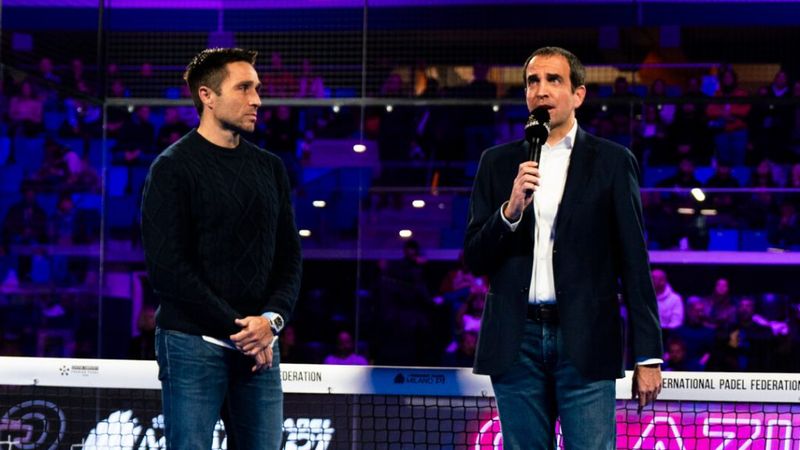
Fernando Belasteguín is the clearest line between padel’s past and present. The International Padel Federation says he finished with 230 titles, six world championships and 16 years as world No. 1, a résumé that still frames how greatness is judged in the sport. His final months, from Mar del Plata to Milan, felt less like a retirement tour than a handover of the measuring stick itself.
The benchmark padel still uses
Belasteguín’s case matters because his dominance was not built on one explosive season or one famous partnership. It lasted long enough to define what consistency looks like at the top, and long enough for several generations of players to grow up with his name at the summit. The FIP’s own farewell language called him the greatest in history, while Premier Padel described his career as a 30-year run that redefined the sport.
That framing helps explain why modern fans keep returning to him whenever a new star breaks through. A 16-year reign at No. 1 is not just a record, it is a baseline for comparing mental resilience, physical durability and partnership chemistry. In padel, where points often hinge on positioning, anticipation and the smallest shifts in control, Belasteguín became the player everyone else had to measure against.
How the sport evolved around him
The FIP’s ranking-history page gives the crucial context for understanding why his reign spans more than one era. Since 2005, when the Pro Padel Tour began, No. 1 has been determined by rankings from the main professional circuit. Before that, the federation says the leading names were based on world championships and major circuits and tournaments in Spain and Argentina.
That distinction matters because it shows Belasteguín as more than a champion inside one system. He is the statistical bridge between the sport’s earlier, more fragmented structure and the modern professional calendar that now defines elite padel. The federation’s 2026 website update also says it now preserves titles, finals and ranking history across the major professional circuits, which turns his career into a clean thread running through the sport’s archival memory.
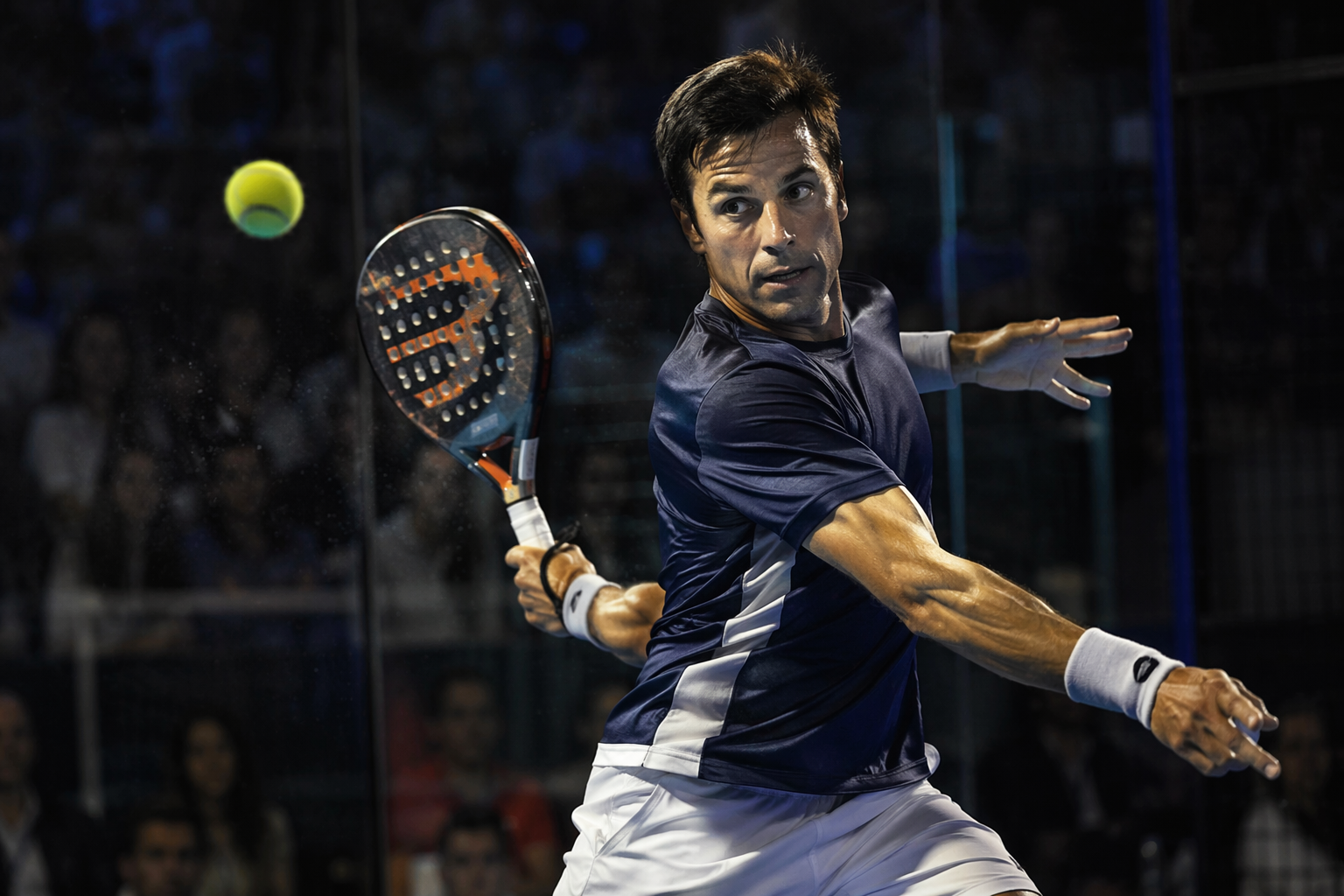
For newer fans, that makes his profile unusually useful. It shows how padel’s elite standard moved from regional and championship-based recognition to a circuit-driven hierarchy, and how one player stayed on top through both realities. Belasteguín is the rare figure whose career can be used to explain the sport’s own institutional evolution.
Why his game lasted so long
His official FIP profile places his birth in Pehuajó on 19 May 1979 and lists him at 1.80 meters tall. It also identifies him as a left-side player, a detail that tells you a lot about the architecture of his success. He was never defined by pure flash; his game was built around control, positioning and an unrelenting competitive edge that could survive every change in the sport’s pace and power.
That profile fits the broader arc of his career. He turned professional at 15, which means the sport’s most enduring standard-bearer entered elite competition while many future stars were still finding their footing. By the time padel accelerated into its current media-heavy, globally watched era, Belasteguín had already spent years mastering the routines, partnerships and pressure points that decide whether a pair stays No. 1 or slips away.
The numbers around him underline that scale. FIP and Premier Padel both say he finished with 230 titles and six world championships. FIP’s 2024 Sardegna feature called him the most decorated athlete in the sport and the greatest No. 1 in padel history, a distinction that matters because it ties individual dominance to the game’s wider growth.
The farewell moments that marked the transition
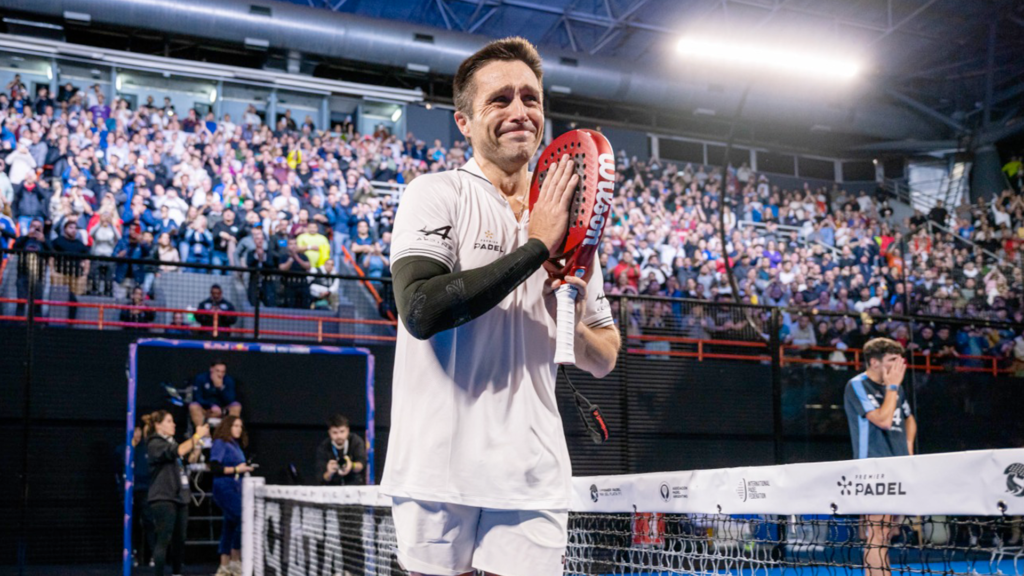
Belasteguín’s last professional match in Argentina came on 25 May 2024 in Mar del Plata, where he and Juan Tello lost 6-3, 6-1 to Arturo Coello and Agustín Tapia. The setting mattered as much as the scoreline: the crowd at Polideportivo Islas Malvinas stood in tears and applauded him, a public acknowledgment that an era was closing in front of them.
His final professional match overall came alongside Tino Libaak against Javi Garrido and Lucas Bergamini, another reminder that the sport’s next generation was already taking the court in the same storyline. In Milan, the farewell ceremony was branded “Grazie Bela,” with FIP president Luigi Carraro present. Premier Padel said the audience there felt privileged to witness the moment, and the event drew 32,000 spectators across Milano Premier Padel P1 week, including 5,500 for the finals.
Those numbers give his exit a broader cultural weight. This was not simply a tribute to an individual title collector, but a public ceremony for a player who had become part of padel’s identity. The emotional scenes in Argentina and the scale of the Milan sendoff show how the sport now treats legacy as an event in itself, not just a statistic in a record book.
What Belasteguín explains about elite padel now
Belasteguín’s career remains the cleanest way to understand what elite padel became before the current boom. He shows why the sport values partnership stability, why left-side control is so prized, and why ranking longevity can matter as much as a single title run. He also shows how quickly padel moved from a smaller, regionally anchored competition to a global circuit where history, rankings and spectacle now sit side by side.
That is why his name still functions as the reference point. When a current No. 1 stretches a streak, when a pair dominates a circuit, when a final feels like the start of a dynasty, the comparison leads back to Belasteguín. His 16-year run at No. 1 did more than fill a trophy case: it set the standard that modern padel still uses to define the sport’s highest level.
Sources
- [1]padelfip.com
- [2]premierpadel.com