FFT chief outlines new era for French padel competitions
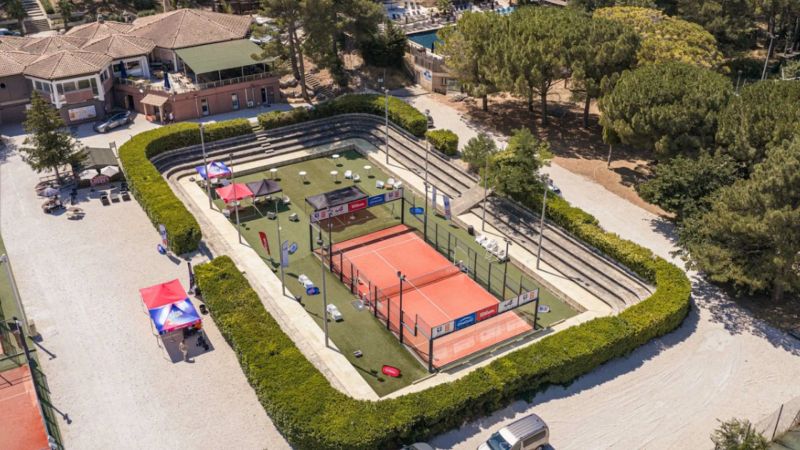
The last P2000 in Cabriès under the current format carried more than a tournament result. It became the handoff point for French padel, with Laurent Aznar using the occasion to sketch a new competition order built around clearer tiers, stronger economics, and a cleaner route from domestic events to international play.
Cabriès as the hinge point
The setting matters because Cabriès was not just another stop on the calendar. WinWin Padel Cabriès hosted the final P2000 in its current form, and Aznar used that backdrop to frame a reform that is meant to touch nearly every layer of the French game. The message was less about one elite weekend and more about how the federation wants the sport to function from the local club upward.
That shift is why the interview landed as a transition story rather than a routine policy update. Cabriès closes one chapter, but the federation is already trying to redraw the board for next season, with the emphasis on organization rather than simple expansion.
What the new competition ladder would look like
Aznar said the next national structure would include four P3000 events. Those tournaments would sit above a reworked domestic ladder, giving French padel a premium tier that is distinct from the events that currently anchor the national circuit.
The same reform would keep eight P2000 events, but those would correspond to today’s P1500-level competitions for men and women. That detail is crucial: the labels are changing, but the underlying hierarchy is being sharpened rather than blurred. The French Tennis Federation still lists P1500 and P2000 events on its national competitions page, which shows that the system is still in motion and that the proposed P3000 tier is meant as a structural change, not a cosmetic rename.
For players, that means clearer signals about where each stop fits in the season. For clubs and organizers, it means a more formal ladder to build around, with higher-tier events separated from the middle of the domestic circuit instead of all of them competing for the same status.
Why calendar clarity matters as much as the labels
The competition tier only works if the calendar works with it. The FFT says it publishes calendars for both the 2026 sports year and the 2027 sports year, which suggests the federation is trying to plan padel as a multi-season system rather than through isolated announcements.
That concern was already visible before Cabriès. On October 4, 2024, the Conseil National du Padel met at the Centre National d’Entraînement to discuss the future of the discipline. By May 2025, Aznar was already saying that the next season’s calendar was still being built and that calls for applications were underway. Put together, those milestones show a federation trying to move from improvised scheduling toward a more ordered national architecture.
The pressure point is obvious. If the calendar is unclear, players cannot plan rankings runs, clubs cannot commit resources with confidence, and organizers cannot sell events as stable fixtures. The new hierarchy only matters if the dates, entry windows, and event priorities stop shifting under everyone’s feet.
The real test: money, access, and the domestic pathway
Prize money sits at the center of the reform because the best French players need a viable domestic route if they are going to stay in the national system. A better-labeled ladder means little if the middle of the circuit does not pay enough to justify travel, coaching, and time away from other work or international opportunities.
That is where the discussion around the FIP circuit becomes important. Aznar’s push to work more closely with the FIP pathway signals a desire to connect French tournaments to broader international opportunities, rather than leaving players to choose between a domestic circuit and a separate international climb. The reform therefore is not only about domestic prestige; it is about whether France can build a pathway that keeps its sub-elite and elite players inside the same ecosystem long enough for them to progress.
Access for sub-elite players is part of the same issue. A cleaner ladder can help, but only if the middle tiers remain open enough for strong regional players to move upward. If the reform simply raises the branding at the top without widening opportunity below it, it risks rearranging bottlenecks instead of removing them.

The pressure points Aznar wants tightened
Aznar has also said the federation wants to address coached tournaments, phantom pairs, absent referees, strategic withdrawals, and software-related changes. Those are not side issues. They are the friction points that decide whether a competition system feels credible to the people inside it.
Coached tournaments and phantom pairs go straight to competitive integrity. Absent referees and strategic withdrawals affect the quality and legitimacy of events on the ground. Software changes matter too, because the administrative layer has become part of the competitive product, especially when clubs and players depend on orderly registration, draws, and scheduling tools. If the federation wants a stronger hierarchy, it has to make the operational base trustworthy enough to support it.
Clubs, health, and the wider ecosystem
The reform also has a club-facing dimension that goes beyond elite competition. French padel depends on facilities that can host matches, training, and everyday participation at the same time, and that makes club support a central policy issue rather than an afterthought.
Aznar’s wider footprint reflects that broader view. FFT coverage from December 18, 2024 said ASCAP Montbéliard had been offering padel-santé sessions for three years and had opened a third slot, working with the Ligue contre le cancer and the Réseau sport-santé Bourgogne-Franche-Comté. That example matters because it shows padel being used not only as a competition sport but also as a club-based health and participation tool.
In that sense, the Cabriès interview points to a federation trying to manage padel as a full ecosystem. The new era is not just about a renamed ladder or a better top tier. It is about whether French padel can give clubs a stable framework, give players a path worth staying on, and give organizers enough clarity to build events that actually hold together.
Sources
- [1]padelmagazine.fr
- [2]padel-magazine.co.uk
- [3]fft.fr