FIFG rulebook explains FootGolf's tournament structure and scoring formats
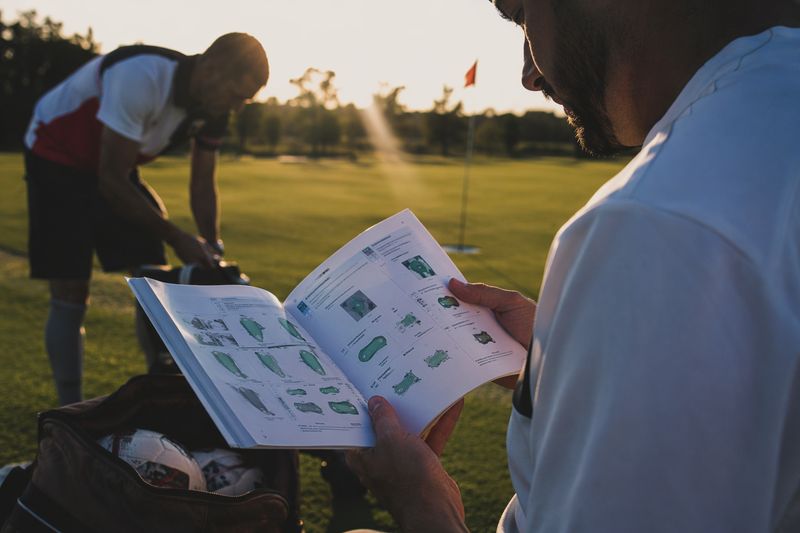
FootGolf’s real edge is not the novelty of kicking a soccer ball around a golf course. It is the machinery underneath the game: a rulebook built in 2012, a committee structure, and tournament procedures that let events run from local fields to world championships.
How scoring actually works
The basic objective is simple: move from the teeing zone to the hole in the fewest kicks. That single idea drives both of the sport’s main competition formats, stroke play and match play, and it is what gives FootGolf a familiar golf-like structure even as the action is built on soccer technique.
In stroke play, every kick matters across the full round, so the player with the lowest total score wins. In match play, the contest is framed hole by hole, which changes the pressure and the tactics: the result of each hole matters more than the overall count until the match is decided. That split gives organizers flexibility, because one event can emphasize individual scoring while another can build a head-to-head format with a different feel and a different kind of tension.
The rulebook also makes room for the practical problems that decide real tournaments. It addresses scorecards, dead heats, disqualification issues, protests, penalties, and interruptions to play, which means the sport has formal answers ready when scores are level or an event is disrupted. That matters because the competition is not just about accuracy on the course, it is about how the score is recorded, verified, and settled when the round does not go smoothly.
The rulebook is also the event manual
The Federation for International FootGolf says the rulebook was created in 2012 and has been updated over time to improve player experience, professionalism, and fairness. That history explains why the sport can function cleanly across different countries and venues: the rules are not treated as casual suggestions, but as a shared operating system for tournaments.
The current competition rules allow local rules, but only if they are made available to players before the tournament begins. FIFG also requires organizers to follow its Tournament Guidelines strictly, which gives each event a common baseline even when the venue, climate, or field setup changes. The rulebook goes well beyond shot-making and scoring, covering conditions and suspension of rules, tournament directors and marshals, course setup, extreme circumstances, starting times and groups, and interruptions to play.
That structure also explains why FootGolf can run with limited on-course supervision. FIFG describes the sport as one played with minimal marshal oversight and built on player integrity, courtesy, and sportsmanship. In practice, that means the code of conduct is part of the competitive architecture, not a side note, because the sport depends on players knowing the rules and enforcing them on themselves.
Committees and licensing create legitimacy
FIFG’s governance model is built around committees for competitions, the World Cup, rules, and women’s issues. That setup matters because it pushes authority into clear lanes: one group shapes competition standards, another oversees the flagship championship, another handles the rules, and another gives women’s issues a formal place in the sport’s decision-making.
The federation also recognizes only one national organization per country for player affiliation and world-tour licensing. That rule helps prevent fragmented national systems from pulling in different directions and gives the sport a single chain of recognition from local affiliation to international competition. FIFG also organizes regional tours in North America, South America, Europe, Asia-Pacific, and Africa, which turns a niche game into a structured global calendar rather than a collection of isolated events.
FIFG says its main function is to promote worldwide recognition of the sport, and that business logic is visible in the governance model. A sport that wants credible rankings, licensing, and elite events needs standardized rules, approved national bodies, and regional tour systems that can feed players upward without changing the competitive language from one country to the next.
World championship growth shows the scale
The sport’s championship history shows how quickly that structure has scaled. FIFG lists the first World Championship in Hungary in June 2012 with 79 players from 8 countries. By Argentina in January 2016, the event had grown to 227 players from 26 countries. Morocco in December 2018 brought 503 players from 33 countries, and the United States hosted 972 players from 39 countries in May 2023.
The 2026 World Championship in Acapulco is listed at 1,240 players and 64 teams, split into an individual world championship from May 27 to June 1 and a team world championship from June 2 to June 7. That structure shows how FootGolf now balances individual excellence with team identity, much like larger established sports that separate solo titles from team competition. The expansion also underscores why governance matters so much: once an event reaches four-digit player counts, the rules around groups, schedules, and dead heats become as important as the kicks themselves.
What elite tournament design looks like in the United States
The same architecture shows up in FootGolf USA’s Nationals 2025. The event counted for the AFGL Tour, the Region 1 North America Tour, the FIFG World Tour, and the FootGolf Grand Slam, which means one tournament could matter on several competitive ladders at once. That layering gives players more at stake in a single trip and gives the event more weight in the larger season.
The format was built around morning individual rounds and afternoon club rounds, with separate course arrangements for different categories. Men’s players used one course, while Senior Men, Senior Men Plus, Women, and Senior Women played on a separate course, with both courses running simultaneously. That is a useful snapshot of how the sport handles logistics: the schedule is not just about getting everyone on the field, but about matching categories, tee times, and course capacity to the shape of the competition.
FootGolf USA also says its U.S. tour calendar runs from July to June and is planned around weather, holidays, travel costs, and distances. That business detail matters because FootGolf is still building its commercial footprint, and the calendar is part of what makes the sport viable for players and organizers who have to budget time and money across a broad geography.
FootGolf’s growth is easy to miss if the game is reduced to a novelty. The rulebook, the committees, the licensing system, and the tournament formats show a sport that has built legitimacy through procedure, and that procedural backbone is what lets it scale from a local round to a 1,240-player world championship.