FIFG sets strict rules for hosting FootGolf's biggest events
The biggest FootGolf dates are no longer handed out like invitations. FIFG has built a power map around licenses, calendar cutoffs, and scored bids, and that structure now decides who gets a Major, a 500, or the World Cup stage itself. For ambitious host nations, clubs, and organizers, the message is blunt: the route to the sport’s top events runs through compliance first, prestige second.
How FIFG draws the line between elite events
FIFG’s 2026 competition rules make the sport’s hierarchy unmistakable. World Cup events carry 1000 FIFG points, the World Masters is also reserved for non-World Cup years and awards 1000 points, and 250-level events are being reduced as the federation tightens the top end of the calendar. That matters because points are not just a reward system; they are the currency that shapes relevance, ranking pressure, and where the best players choose to show up.
The rules also raise the operational bar. Pace of play regulations and control are mandatory for all FIFG tournaments from the 250 level and above, which pushes the sport toward a more standardized, more television-friendly, more professionally managed product. In practice, that means organizers are no longer selling only a golf course and a trophy; they are selling a controlled competition environment that can survive the scrutiny of elite international play.
What a host must do before it can even bid
The route to Majors and 500s begins before any vote or board approval. FIFG says member countries must meet minimum eligibility criteria before they can bid for future Majors and 500s, so the first hurdle is not geography or ambition but readiness. The federation will also consider the WT licenses of the member country up to October 31 of the current year when deciding the following year’s bidding process, which gives the calendar a hard annual cutoff and rewards federations that are organized well in advance.
That creates a very specific checklist for a would-be host. The country, club, or organizer needs a valid standing in the federation’s licensing structure, a bid that satisfies the eligibility bar, and enough lead time to prepare for the next season’s selection cycle. In other words, the date is not won in the final presentation alone; it is won months earlier through administrative discipline and compliance.
The bid process, step by step
The European selection process shows exactly how the modern FootGolf calendar gets built.
- Clear the pre-bid requirements. FIFG’s Europe process started with criteria covering course quality, operational planning, player services, media capacity, and historical organizational performance. Those categories tell organizers what the federation values: a credible playing surface, a functioning event machine, a serious media operation, and a track record that suggests the event will run cleanly.
- Survive independent review. An independent panel of four experienced members from four different countries interviewed the bidders. That cross-border setup matters because it reduces the sense of local favoritism and makes the selection feel like international governance, not regional favoritism.
- Score the proposal on three fronts. The panel evaluated past-event quality, the strength of the 2026 tournament proposal, and member-country development data. That blend is revealing: FIFG is not just asking who can stage the prettiest event, but who can do it well, who can advance the tour, and who can help the sport grow in that country.

- Send recommendations to the FIFG Board. The panel forwarded its recommendations for ratification, which means the board retains final authority. That final step is where the sport’s political and sporting priorities meet, but the pool has already been narrowed by a structured review.
The result in Europe was a clear distribution of elite hosting rights. The 2026 Majors went to Italy, Scotland, Slovakia, and Sweden, while the 500s were awarded to Belgium, the Czech Republic, England, France, Hungary, Portugal, Slovenia, and Spain. FIFG framed the decisions as part of a “rigorous, transparent and data-driven bidding process,” and the wording fits the system it built: elite events are now earned through process, not merely preferred by reputation.
Why the World Cup sets the tone for everything else
The World Cup is the clearest example of how FIFG links event access to legitimacy. Mexico won the 2026 World Cup hosting rights over Sweden after a transparent bidding process, and FIFG said that if member countries comply with the federation’s standards, more than 68 nations could be represented at the 2026 World Cup, a first for FootGolf. That is a huge statement of ambition: the federation is not just building a bigger tournament, it is using the tournament to widen international recognition.
FIFG also tied participation to broader institutional standards. The federation and its General Assembly reaffirmed that only federations complying with SportsAccord standards would be eligible to participate in the 2026 World Cup. That gives the event a second layer of meaning: it is not merely a championship, but a proving ground for whether national federations meet the governance threshold that elite sport now demands.
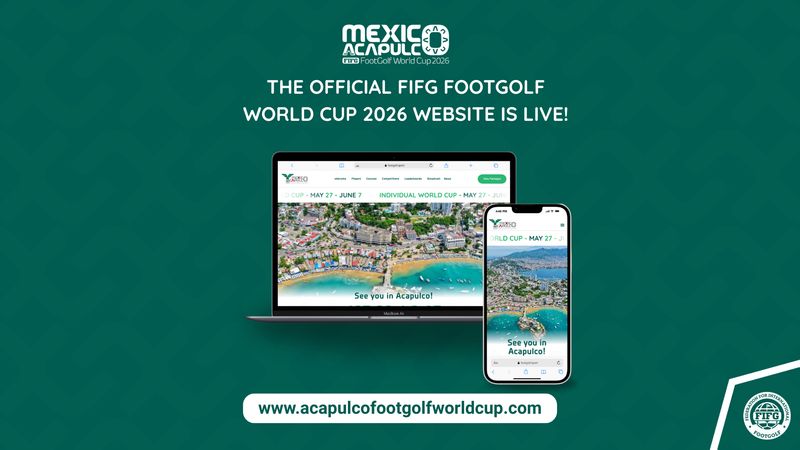
The Acapulco schedule makes the scale concrete. The FootGolf World Championship Acapulco 2026 is set for May 27 to June 7, 2026, with individual competition from May 27 to June 1 and team competition from June 2 to June 7. The official site lists 1,240 participating players and 64 teams, including 24 men’s teams, 24 senior men’s teams, and 16 women’s teams. The individual competition will distribute 1000 FIFG points in every category, underscoring that this is the sport’s biggest ranking stage, not just its biggest gathering.
The growth curve behind the governance
The federation’s stricter structure makes sense when placed against FootGolf’s growth. The World Championship site records earlier editions in Hungary in 2012 with 79 players from 8 countries, Argentina in 2016 with 227 players from 26 countries, Morocco in 2018 with 503 players from 33 countries, and the United States in 2023 with 972 players from 39 countries. That rise from 79 players to 972 shows why the federation has moved from flexible event placement to formalized control.
The calendar is now doing double duty. It awards prestige to the best-run hosts, and it pushes the sport’s geography outward by rewarding countries that can meet the standard. For organizers, that means the winning formula is no longer just a strong course or a loyal local base. It is the ability to prove, in advance, that the event can serve the players, the media, the federation, and the sport’s broader legitimacy all at once.
FIFG’s biggest events now sit at the intersection of competitive prestige, international reach, and administrative discipline. That is the new FootGolf power map, and every host that wants a date has to learn how to navigate it.