FIFG World Cup 2026 qualification system aims for global balance
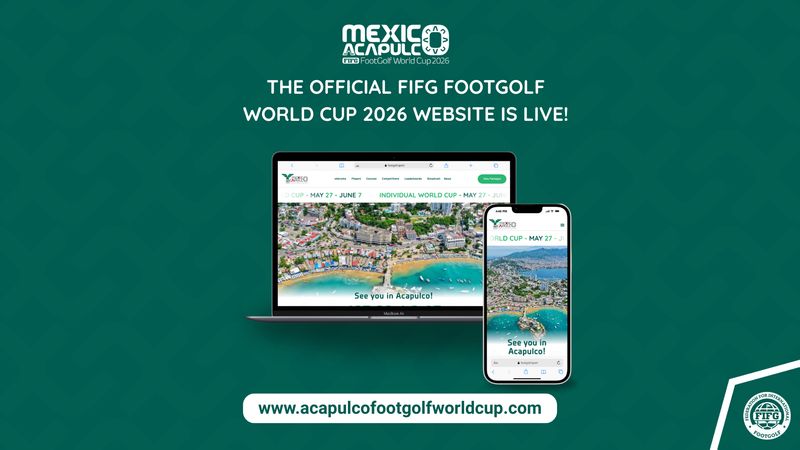
The 2026 FootGolf World Cup in Acapulco is not being filled by talent alone. With 1,240 players, 64 teams, and a 12-day schedule split between individual and team play, the field is being shaped by federation licensing, world rankings, and regional allocation rules that turn administration into competitive advantage.
How the qualification system actually works
FIFG designed the World Cup qualification framework to do three things at once: ensure global representation, foster competitiveness, and motivate active participation in the sport. The architecture was built by the World Cup Committee, refined by the Competition Committee, and approved by the FIFG Board, which makes the system a federation-wide policy rather than a one-off tournament rule.
The practical effect is simple. FootGolf does not use a pure open-entry model, and it does not rely on a single ranking list to decide the field. Instead, it blends guaranteed country access, membership-driven slot distribution, and performance-based selection so that the sport grows in more than one direction at the same time.
Why licensing matters before a ball is struck
The biggest gatekeeper is the World Tour License. FIFG’s player-affiliation rules say a player must be affiliated with the national FIFG member country of birth or permanent residence in order to apply for that license. That means the sport’s international pathway starts with administration, not just scoring.
FIFG also links opportunity to activity. Its competition rules say tournament opportunities for member countries depend on the amount of player memberships, and the qualification document says a player must have played at least one FIFG tournament to avoid manipulation. In practice, that rewards countries that build a real competition structure and makes it harder for dormant federations to rush players into the system at the last minute.
The result is a system where federations with stable membership rolls, regular tournaments, and clear affiliation records have the cleanest route into the World Cup. Countries that lack that paperwork or that do not maintain active participation can lose ground even if they have strong individual players.
The base spots and the ranking overlay
Every country gets a minimum foothold in the individual competition. FIFG’s qualification rules guarantee at least one Men player, one Senior Men player, and one Women player for each country. That base allocation matters because it keeps the World Cup from becoming an event dominated entirely by the deepest and richest federations.
After that, the system opens up in two layers. Seventy-five percent of the remaining spots are assigned according to the percentage of licensed players in each country, while 25 percent are assigned based on how many players from that country sit in the top 100 of the world rankings. The design rewards both breadth and elite quality, but it leans heavily toward nations that can sustain a larger licensed player base.
That balance creates clear winners. Countries that have invested in local leagues, kept their memberships current, and put players into enough FIFG events can win extra places without depending entirely on one star. Smaller federations can still qualify, but their margin for error is much slimmer.
The regional map shapes who gets in
The national-team competition is split across five global regions: North America, South America, Europe, Asia and Oceania, and Africa. Team places are allocated through those regional lanes, then organized into seeded group-stage pools for men, women, and senior men.
That structure gives the World Cup a built-in geographic balance, but it also creates a clear practical advantage for regions with deeper participation and more established systems. Countries such as the United States, Mexico, Argentina, Brazil, Slovakia, France, Japan, Morocco, and South Africa appear in the qualified lists, showing how the system stretches across continents while still favoring federations that can meet the compliance and membership tests.
The federation has made the regional logic part of its growth plan. At its June 12, 2025 presidents’ meeting, FIFG said the first World Cup could include more than 68 member countries if compliance targets are met. That is the real subtext of the format: the field expands not just when players improve, but when national structures hold up.

Acapulco shows the scale of the model
The Acapulco World Championship site gives the clearest picture of what the system produces when it is fully assembled. The event is set as a 12-day celebration, with the Individual World Championship from May 27 to June 1 and the Team World Championship from June 2 to June 7. The host courses are Turtle Dunes Country Club and Tres Vidas Golf Club, with Princess Mundo Imperial serving as the host hotel.
The headline numbers are striking: 1,240 participating players and 64 teams. That scale matters because it shows how far FootGolf has moved from its early years. The site also plans daily streaming from May 29 to June 7, with regional television coverage of the finals, underscoring how much more polished the championship has become.
The event structure also separates access by audience. The players’ package page shows that the individual and team competitions are sold separately, and that officials, caddies, and family and friends each have distinct access packages. That kind of segmentation is another sign that the championship now operates like a major international event, not a niche gathering.
The comparison with earlier World Cups
The growth curve is steep. The first official FootGolf World Cup was held in Hungary in 2012. FIFG’s Acapulco site lists that tournament with 79 players from 8 countries, while a secondary historical source places the early event at 77 players. Either way, the point is the same: the sport has gone from a small pioneer field to a large, multi-continent championship.
The World Cup then scaled quickly. Argentina hosted in January 2016 with 227 players from 26 countries, Morocco hosted in December 2018 with 503 players from 33 countries, and the United States hosted in May 2023 with 972 players from 39 countries. FIFG’s Orlando 2023 World Cup page also describes that event as bringing together 39 countries and more than 970 players.
That history matters because the qualification system is now trying to preserve the sport’s global spread while the event itself keeps getting bigger. The newer the championship gets, the more important the licensing and regional framework becomes.
Who benefits, and who gets squeezed
The nations that benefit most are the ones that have turned FootGolf into an organized domestic sport. Countries with strong membership counts, regular tournament calendars, and players already active on the world ranking board can collect extra slots and protect their place across multiple divisions. That is especially valuable in the individual competition, where the 75 percent membership-based allocation can turn participation into field size.
The countries most likely to lose out are the ones with strong individual players but weak administrative systems. A nation can have a top talent and still fall short if it cannot prove affiliation, keep a federation compliant, or create enough tournament volume to build membership totals. In FootGolf, that is not a side issue. It is the route to the World Cup.
The wider model behind the tournament
FIFG says it exists to promote and grow FootGolf globally, and the qualification system reflects that mission in hard numbers rather than slogans. The federation recognizes only one national organization per country, uses rankings as a supplement rather than a master list, and links World Tour access to national affiliation and residency or birth.
The same hierarchy shows up in other parts of the calendar. FIFG says the World Masters, staged in non-World Cup years, is qualified through previous-season world and regional rankings, which confirms that licensing, rankings, and regional pathways are the backbone of the sport’s competitive structure.
That is why the 2026 World Cup field matters beyond one tournament in Mexico. It shows a young international sport deciding that global reach, competitive balance, and administrative compliance are part of the scorecard, not separate from it.