FIP rules define official padel balls, shaping the sport's identity
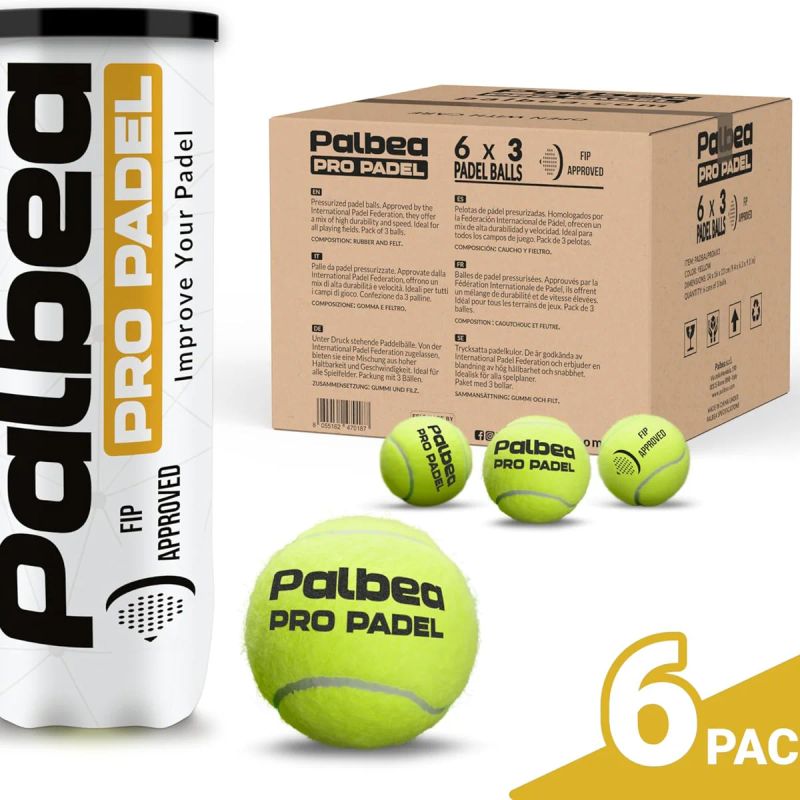
An official padel ball must appear on the International Padel Federation’s certified list, and a padel racket can be no longer than 45.5 cm. Those rules shape the speed, bounce and compact tactical rhythm that make padel feel different from tennis.
The ball is part of the rulebook, not just the kit
FIP competition balls are not treated as generic pressurized balls. Every ball used in an official competition must comply with technical specifications and appear on the federation’s official certified list, and approved balls must identify both the brand and the model as belonging to that list. That turns ball choice into a legality issue as much as a performance one.
The standards matter because the ball is tuned for rebound, pressure and consistency. In practical terms, those details affect how quickly a point can open up off the glass, how predictable a return feels on a low bounce, and how much control you get when the pace gets heavy at the net. If the ball is outside certification, it is not just a different feel on court; it is not an official competition ball.
The federation’s documents page includes a 2026 rules PDF and separate approved-ball certification files. The ball list and the competition standard are active parts of how the sport is governed.
What the racket rules actually mean

The racket is where the sport’s identity becomes visible at a glance. Under FIP rules, a padel racket must be solid and stringless, with a perforated hitting surface. It is nothing like a tennis frame, and that is the point: no strings, no oversized leverage, no easy import of tennis power geometry.
The measurements are just as specific. The maximum overall length is 45.5 cm, and the total of length plus width plus thickness cannot exceed 60 cm. The handle also has to include a non-slip grip and a safety cord. Those limits keep the format compact and consistent.
That structure changes shot-making in obvious ways. A solid face and smaller dimensions reduce the room for pure power generation, so spin, control and clean contact matter more.
What to check before you buy
If you are shopping for equipment with sanctioned play in mind, the first question is not how it looks on a shelf. It is whether the exact ball or racket can pass the federation standard.
• Check the ball brand and model against the official FIP certified list. • Make sure the ball is described as complying with FIP technical specifications. • Confirm that the racket is solid and stringless, with a perforated face. • Verify the length at 45.5 cm or less. • Check that the full dimensions, length plus width plus thickness, stay within 60 cm. • Look for a non-slip grip and a safety cord on the handle.

These are not cosmetic details. A racket that feels comfortable in the hand but fails the size test, or a ball sold as “match quality” without official certification, can be fine for casual hits and still fall outside sanctioned competition.
Why the sport plays the way it does
The equipment rules explain a lot of what spectators notice immediately. Padel rallies are fast because the ball, court and racket are all built around controlled rebounds and compact exchanges. Net play matters because the equipment does not give players tennis-style reach or string-bed help; instead, it rewards anticipation, positioning and clean contact under pressure.
The ball standard keeps bounce and consistency under control, while the racket standard preserves the sport’s tight geometry.
A federation built on formalization

The International Padel Federation has been formalizing that identity for decades. The federation was founded in Madrid on July 12, 1991, by the legal representatives of the Argentine, Spanish and Uruguayan federations. The federation traces padel’s origin back to 1969 in Acapulco, Mexico, where Enrique Corcuera invented the sport at his house in Las Brisas.
Julio Alegría Artiach was the first FIP president, and Luigi Carraro is the current president. The Rules and Regulations Committee continually monitors the game and can recommend changes to the General Meeting, which keeps the rulebook alive instead of frozen in time.
Why manufacturers and tours care so much
The certification process is not only for players. Manufacturers have to put balls through formal testing before they can be listed for official competition, which makes federation approval a commercial gate as much as a sporting one. Clubs and tournament organizers also have to care, because sanctioned events depend on equipment that fits the approved standard.
Tour-level supply adds another layer. Premier Padel has an official ball partnership with Wilson, and purpose-built models are used on tour.