First girls flag football recruits help shape college game
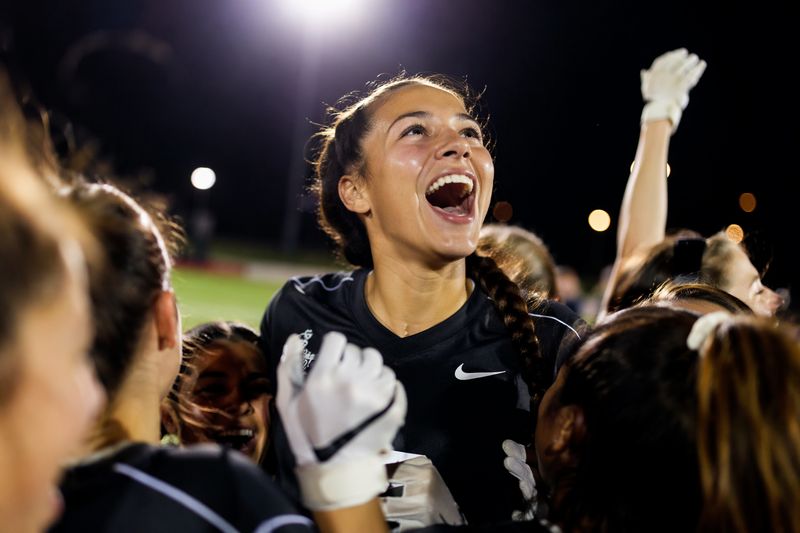
Girls flag football’s first college recruits are stepping into college before the route has fully been mapped. The class of 2026 is not just choosing a school, it is helping define what women’s flag football will look like on campus, where scholarship money, roster sizes and coaching structures are still taking shape.
The first college class is entering a moving target
That is the key difference between this recruiting cycle and the established lanes in basketball, soccer or volleyball. In those sports, players know what a scholarship board, a depth chart and a national ranking usually mean; in flag football, the competitive tiers are still shifting, and campuses are still deciding how serious they want to be.
The pressure cuts both ways. Early recruits get to be trailblazers in a sport that is expanding fast, but they also live with less certainty than athletes in older college pathways. They are being asked to trust a process that is still under construction, from the way teams are built to the way the game is taught and evaluated.
The NCAA has moved flag football onto the next track
The NCAA added flag football to its Emerging Sports for Women program on January 16, 2026, a step that puts the sport on a formal path toward championship consideration. The association said that path now also runs alongside flag football’s inclusion in the 2028 Los Angeles Summer Olympics, a signal that the sport’s growth is no longer confined to high school gyms and weekend showcases.
That emerging-sports framework is not new. The NCAA created the program in 1994 after a Gender Equity Task Force recommendation, and eight sports have already advanced from emerging status to NCAA championship sports, including rowing, ice hockey, water polo, bowling, beach volleyball, women’s wrestling, acrobatics and tumbling, and stunt.
On May 19, 2026, the NCAA said flag football was moving toward championship status and noted that RCX Sports and USA Football had submitted the application earlier in the year. That matters because the sport’s next stage is no longer hypothetical. It is moving through the same machinery that turned other women’s sports into championship properties.
High school rules are finally becoming standardized
Before college can settle into a real recruiting ecosystem, the high school game has to be consistent enough for coaches to compare players across state lines. The National Federation of State High School Associations said it would write the first official national high school flag football rules, effective with the 2025-26 season, and its rules committee has treated 7-on-7 as the most appropriate starting point for high school play.
The national picture is still uneven, though it is expanding. The NFHS said 17 state associations had sanctioned girls flag football, six more states were voting on sanctioning in 2026, and 15 states were operating pilot or independent programs. In June 2025, the federation said the sport had expanded to 28 states, which shows how quickly the field has widened even before every state has signed on to the same structure.
The NFL’s broader tally is even larger: more than 35 states are now offering or piloting sanctioned girls high school flag programs. That spread is a reminder that recruits are being scouted out of different competitive environments, with some states deep into sanctioned play and others still building toward it.
Scholarships, roster depth and coaching are the real friction points
The biggest challenge for the first college recruits is not just finding a place to play. It is figuring out how each school plans to support the sport. Scholarships may be available in one form at one campus and in a different form elsewhere, while some programs are still deciding how many players they need, how they will split offense and defense, and whether they have the coaching staff to match their ambitions.
That uncertainty is part of why the earliest recruiting cycle feels so different. College flag football is not being added to a finished ecosystem. It is being built in public, with players, coaches and athletic departments all learning at the same time what a credible program looks like.
The scale is already visible. The NFL says more than 100 colleges and universities offered women’s flag football across the NCAA, NAIA and NJCAA in spring 2025. That number does not settle the sport’s structure, but it shows the pipeline is no longer theoretical.
The NAIA is already operating on a championship timeline
While the NCAA is still advancing flag football through its emerging-sports pathway, the NAIA has already moved faster. The association approved women’s flag football as its 30th championship sport, effective beginning with the 2026-27 academic year, and said 60 member institutions are expected to sponsor the sport that year.
The NAIA launched women’s flag football in 2021, which gives it a head start in building schedules, staffing and competitive identity. For recruits, that creates a second route into college flag football, one that may offer a more defined immediate playing path while the larger NCAA picture continues to form.
That split matters. Some athletes will choose campuses because they want to help a program start from zero. Others will want a place where the championship structure is already in motion. Either way, the recruiting decision is now about more than making a roster. It is about choosing which version of the sport they want to help create.
Showcase events are becoming the sport’s public recruiting board
The NFL and USA TODAY Sports have also turned girls flag football rankings into part of the sport’s visibility engine. That kind of exposure matters in a young market, because rankings and showcase events give recruits a common language while colleges are still figuring out their own.
The NFL has used Pro Bowl week and the NFL Flag Championships to spotlight the path from youth football to college, which is exactly the bridge the sport needs. Those events give players a stage, coaches a scouting window and campuses a reason to act faster.
That is the real story behind the first wave of recruits. They are not just chasing scholarships or roster spots. They are entering at the point where girls flag football is moving from breakout status to infrastructure, and every commitment they make helps shape the college game that comes next.
Sources
- [1]usatoday.com
- [2]ncaa.org
- [3]nfhs.org
- [4]playfootball.nfl.com
- [5]naia.org