First Open Racquetball final showed sport before modern power game
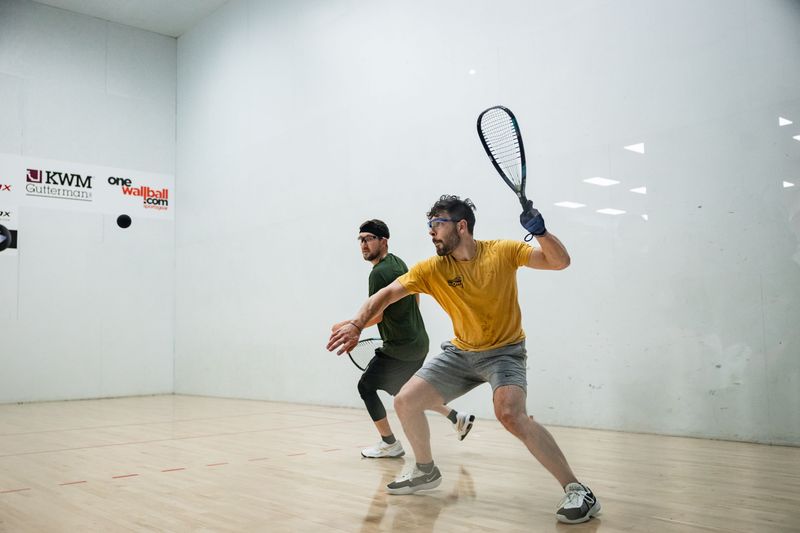
The first Open Racquetball Singles Championships final in St. Louis at the JCC looked less like a polished title match and more like a sport still assembling its own rulebook. Charlie Brumfield, 20, and Dr. Bud Muehleisen, 37, were captured just before the final started, and the picture freezes a version of racquetball that feels almost experimental by modern standards.
What makes that final so revealing is not only who played it, but how they had to play it. Each man stood about six feet even, both arrived with multiple racquet accolades, and neither was working with the standardized gear or pace that now define the sport. The match is a clean snapshot of racquetball before the power game took over.
The final before racquetball became predictable
At the St. Louis JCC, the early national final still carried the feel of a new indoor sport trying to settle its identity. Brumfield and Muehleisen were not just finalists, they were representatives of two different generations meeting in a game that had not yet settled on the conventions fans now take for granted.
That matters because early racquetball was not yet built around the same shot patterns, equipment standards, and pace you see today. The US Racquetball Museum’s caption makes that clear by preserving the match at the exact moment before it began, as if the sport itself had not yet decided what it was going to become.
Wood, wire and a ball that would not come alive
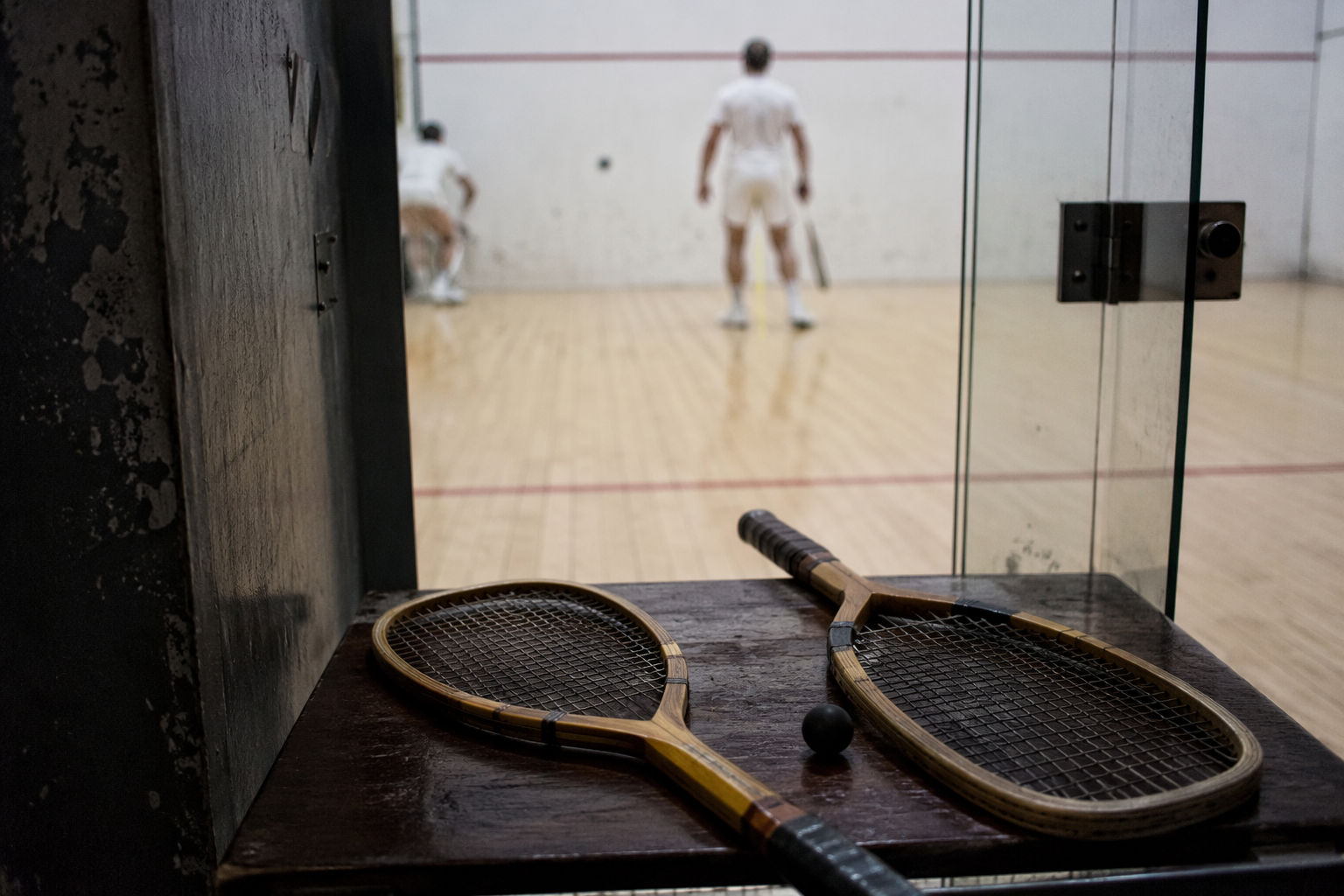
The equipment tells the story faster than any retrospective ever could. Brumfield used the Joe Sobek “Wooden Clunker,” while Dr. Bud played with the Dayton Steele racket, described as double-strung with wire strings. That is not a minor detail. It is the difference between an organized modern tool and a piece of gear from an era when racquetball was still borrowing and experimenting.
The ball was described as “so dead” that a ceiling ball was impossible to execute. That one fact changes everything about how the rally would unfold. Without a reliable ceiling shot, the match shifted away from the sharp, attack-first style modern fans expect and toward patient exchanges, placement, and durability.
The result was lengthy rallies rather than quick finishes. In a modern power game, a point can turn on one violent swing, one deep serve, or one dying ceiling ball. In this final, the dead ball flattened that style and forced both players to earn points the hard way, through extended contact and control.
Why the format mattered as much as the gear
The final was played best of 3 to 21 points, a format that gives even more weight to endurance and discipline when rallies drag on. In a match like this, a fast burst does not guarantee control of the scoreboard. One extended game can drain momentum, and a slow start can become a real problem if the ball refuses to produce easy winners.
That format also places the match in racquetball’s formative phase, when the sport’s competitive structure had not fully converged on the rhythm most fans now recognize. The combination of short match length, dead-ball conditions, and primitive racquets made this final less about explosive offense and more about surviving long stretches of work.
Bud Muehleisen’s place in the sport’s lineage
Dr. Bud Muehleisen’s career helps explain why this final carries so much historical weight. USA Racquetball says he was the very first indoor candidate inducted into the USA Racquetball Hall of Fame in 1974, the same year the national outdoor championships were first held in Orange County, California. That timing puts him at the center of a sport splitting into indoor and outdoor branches while still defining its identity.
A US Racquetball Museum video result adds another layer to his background: Muehleisen began playing paddleball in 1962 and took up paddle rackets in 1969. That places him squarely in the pre-racquetball generation, the bridge between older paddle sports and the new game that was emerging around him. He was not just a participant in the first national final. He was one of the figures carrying earlier indoor racket traditions into racquetball’s future.
Why St. Louis belongs in the sport’s origin story
The setting matters too. A 2022 St. Louis Jewish Light story framed racquetball as part of St. Louis’s Jewish community history, which fits the JCC setting of the first Open final. That local context is important because racquetball did not emerge in a vacuum. It grew in community spaces, in rooms and clubs where new sports could take shape before they were fully standardized.
St. Louis at the JCC gives the final a specific kind of weight. It was not staged in a far-off championship arena built for spectacle. It happened in a place where the sport was still being tested, watched, and refined by the people closest to it.
What that chaotic final still tells the modern game
This match is useful because it shows racquetball before it turned into the faster, more technical power game that now dominates the sport. The Wooden Clunker, the wire-strung Dayton Steele racket, the dead ball, the absence of a ceiling shot, and the best-of-3-to-21 format all point to the same truth: early racquetball demanded a different kind of athlete and a different kind of patience.
Brumfield and Muehleisen did not just play a final. They helped define the boundaries of what racquetball could be. The sport that followed would become more standardized, more explosive, and more specialized, but this St. Louis match shows the rough, improvised version that came first.