Flag football gains momentum in Tonga’s capital Nuku’alofa
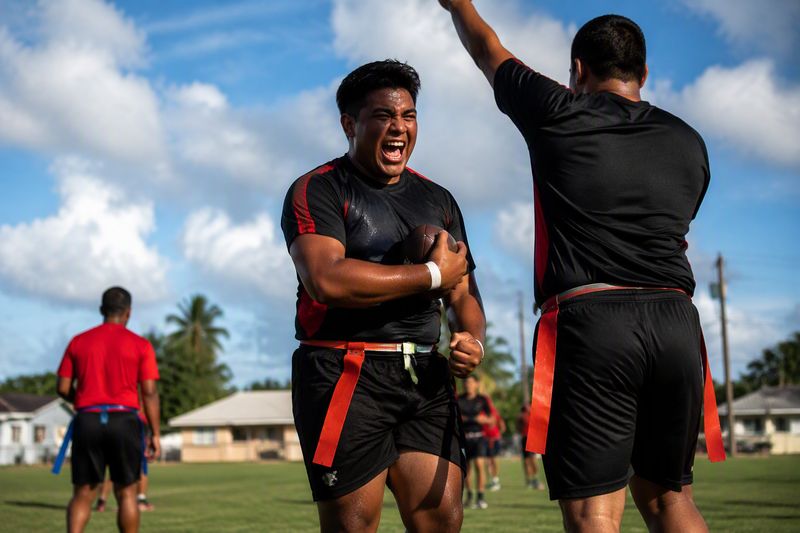
Flag football is finding a real foothold in Nuku'alofa, where youth clinics and a Tonga High School tournament are turning an Olympic afterthought into a local option. In a capital where rugby and other contact sports have long set the tone, the non-contact version of American football is carving out space by being cheaper to start, easier to stage and faster to teach.
Why Nuku'alofa is warming to the game
The appeal in Tonga’s capital starts with access. Flag football needs less protective equipment than tackle football, can be played in smaller spaces and still gives players the pace, skill work and teamwork that make American football attractive in the first place. That matters in a place where families, schools and recreational players often weigh cost and convenience before they commit to a new sport.
It also fits a sporting culture already built around contact games. In Pacific nations, rugby has long dominated the conversation, but flag football offers a lower-contact pathway for young athletes who want something different without losing the energy of full-field competition. That combination of familiarity and novelty is a big part of why the sport is showing up in places like Nuku'alofa rather than staying confined to established American football markets.
Who is pushing the rollout
The local momentum is not happening by accident. A U.S. Embassy in Tonga page, titled Regional Sports Envoy: USA Football to Tonga and Fiji, points to organized development work in the country and across the region. Pasifika TV also noted that the upcoming launch of the United States Flag Football program in Tonga and Fiji is aimed at bringing American football to the Pacific.
Those efforts line up with what is already visible on the ground in Nuku'alofa. Search results reference after-school youth clinics and a flag football tournament at Tonga High School on Saturday, August 8, 2026, which shows the sport moving beyond a talking point and into actual community use. For a new code to stick, that kind of school-based and youth-driven activity matters more than any promotional campaign.
Olympic visibility has changed the ceiling
The bigger story behind the local growth is the sport’s new international profile. The International Olympic Committee approved flag football for the 2028 Olympic Games in Los Angeles in October 2023, giving the game a legitimacy boost that reaches far beyond the United States. LA28 has said the sport will make its Olympic debut in 2028 and describes it as a non-contact format of American football.

That Olympic status gives smaller markets a reason to pay attention. When a sport enters the Games, federations, schools and private organizers often follow with programs, tournaments and pathway planning, because the event creates a clear target for development. In Tonga, that means local popularity can feed bigger ambitions, from school participation to regional competition and, eventually, national-team interest.
The NFL has helped amplify that ceiling. On August 5, 2024, the league said the LA28 Olympic sports program would feature men’s and women’s flag football, and on May 20, 2025, it said clubs voted to allow NFL players to participate in flag football at the 2028 Olympic Games in Los Angeles. Those moves tied the sport’s top professional league directly to its Olympic future, a signal that has made flag football look less like a side project and more like a global asset.
What the local scene suggests about the future
Nuku'alofa’s rise is important because it shows how flag football can adapt to different football cultures without needing a massive infrastructure build-out. The sport can work on school grounds, in smaller community spaces and in settings where full-contact football is harder to organize. That makes it especially useful in island nations, where cost, space and coaching depth often shape what takes root.
The capital’s current activity also suggests the game is spreading through the kinds of entry points that usually matter most. Youth clinics, school tournaments and embassy-linked development programs give players a first touch with the sport before any national structure is in place. That makes the adoption process less about importing a finished product and more about building a local version that fits Tonga’s athletic landscape.
For players, the comparison with other options is straightforward. Flag football offers a path into an international sport without the same equipment burden or collision risk as tackle football, while still preserving the speed and tactical reading that make football compelling. In a city where rugby and other contact codes already demand attention, that is enough to make the new game stand out.
The result is a capital that looks increasingly connected to the wider Pacific and Olympic conversation. With the 2028 Games on the horizon, Nuku'alofa is one of the places where flag football’s next stage is already visible, not in a stadium half a world away, but on school fields and in local programs where the sport is learning how to belong.
Sources
- [1]matangitonga.to
- [2]pasifikatv.co.nz
- [3]nfl.com
- [4]buccaneers.com
- [5]packers.com
- [6]la28.org
- [7]to.usembassy.gov
- [8]talanoaotonga.to