Flag football gear checklist: pocketless shorts, flag belt, mouthguard and cleats

Flag football looks simple at checkout because the list is short. It only works, though, when the gear matches the rules: pocketless shorts, a properly fitted flag belt with detachable flags, a mouthguard and non-metal cleats or athletic shoes. Miss one of those and you are not just under-equipped, you are out of step with how the game is played.
Start with the pieces that are not optional
Pocketless shorts are a rule item, not a style choice. Pockets can trap or hide a flag, which breaks the basic mechanic of the sport, where the defensive play is the flag pull itself. In flag football, that pull is the equivalent of a tackle, so anything that interferes with it changes the game.
The flag belt matters just as much. It has to fit properly and hold detachable flags securely, because clean releases are what make a pull legal. If the belt rides too loose, the flags can slip off too easily; if it is too tight or poorly designed, the pull stops being a clean test of speed and positioning.
A mouthguard belongs in the bag even though flag football is non-contact by design. Players still collide, fall, reach and jostle at the line and in space, and that is enough to make a small piece of protection worth taking seriously. The sport is built around movement, not punishment, but “non-contact” is not the same thing as no physicality.
Footwear is the last must-have, and it is easy to get wrong. iFlag requires non-metal cleats or athletic shoes, which tells you the real priority: traction, stability and safe cuts. The game rewards quick changes of direction, so the wrong shoe can turn a fast plant into a slip.
What you can skip, and where the money goes further
The biggest savings in flag football come from what you do not have to buy. NFL FLAG makes that plain in its equipment checklist: helmets and shoulder pads are not required in flag football. That alone changes the bill and the prep time, which is part of why schools, parks and families can get teams on the field faster.
Olympics.com lists the core kit in the same minimalist spirit: flag belt and flags, jersey and shorts, cleats, mouthguard, with football gloves as optional. Gloves can help grip in wet weather or on a chilly night, but they are not part of the core requirement. If you are shopping for a first season, gloves are the definition of a nice-to-have.
Some leagues make the buying list even lighter. Next Level Sports says some leagues provide shorts, jerseys, flags and balls, and in that setup mouthguards are recommended but not mandatory. That is the clue to shop smart: do not buy duplicates before you know what the league hands out, because the fastest way to overspend is to purchase a team kit and then discover the club already supplies half of it.
Why the small details matter so much
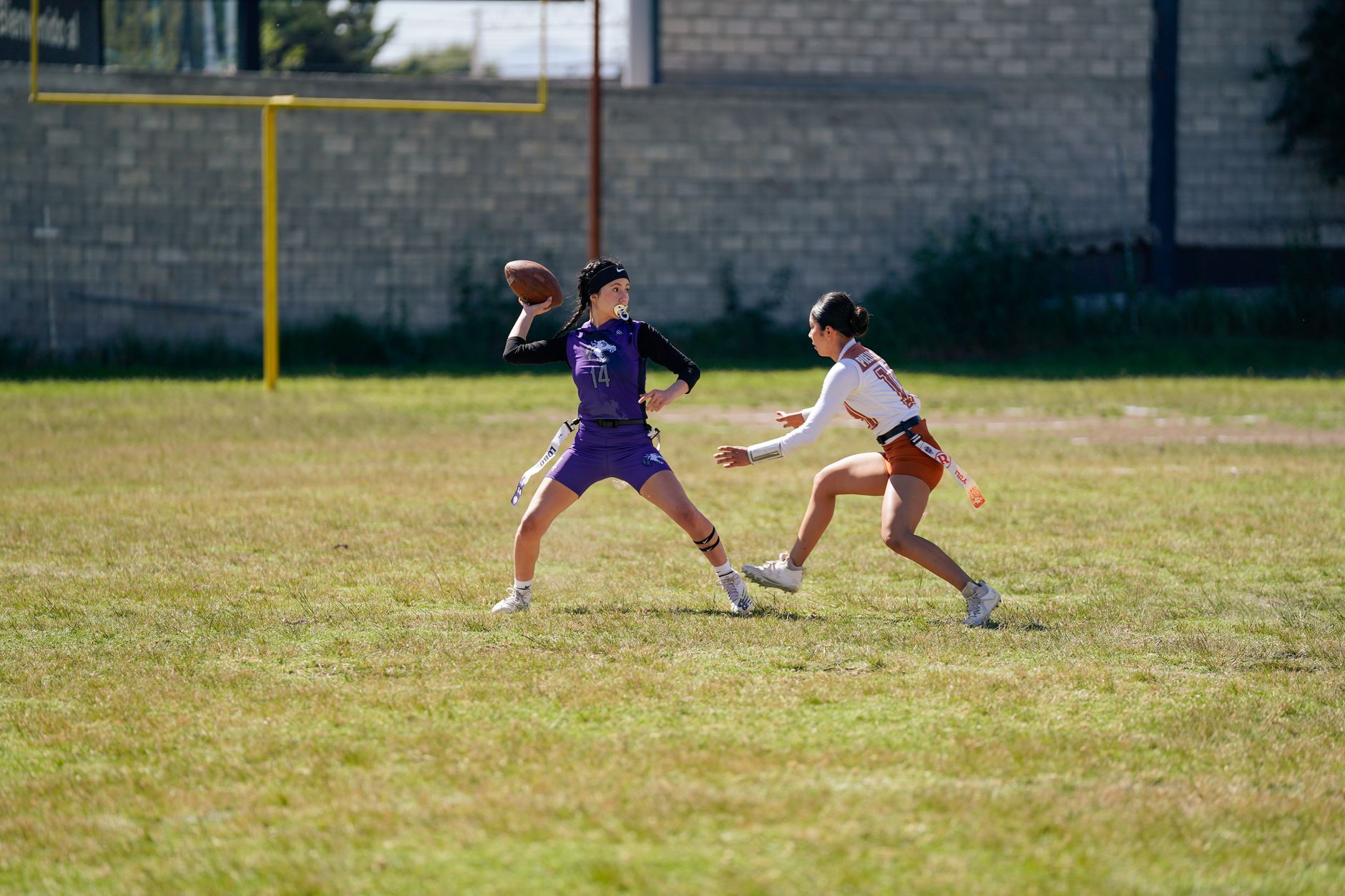
Flag football has a minimalist look, but it is a rule-heavy sport. International rulebooks updated in 2023 included changes to pants and flag specifications, a reminder that even equipment that seems basic is tightly controlled. That is the part first-time buyers miss: this is not just athletic apparel, it is functional equipment that has to interact with the rules cleanly.
That is also why the flag belt deserves more attention than it usually gets. It is the sport’s core defensive tool, and a cheap belt that does not release properly can ruin the play before it starts. If the flags are not detachable in the right way, the game stops being about timing and leverage and starts becoming a mess of arguments.
The same logic applies to shorts. Buying anything with pockets, even if it is cheaper or more comfortable off the field, is a mistake because the rules do not care how much your kid likes the fit. The game cares whether a defender can pull a flag without it catching on fabric.
The Olympic stage is getting bigger
Flag football’s gear list is small, but the sport’s profile is not. The Olympics.com FAQ says the game will make its Olympic debut at the Los Angeles 2028 Summer Games, and NBC Olympics says the men’s and women’s tournaments will be played at BMO Stadium with six teams on each side. That kind of stage tends to sharpen attention on the basics, because once a sport reaches that level, the small details stop being niche and start being standard.
The Olympic push is also pulling more eyes toward the player pathway. NFL and NFLPA announced in 2025 that NFL clubs approved participation of NFL players in the 2028 Olympic Games in Los Angeles, which gives the sport an unusually direct line to mainstream football talent. The more visible the game becomes, the less room there is for sloppy first purchases and the more important it gets to buy the right starter kit the first time.
A smart first-time buying plan
The cleanest way to shop is to separate must-haves from fill-ins before you get to the register. Buy pocketless shorts, a properly fitted flag belt with detachable flags, a mouthguard and non-metal cleats or athletic shoes first. Then check the league rules for anything that is supplied, because some programs, like the one Next Level Sports describes, hand out shorts, jerseys, flags or balls.
A few common mistakes keep showing up at the checkout line: • Buying shorts with pockets because they are on sale • Picking metal cleats instead of non-metal ones • Skipping the mouthguard because the sport is “not tackle” • Assuming every flag belt works the same way • Purchasing gloves before confirming they are needed
If you want to save money, start with the league’s required list and nothing more. Flag football is one of the few football codes where the gear bill can stay modest without cutting corners, but only if every item you do buy fits the rules as tightly as the game itself does.
Sources
- [1]iflag.org
- [2]nflflag.com
- [3]olympics.com
- [4]nbcolympics.com
- [5]nflpa.com
- [6]support.nextlevelsports.com
- [7]americanfootball.sport