Flag football’s wartime roots explain its rise and accessibility
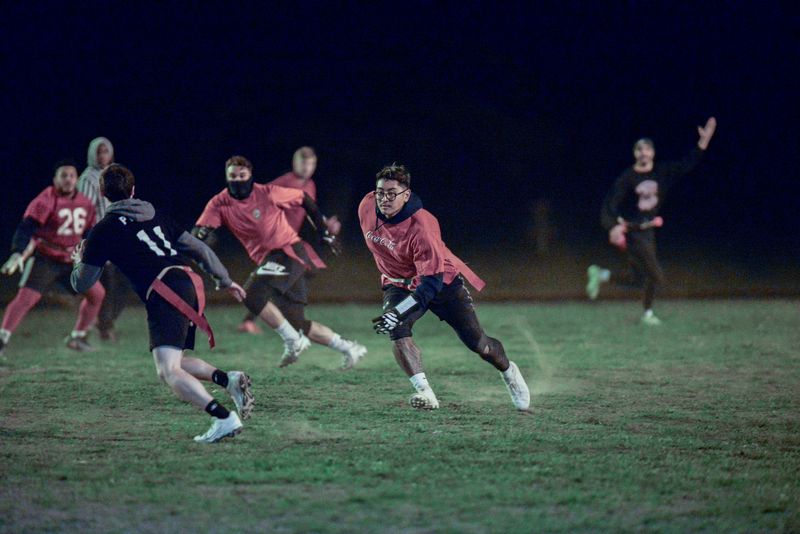
Flag football’s rise starts with a simple idea: football could be competitive without being collision-heavy, expensive, or tied to one field setup. Britannica traces the sport to World War II, when American soldiers played a noncontact version called “touch and tail football,” and the U.S. Air Force has described its military-base roots as stretching back to the 1940s. That origin is the sport’s DNA story, because it explains why flag football still travels so easily from base gyms to schoolyards, rec leagues, and international stages.
The basic structure remains stripped down and portable. Britannica says the game is typically played by two teams of five players each, and another Britannica explainer makes the rule distinction plain: defenders stop the ballcarrier by pulling flags from a waist belt instead of tackling. That one rule change does a lot of work at once, lowering contact risk while also cutting down on the equipment and roster demands that can keep tackle football out of reach.
Why the wartime model still fits modern play
Flag football was never built around heavy infrastructure. A ball, flags, belts, and open space were enough to create real competition, which is why the sport moved so naturally from military recreation into broader community use. The same practical setup that worked on military bases in the 1940s also fits schools, youth programs, and mixed-age rec leagues today, where availability and flexibility often matter as much as raw athleticism.
That low barrier to entry shapes the way the game feels on the field. Speed, spacing, and quick decision-making matter more than size and collision power, so players who may not suit tackle football can still find a place in flag. The design makes the game cheaper and safer by construction, and those are not side benefits; they are the reason it keeps expanding across age groups and skill levels.
The military link is not just history
The sport’s military roots still show up in its modern use inside the armed forces. A Nov. 20, 2024, National Air and Space Intelligence Center article said intramural flag football boosts morale and fitness among military personnel, echoing the original purpose of keeping service members active and connected without the injury load of tackle football. In that same article, NASIC members played an intramural game at Wright-Patterson Air Force Base in Ohio on Oct. 17, 2024.
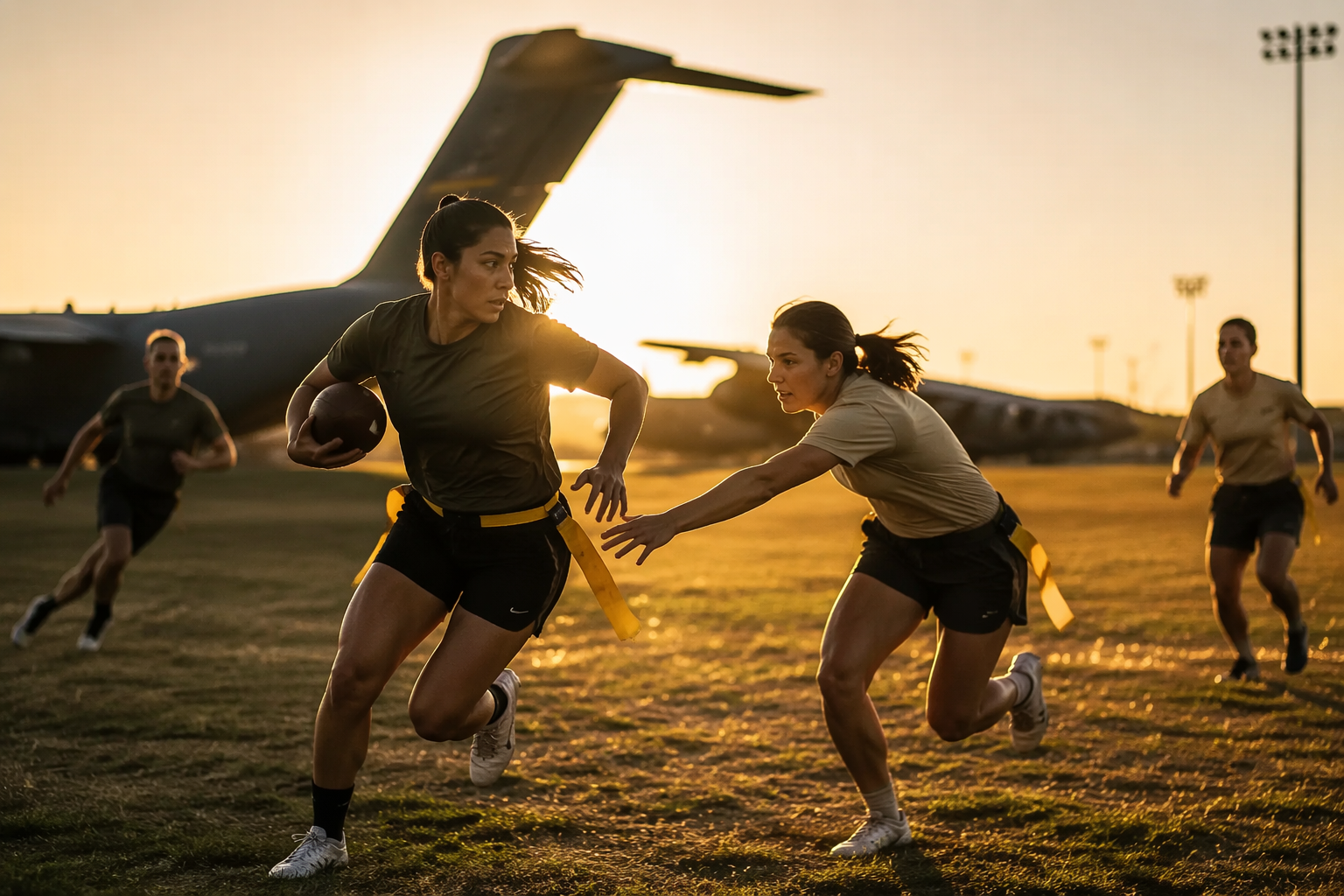
That detail matters because it shows flag football has retained the exact qualities that made it useful in the first place. It is still a sport that can be dropped into a base schedule, played without a long equipment list, and used to build conditioning and camaraderie. The military connection is not a relic in this story; it is proof that the format still solves the same practical problems it did eight decades ago.
From recreation to a global sport
The modern growth curve is bigger than the military and much bigger than casual backyard play. Britannica notes that the NFL has promoted flag football by turning the Pro Bowl into a flag football game since 2023, staging the NFL FLAG Championships, and working with the International Federation of American Football to push for inclusion in the 2028 Los Angeles Olympics. That is a major shift in status: what began as a noncontact adaptation now sits in the pipeline of elite, branded, internationally visible sport.
IFAF gives that global push a clearer frame. The federation says it has more than 90 member nations and promotes the growth of American football worldwide. That breadth helps explain why flag football scales so quickly, especially in places where full-contact football can be too expensive, too equipment-heavy, or too physically demanding to spread widely. The game’s wartime practicality has become a business and participation advantage in the Olympic era.
Why schools, leagues and international bodies have embraced it
Flag football’s appeal is easier to understand when you look at who can actually run it. Schools can organize it without the full medical and equipment overhead of tackle football, community leagues can fill schedules with less specialized gear, and international bodies can present it as a version of football that is easier to teach, transport, and standardize. The same traits that once made it useful on bases now make it a natural growth product for youth systems and emerging markets.
The NFL’s investment also changes the sport’s visibility. Once the league began using the Pro Bowl as a flag football stage and added the NFL FLAG Championships, the game gained a clearer elite pathway and a stronger broadcast profile. That matters because visibility drives participation, and participation drives the next generation of players, coaches, and organizers.
Women’s flag football built its own organizing path
Flag football’s expansion also includes a separate women’s history that deserves its own place in the story. The International Women’s Flag Football Association says there had never been a central organization for women’s flag football until 1995, and that the National Women’s Flag Football Association came before it. That timeline shows women’s flag football did not simply borrow a ready-made structure; it had to build one.
That organizing history is visible in long-running events like the Kelly McGillis Classic in Key West, Florida. The IWFFA’s 2025 program calls it the 33rd annual International Female Flag Football Championships, a marker of continuity that reaches well beyond novelty. Diane Beruldsen and Kelly McGillis remain tied to that competitive circuit, which underscores how women’s flag football has developed into a durable and recognizable part of the sport’s landscape.
The sport’s DNA is still the story
Flag football did not become popular by copying tackle football and stripping out a few hits. It grew because its original design solved three problems at once: safety, low cost, and accessibility. That solution worked for soldiers on military bases in the 1940s, for intramural athletes at Wright-Patterson Air Force Base in 2024, and for the NFL and IFAF as they push the game toward Los Angeles in 2028.
That is why the sport keeps scaling. Its origins are not a side note to the present, they are the reason the present makes sense.
Sources
- [1]nasic.af.mil
- [2]britannica.com
- [3]ifaf.org
- [4]iwffa.com