FootGolf began in Netherlands with footballers on a golf course
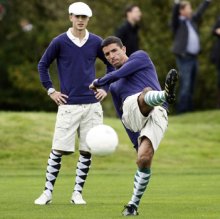
Michael Jansen and Bas Korsten turned a Dutch training-ground idea into the modern game of FootGolf in 2008, after drawing on Willem Korsten’s Tottenham Hotspur habit of kicking balls back toward the changing rooms in as few touches as possible. That small piece of football culture gave the sport a clear sporting ancestry and a layout that made sense on a golf course: kick, count, repeat.
The modern version took hold because it could be standardized. The Federation for International FootGolf says the sport is played on 9- or 18-hole courses, with players striking a standard soccer ball from a teeing zone into oversized holes. The same rulebook stresses courtesy and sportsmanship, which helped separate FootGolf from a loose kickabout and gave golfers and footballers a format they could recognize immediately. FIFG says its rulebook was created in 2012 and has been updated over time, a sign that the sport was being built for export rather than left as a one-off novelty.
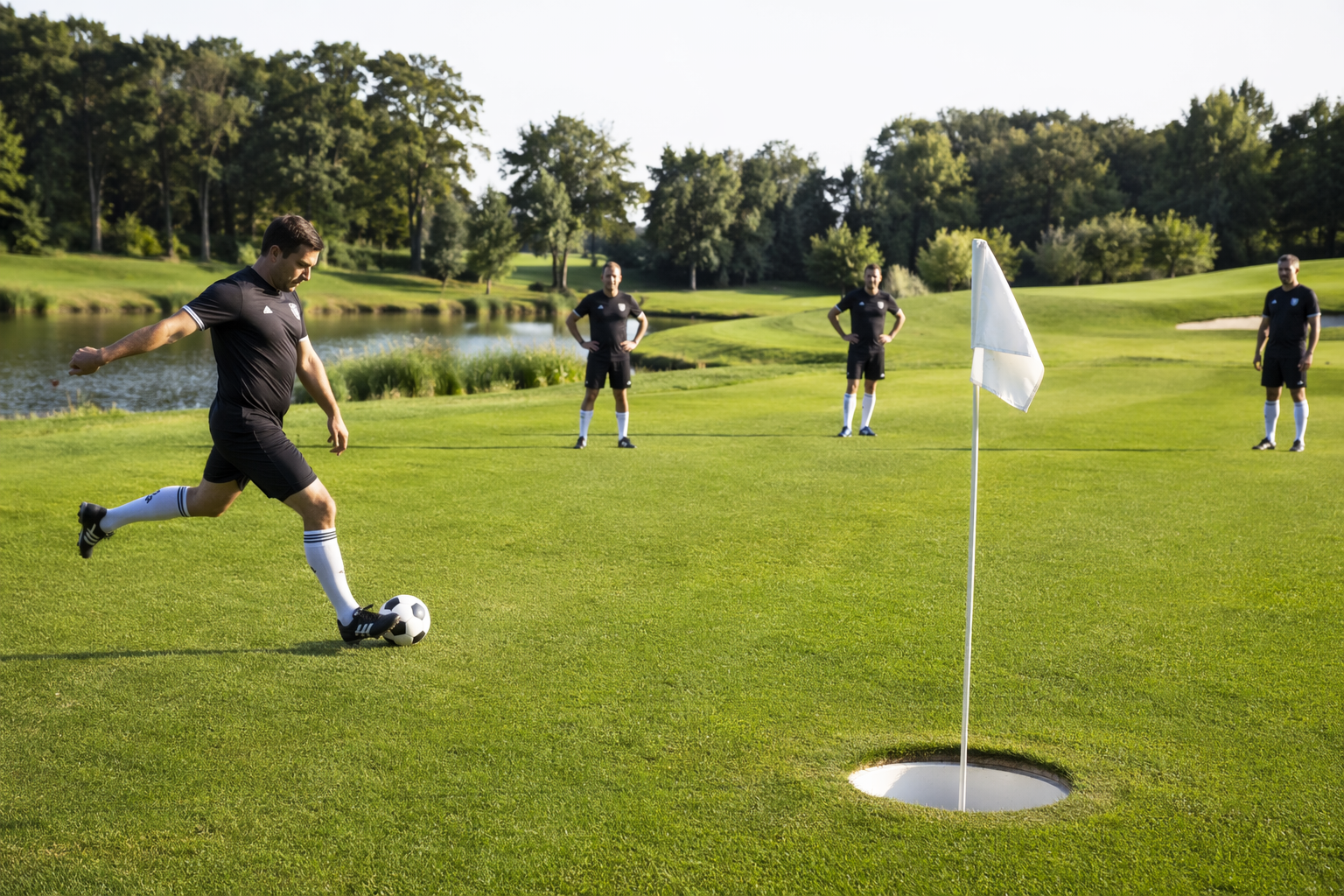
That structure arrived quickly. FootGolf’s path moved from the Netherlands into Belgium and Hungary, then to Argentina in 2010, while the American FootGolf League was founded in 2011. The bigger institutional break came on June 3, 2012, when the Federation for International FootGolf was founded near Budapest during the first FootGolf World Cup. Eight countries took part in that first World Cup, a small field by later standards but enough to turn an informal idea into an international competition.

The World Cup record shows how fast the sport scaled once the rules and governance were in place. The second World Cup, in Argentina in 2016, drew more than 230 players from 26 member countries. By 2018 in Morocco, the field had grown to 520 players from 33 countries. In Orlando in 2023, the fourth World Cup reached 972 players from 39 countries, a jump that underscored how firmly the sport had moved beyond its Dutch origin story.
FootGolf’s earlier history matters too, because a similar game called codeball briefly drew interest in the United States in the late 1920s and 1930s. But that version never had the same combination of a football-born identity, golf-course compatibility, and a formal governing structure. The 2008 Netherlands model did, and that is why it became the version that traveled.