FootGolf course hazards raise slip and injury risks for players
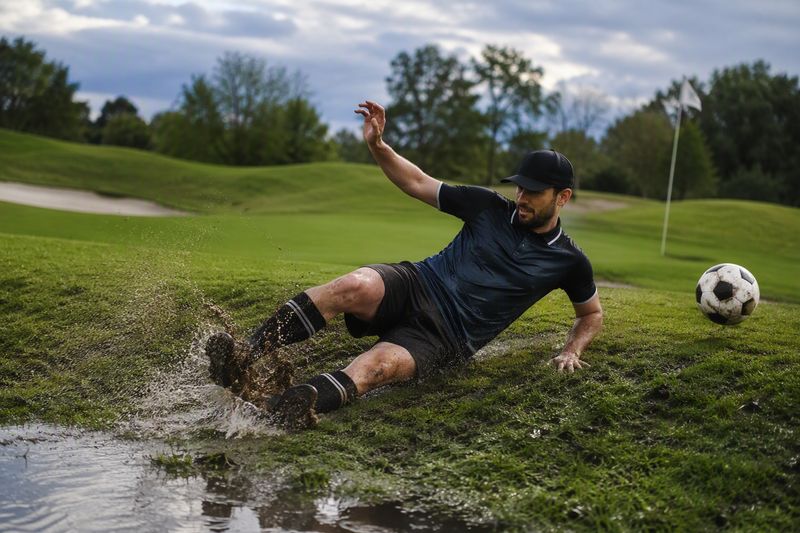
Shared fairways, uneven lies, wet grass, cart paths, and golf-course infrastructure give FootGolf a hazard profile that is different from soccer and more complicated than many first-time players expect. The sport works best when clubs treat those risks as part of the setup, not as an afterthought.
Why FootGolf needs its own safety lens
In FootGolf, players kick a soccer ball into a 52cm cup located away from golf greens. That design keeps FootGolf firmly in the golf-course environment, but the movement pattern is different enough to change how injuries happen. Players are walking, kicking, turning, and accelerating over turf that may slope, soften, or break unexpectedly, which is why slips often lead to ankle and knee injuries rather than the club-and-ball impacts tied to golf.
The sport’s governing structure reinforces that point. The Federation for International FootGolf’s rules place the game in the teeing zone and depend on player integrity, consideration for other players, and compliance with the rules. It is also played with minimal marshal supervision, so course safety relies heavily on clear layout, visible instructions, and players making smart decisions before a bad step becomes a problem.
Where the hazards sit on a golf course
The risks in FootGolf are tied to the features that make golf courses attractive in the first place. Slopes can turn a routine approach into a slide, bunkers can trap a planted foot, water hazards pull players toward unstable edges, and tree roots or rough ground can catch a stride without warning. Cart paths add another layer, since a player moving between fairways can go from soft turf to hard pavement in a single step.
Wet grass is one of the most obvious danger points. A course that feels harmless in dry conditions can become slippery after rain or morning irrigation, especially on side hills and near transitions from fairway to rough. Changes in elevation matter too, because FootGolf rewards a controlled kick, but the player still has to climb, pivot, and recover on ground that may not offer clean traction.
How the sport grew into a managed activity
FootGolf did not begin as a polished, fully regulated sport. New Paltz Golf Course dates the origins as early as 2001, while FootGolf Dublin traces similar informal beginnings as far back as 2006. The most consistent modern origin story places the first nine-hole FootGolf tournament on a golf course in the Netherlands in 2008, organized by Michael Jansen and Bas Korsten.
Playeasy traces the Dutch version to a soccer habit of trying to move balls from a training area to a changing room in as few kicks as possible. The American FootGolf League has set standards for course design, layout, and yardage for pars since 2011, while FIFG is the world’s governing body for the sport.
What clubs can do without making the game feel stiff
The best FootGolf venues keep the experience relaxed while making the ground easier to read. That usually starts with layout: tee markers should be obvious, walking routes should stay away from the slickest slopes and cart-path pinch points, and local rules should tell players where to stand, how to pace play, and which areas are off limits. Tee markers and local rules are standard tools for controlling position and flow.
Practical prevention on the operator side looks like this:
• Mark teeing zones clearly so players are not improvising their starting point.
• Flag wet turf, steep banks, and cart-path crossings before play begins.
• Keep balls and foot traffic away from greens, since the sport is built around a 52cm cup positioned away from them.
• Use marshals or volunteers at problem spots, even if the format normally relies on minimal supervision.
• Give first-time players a short briefing on slopes, bunkers, and spacing before they start.
• Check the course after rain or irrigation, when slips become more likely and footing changes fast.
What players, parents, and first-timers should do before the first kick
Prevention starts with reading the ground before the first kick. Proper footwear with grip matters on wet fairways and sloped lies, and the pace of play should slow down when the route crosses bunkers, roots, or hard surfaces. A quick look at the landing area before each kick can keep a small misstep from becoming a twisted ankle.
Parents bringing younger players should focus on spacing and footing first. FootGolf moves more like a walking round than a sprinting field sport, but the repeated kicking and scanning of the course can make players forget about what is under them. The safest habit is simple: stop before the kick, check the slope, check the surface, and only then play the shot.
Sources
- [1]firstpersonalinjury.co.uk
- [2]newpaltzgolf.com
- [3]usafootgolf.org
- [4]footgolf-dublin.ie
- [5]footgolfusa.com
- [6]footgolf.sport
- [7]prezi.com
- [8]playeasy.com