FootGolf explained, how soccer and golf merged in the U.S.
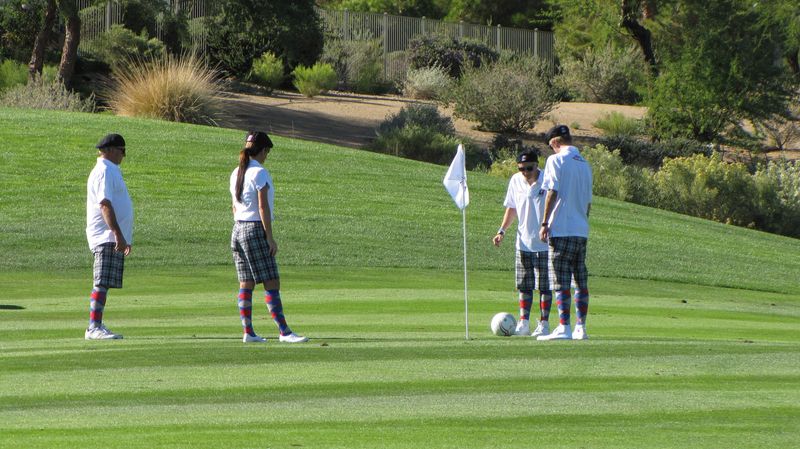
FootGolf’s American story starts with a simple collision of habits: golfers understood the course, soccer players understood the ball, and the American FootGolf League gave both groups a shared format. The sport took root by making a golf course feel instantly familiar while changing just enough to create its own competitive identity, from the oversized cup to the scoring and strategy around it.
How the U.S. game got organized
The American FootGolf League was founded on November 19, 2011, and that date matters because it marks the moment FootGolf began to take shape in the United States as more than a novelty. A first U.S. tournament followed on July 22, 2012, at Chula Vista Resort in Wisconsin Dells, Wisconsin, giving the sport an early competitive home and a public proof of concept. FootGolf USA’s member information also lists United States FootGolf, or FootGolf USA, as founded on November 18, 2011, with a founding-member listing in the Federation for International FootGolf in June 2012.
That timeline shows how quickly the American version moved from introduction to structure. The AFGL positioned itself as the founding and governing body for FootGolf in the United States under the Federation for International FootGolf, and in a 2014 rules description it said it had set standards for course design, layout, and yardage for pars since 2011. Those details are important because they explain why the sport could spread without feeling improvised: it had a governing framework, an early tournament, and a way to make different courses play comparably.
Why the crossover clicked
The clearest definition of the sport comes from USA FootGolf, which describes it as a precision game in which players kick a soccer ball into a 52-centimeter cup placed away from golf greens in as few shots as possible. That one sentence explains the appeal for both sides of the crossover. Golfers already know how to read angles, distance, and par-based scoring; soccer players already know how to strike a ball with pace, spin, and control.
The game’s American translation worked because it did not ask either audience to start from zero. Golfers stepped onto a familiar landscape, while soccer players found a competitive outlet that rewarded touch rather than a golf swing. The sport still has its own identity through course design and strategy, but the entry point is immediate, which is exactly why it has remained easy to explain to newcomers and easy to market for operators looking to add activity without rebuilding a facility.
What course operators had to solve
For course owners and managers, the early barrier was not whether FootGolf made sense in theory. It was whether the format could fit alongside existing golf operations without disrupting the main business. The AFGL’s emphasis on standards for design, layout, and par yardage gave course operators a template for how to host matches in a repeatable way, which lowered friction for facilities deciding whether to try it.

Florida emerged as a natural showcase because warm weather extends playing seasons and golf properties there can support added activity. Palm Beach Gardens became a useful backdrop for explaining the sport because it sits inside a state that has long served as a proving ground for niche outdoor formats. That environment helped FootGolf look less like a one-off experiment and more like an adaptable course product that could slot into leisure, recreation, and event programming.
Why players keep showing up
FootGolf’s appeal has always been broader than a pure sports audience. The format works for casual recreation, family outings, league play, charity events, and introductory tournaments because the barrier to entry is low and the competition is easy to grasp. A soccer ball, a hole, a scorecard, and a golf course are enough to create an event that feels both accessible and structured.
That accessibility matters in the American market because it gives the sport a place between traditional golf and more informal recreation. Golfers get a fresh competitive twist on a familiar setting, while soccer players can test technical control without needing to learn a full golf swing. The result is a sport that feels inclusive without losing its precision.
The American playbook still driving growth
The original U.S. playbook still explains where FootGolf gains traction today: clear rules, course compatibility, and a format that can be introduced quickly without major capital investment. Those strengths matter even after the novelty fades, because the sport’s value depends on making a golf course more active, not more complicated. The AFGL’s early standards helped create that simplicity, and the first U.S. tournament at Chula Vista Resort gave the game a concrete launch point.
Later commentary from Golf Course Management captured the sport’s uneven path in the American market, noting that it has had ups and downs but remains a viable option at golf courses. That balance is the best current snapshot of FootGolf’s place in the U.S. It has not become a mainstream mass sport, but it has also not disappeared into the novelty pile. Instead, it survives where the original formula still works best: on courses looking for extra use, in markets that understand outdoor recreation, and in communities where soccer and golf can meet on the same fairway.
Sources
- [1]inflorida.com
- [2]footgolfusa.com
- [3]footgolf.sport
- [4]youtube.com
- [5]gcmonline.com
- [6]usamastersgames.com
- [7]sportsdestinations.com