FootGolf fundraiser turns summer outing into community support
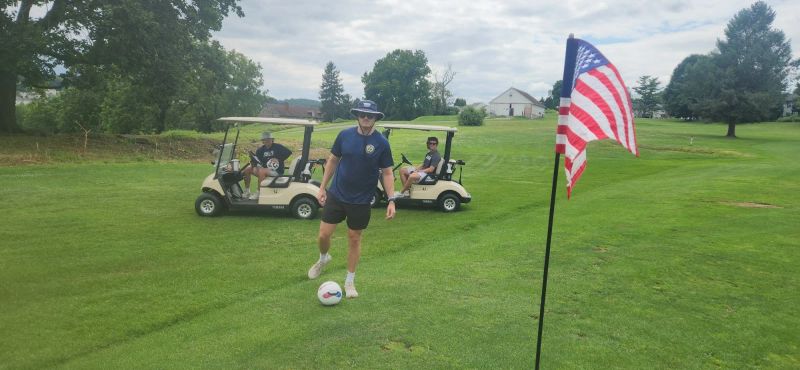
FootGolf has become one of the cleanest charity-event formats in sports because it strips away the intimidation and expense of traditional golf without losing the pleasure of a course-based day outside. A soccer ball, a walk across the fairways and a relaxed social atmosphere are enough to pull in families, casual athletes and donors who might never sign up for a standard scramble. That mix is why organizers keep choosing it for fundraisers: it is easy to understand, easy to market and easy to turn into a community gathering.
Why FootGolf fits fundraisers
The appeal starts with access. Players do not need a full golf bag, private lessons or a long learning curve, just basic ball control and the willingness to walk a course. That lowers the barrier for first-timers while still giving the day the look and feel of a real golf outing, which helps charities sell the event as something more engaging than a banquet or a straight donation drive.
FootGolf also widens the circle of participants. The format naturally brings in youth players, parents and social groups, not just the regular golfing crowd, and that matters for local nonprofits looking for turnout as well as dollars. A charity can frame the day as a family outing, a team-building exercise or a casual competition, depending on the audience it wants to reach.
How the game actually works
USA FootGolf describes the sport as a precision game in which players kick a soccer ball into a 52-centimeter cup placed away from golf greens. The goal is to complete each hole in as few shots as possible, starting from the teeing zone and finishing in the green zone, with the official rules emphasizing integrity and consideration for other players.
That setup is part of what makes the game so fundraiser-friendly. It keeps the scoring simple enough for beginners to follow, while still rewarding touch, judgment and consistency from players who want a competitive edge. The course setting gives the event a polished backdrop, but the equipment and rules keep the atmosphere accessible rather than intimidating.

The format also gives organizers flexibility. USA FootGolf says the game can be as fun or as competitive as the hosts want, which makes it easy to build around a family day, a club outing or a charity drive. That adaptability is one reason FootGolf travels well beyond dedicated sports circles and into community programming.
The sport has a real competitive backbone
FootGolf is not just a one-off novelty attached to fundraisers. The American FootGolf Federation says it introduced the sport to North America in 2011, and USA FootGolf says the first FootGolf tournament in the United States took place on July 22, 2012, at Chula Vista Resort in Wisconsin Dells, Wisconsin. From there, the structure kept building: USA FootGolf says the sport has been regulated by the Federation for International FootGolf since July 2012, the FIFG created the FootGolf Rulebook in 2013, and a new rulebook was first used in December 2018 at the FIFG FootGolf World Cup in Marrakesh, Morocco.
That history matters because it shows the fundraiser model rests on a sport with international standards, not an ad hoc recreation trend. USA FootGolf says the American FootGolf Federation is the governing body and exclusive U.S. member of the FIFG, and Team USA has competed in every edition of the FIFG World FootGolf World Cup. For local charity events, that creates a useful balance: the day can feel relaxed, but the sport itself has a defined competitive and organizational structure behind it.
What current fundraiser demand looks like
The clearest proof of FootGolf’s draw comes from the event calendar. Coatesville Youth Initiative called its 2025 Footgolf Challenge Fundraiser its first-ever Footgolf Challenge Fundraiser and said it was nearly sold out, with only a few foursomes remaining. The organization later thanked sponsors, players and supporters for making the fundraiser an incredible success, a sign that the format can generate the kind of participation charities want when they need a lively summer event.
Houston Dynamo Charities has also embraced the format, announcing an inaugural Foot Golf Tournament for June 24. That is a notable signal because it shows a professional-sports charitable arm seeing FootGolf as a viable fundraising vehicle, not just a side activity. When organizations with established donor networks use the format, it strengthens the case for smaller community groups that want a fresh event without having to invent one from scratch.
Caln Township has also promoted FootGolf in public outreach, and other local venues and parks systems have used it for grand openings, parties and community programming. Those uses point to the same larger pattern: FootGolf works in spaces where organizers want a relaxed, interactive event that feels active but does not require specialized training or equipment. It fits naturally into summer programming because it is social, outdoors and easy to explain in one sentence.
Why the model keeps growing
FootGolf’s growth as a fundraiser comes from the same trait that makes it enjoyable to play: it meets people where they are. It keeps the course setting and the shared pacing of golf, but it replaces the cost and stiffness of the traditional version with a soccer ball and a more casual entry point. That makes it especially useful for charities that want broad participation, visible energy and a format that can welcome both regular golfers and first-timers.
The sport’s established rulebook, U.S. governing body and international championship structure give that accessibility a credible foundation. The fundraiser format is not standing apart from FootGolf’s competitive identity, it is drawing strength from it. That is why the game keeps turning up on community calendars, and why it continues to work so well as a summer outing with a purpose.