FootGolf grew from Dutch novelty into a global regulated sport
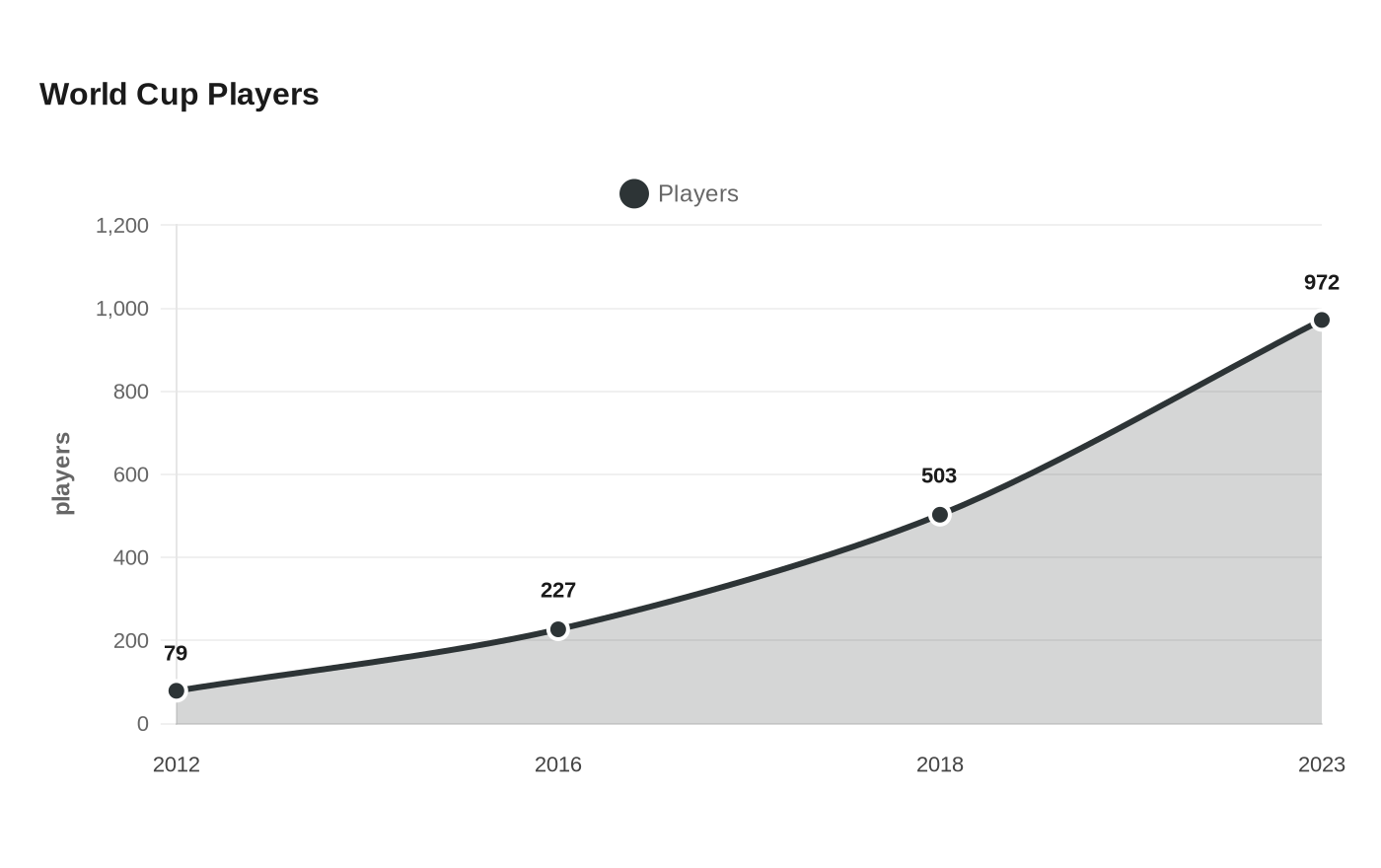
FootGolf did not win legitimacy by accident. It earned it in stages, first as a clever post-training idea in the Netherlands, then as a sport with formal rules, a world federation, and international championships that kept getting bigger. The numbers tell the story better than the hype: 79 players in the first World Cup became 972 by the time the event reached the United States in 2023, and the next global championship in Acapulco is scheduled to draw 1,240 players across 64 teams.
From Dutch novelty to a named sport
The modern version of FootGolf was created in the Netherlands in 2008 by Bas Korsten and Michael Jansen. Its origin is unusually concrete for a new sport: it was loosely based on a post-training routine connected to Willem Korsten, who played for Tottenham Hotspur from 1999 to 2001. That matters because it places FootGolf inside a real football environment, not a marketing brainstorm. The sport’s identity came from soccer culture first, then from codification.
The name itself does a lot of work. FootGolf is a portmanteau of football and golf, and the format is simple enough to explain in one breath: play from the teeing zone to the hole in as few kicks as possible. That combination is the sport’s main selling point and its main structural strength. It feels accessible to casual players because the action is familiar, but it also creates a scoring system that can be measured, organized, and regulated like a real competition.
2011 to 2013: the border crossing and the rulebook
The sport’s first real legitimacy test was whether it could travel. USA FootGolf says FootGolf was introduced to North America in 2011, and that same year the American FootGolf League was established. That is the moment the game stopped looking like a one-off novelty and started behaving like a sport with an infrastructure problem, which is the best kind of problem to have. Once a domestic league exists, the conversation shifts from “What is this?” to “How do we standardize it?”
Federation for International FootGolf, or FIFG, says it has regulated the sport since July 2012. That is the key turning point in the legitimacy story because governance changes everything in practice. A governing body can set competition rules, define who qualifies for sanctioned play, and decide which national organizations count. Without that layer, FootGolf is just a game you can set up anywhere. With it, FootGolf becomes a sport with borders, rankings, and a pathway to international competition.

The rulebook milestones make that shift even clearer. USA FootGolf says the sport’s first rulebook arrived in 2013, and FIFG’s later 2018 rulebook was introduced at the FIFG FootGolf World Cup in Marrakesh before becoming official in all FIFG member countries on January 1, 2019. That sequence matters because rulebooks are not paperwork for their own sake. They tell players what equipment is legal, how courses are set up, how play is scored, and what counts as an official result. For course operators, the rulebook creates a build standard. For national federations, it creates a common language.
The World Cup era made FootGolf look real
If the rulebook made FootGolf official, the World Cup made it visible. The first FootGolf World Cup was held in Hungary in June 2012 with 79 players from 8 countries. That is not a giant event, but it is exactly the kind of event that turns an idea into an institution. Once a sport has a world championship, it has a calendar, a title, and a benchmark.
The growth after that was steady and hard to ignore. The 2016 World Cup in Argentina drew 227 players from 26 countries. The 2018 World Cup in Morocco brought 503 players from 33 countries. By 2023, the World Cup in the United States had reached 972 players from 39 countries. Those jumps are not cosmetic. They show that FootGolf was building a broader player pool, more national programs, and enough competitive depth to justify a larger international stage.
The 2026 World Championship in Acapulco pushes that arc further, with 1,240 players and 64 teams scheduled to compete, including 24 men’s teams, 24 senior men’s teams, and 16 women’s teams. That breakdown matters because category depth is one of the clearest signs a sport has matured. A serious international sport is not just one open division gathering the same few players. It has age-group structure, women’s competition, and enough national participation to support multiple brackets.
What the formal structure changes for players and courses
FIFG’s current setup shows how much more organized FootGolf has become. The federation recognizes member countries, publishes official competition rules, rankings, and event guidelines, and uses a World Tour license system. It also recognizes only one national organization per country for World Tour licensing. That is a big deal in practical terms because it forces each country to settle who speaks for the sport. For players, it means clearer eligibility and a defined pathway into sanctioned events. For federations, it means less ambiguity and fewer parallel power centers.
That structure also changes how courses operate. FIFG’s standards and event guidelines make it easier to host official competitions on golf courses without guessing at the setup. The game depends on player integrity and minimal marshaling, so officials do not have to police it the way they would a contact sport. That keeps the sport efficient and relatively accessible for venues, while still protecting consistency across events.
USA FootGolf’s description of the sport’s expansion in North America fits that same pattern. The American FootGolf League, established in 2011, helped set course-design standards and promote the sport across the country. A sport cannot scale without repeatable venue requirements, and FootGolf’s growth in the U.S. shows how quickly the game moved from curiosity to organized domestic play.
The modern sport now acts like one
The strongest sign that FootGolf has crossed the line into full sports governance is the way FIFG handles integrity. The federation launched an anti-doping pilot project with the International Testing Agency in 2025, and its competition rules now require anti-doping testing for certain higher-tier tournaments and prize-money events. Those are not the actions of a novelty sport trying to look serious. They are the mechanics of a federation treating players, rankings, and prize events as matters of record.
FIFG’s newer materials also point to women’s, junior, and anti-doping initiatives, along with mandatory youth anti-doping education. Put together, that is the profile of a sport building a long-term system, not just a weekend circuit. FootGolf’s journey is not just that it spread from the Netherlands. It is that it acquired the three things every legitimate sport needs: rules, authority, and a competitive ladder that reaches across borders.