FootGolf rules, etiquette and strategy shape smarter play

FootGolf sells the illusion of simplicity: one ball, one target, fewer kicks. The real game starts once the order of play, the lie, the teeing zone and the course rules start squeezing the margins. That is where scores are made, because FootGolf rewards touch, discipline and judgment in equal measure.
How the basics shape the scorecard
The sport is played from the teeing zone, with each player trying to reach the hole on the green zone in the fewest kicks possible. FIFG governs the game globally, and its mission is to push worldwide recognition of a sport it says was created in 2012. That matters because FootGolf is not an ad hoc backyard novelty anymore; it has a formal rule structure built for competition, including stroke play and match play.
The equipment standard is equally specific. The basic kit is a size 5 soccer ball and a round ball marker, with a FIFG-approved tee optional. The dress code leans clean and golf-like: golf-style shorts, a collared shirt, knee-high socks and indoor or AstroTurf-style trainers. That clothing mix is not decoration, either. It signals a sport that borrows golf’s presentation while keeping soccer’s striking mechanics.
• Size 5 soccer ball • Round ball marker • FIFG-approved tee, optional • Golf-style shorts and collared shirt • Knee-high socks • Indoor or AstroTurf-style trainers
Order of play is strategy, not ceremony
The rulebook gives the opening sequence real tactical weight. In the teeing zone, the player with the best previous score goes first. On the fairway, the player farthest from the hole plays first. That flips the natural instinct to rush toward the pin and instead rewards patience, awareness and constant recalculation of risk.
Players may kick from the ground or tee up to 2 meters behind the markers, and they are expected to be ready at least 10 minutes before their tee time. Practice on the course before the start is not allowed, which means the smart round begins before the round begins. You have to arrive warm, read the wind, understand the surface and decide how aggressively you want to attack the opening shot, because there is no free rehearsal once the group is out there.
That is where FootGolf starts to look less like a novelty and more like course management. If you want a clean card, you do not just swing at space. You manage the angle, the next lie and the penalty risk, because the rulebook is built to reward the player who thinks two kicks ahead.
Etiquette is part of the scoring environment
FIFG says FootGolf is played on courses with minimal marshal supervision, so the sport leans hard on player integrity, courtesy and sportsmanship. That is not a soft idea tucked into a handbook. It is a practical part of how the game works when officials are not standing over every shot.
The 2024 rulebook makes that even clearer by stating that the player is responsible for knowing the rules. It also says that a player or marker giving bad advice can be penalized plus one for each instance. In other words, the cost of ignorance is built into the competition itself. If you do not know how a hole is played, how a marker functions or what advice crosses the line, the score can move against you fast.
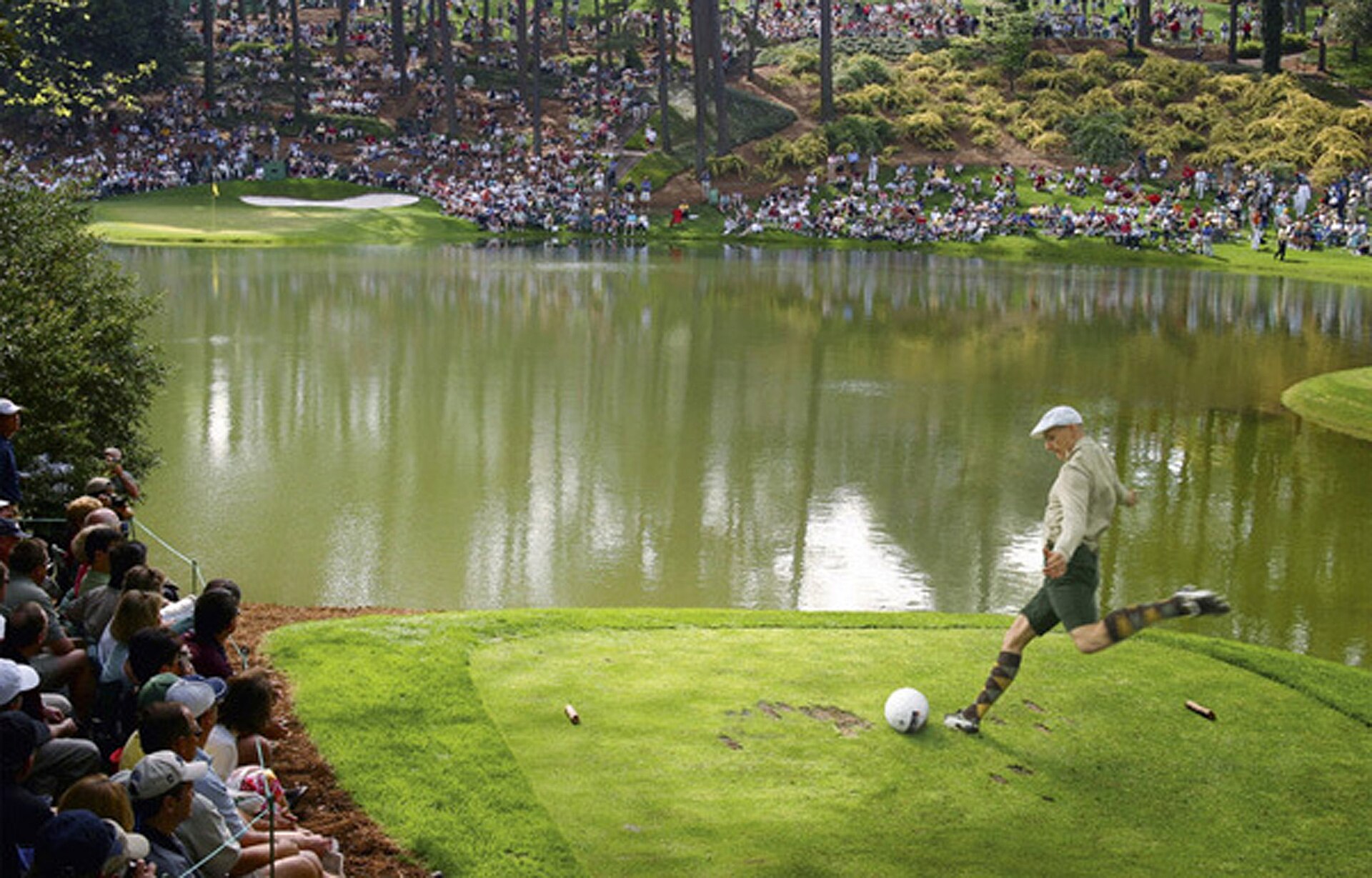
The rulebook also explicitly covers pace of play, priority on the course, care of bunkers and field damage caused by shoes. That tells you exactly what FIFG thinks matters: not just getting the ball in, but protecting the playing surface and keeping the round moving. A player who tramples the course or slows the group is not just rude, they are working against the sport’s structure.
Why smart players treat lies, bunkers and obstructions like live decisions
FootGolf is built around choice. A clean lie can invite an aggressive line, while a tricky one can force a safer kick that preserves position instead of chasing hero shots. Because the sport is self-managed more often than many games, the best players do not wait for a marshal to sort out every problem. They know the rules on bunkers, obstructions and physical conditions well enough to solve the issue without breaking rhythm.
FIFG’s separate obstruction guide is a good clue to how much value the sport places on these moments. Obstructions are not side quests. They are part of the scoring puzzle, the same way a bad bounce or a tight angle can alter an ordinary golf hole. In FootGolf, the disciplined player does not just hit the ball well. The disciplined player also handles the lie correctly, avoids unnecessary alterations to the ball or playing conditions, and stays inside the bounds of course care.
The global stage has already made the rules feel bigger
FootGolf’s rule system matters because the game has grown far beyond a local pastime. FIFG says its continental competitions now span North America, South America, Europe and Asia Pacific. The World Cup is hosted every four years, which gives the sport a steady international rhythm and a clear summit for national programs to chase.
The numbers show the climb. FIFG’s history page lists the first World Championship in Hungary in 2012 with 79 players from 8 countries. Argentina in 2016 brought 227 players from 26 countries, Morocco in 2018 drew 503 players from 33 countries, and the United States in 2023 reached 972 players from 39 countries. Orlando’s 2023 World Cup also featured 39 countries and more than 970 players, underscoring how quickly the field widened once the sport gained traction.
Mexico is part of that lineage too. Federación Mexicana de FootGolf says the country took part in the first World FootGolf Championship in Hungary and has appeared in every FIFG FootGolf World Cup since. That kind of continuity matters in a sport where international growth depends on national federations, repeat participation and players who understand the rules well enough to compete under pressure.
The 2026 FIFG FootGolf World Championship in Acapulco stretched across 12 days, with the individual championship set for May 27 to June 1 and the team championship from June 2 to June 7. FIFG lists 1,240 participating players and 64 teams for the event, a scale that tells you exactly where the sport is headed: bigger fields, higher stakes and a rulebook that asks players to manage far more than just the kick itself.
FootGolf’s appeal is that it looks open and approachable. Its edge comes from the details: the teeing zone, the 2-meter setup rule, the no-practice restriction, the pace-of-play demands, and the expectation that players know enough to police themselves. The sport is friendlier than golf in some ways and stricter than it first appears in others, which is why the best players win not only with touch, but with judgment.